
Decorative items on a market stall with people walking in the background
Horse grazing in a valley with mountains in the background
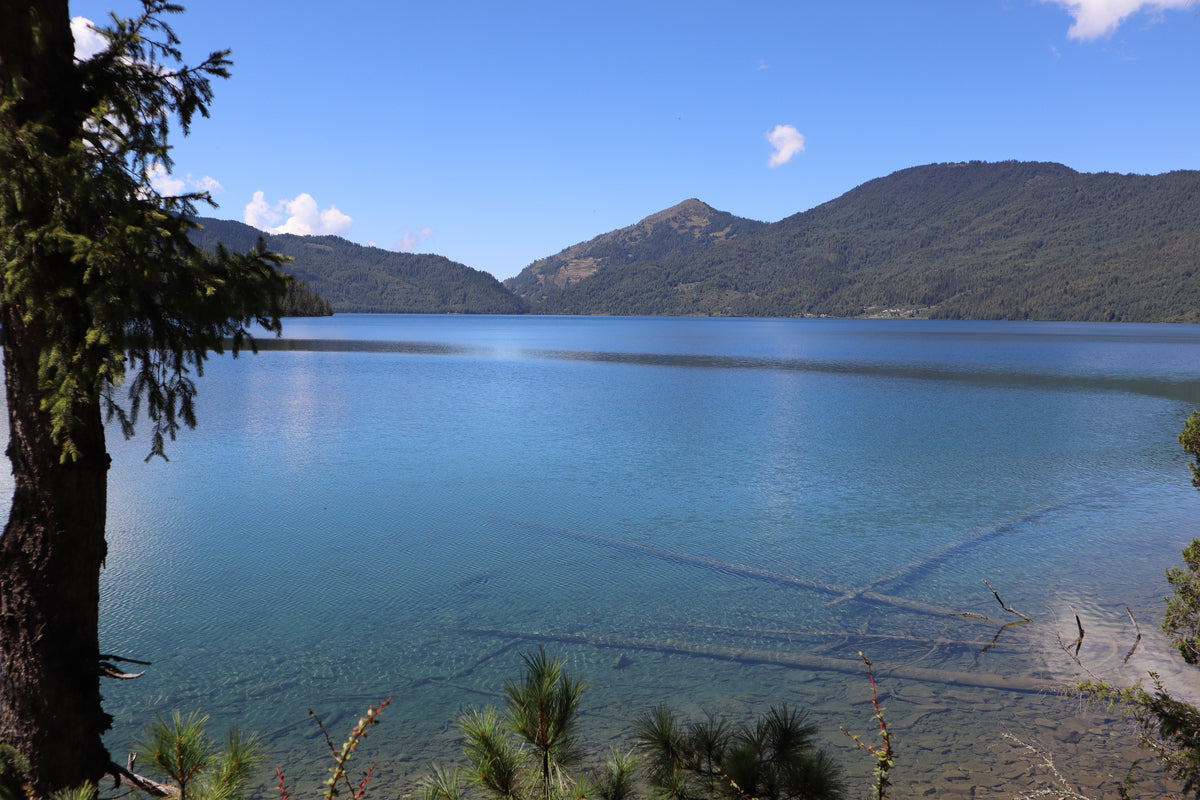
Lake with mountains in the background under a blue sky with clouds
Archaeological site with stone structures and wooden door
Traditional Nepalese temple with multiple tiers against a blue sky
Person sitting on a stone wall with a mountainous background
Traditional building with a garden and pond at dusk
Map of a travel route from Kathmandu to Rara Lake
FREE CANCELLATION UP TO 30 DAYS BEFORE DEPARTURE. FULL TERMS APPLY.

16 Day Rara Lake Trek Far West Nepal | SherpaHolidays

Starting From
$4,575.00
Duration
16 Days
Best Season
Spring
Max Altitude
4,087m (13,408ft)
Comfort Level
Moderate / Wilderness
Dates & Prices


Full payment at booking secures your permits, private guides, and all logistics before your departure date.

Licensed Sherpa Guides
Permits & Logistics Included
Private Journeys Available
Altitude Safety Expertise

Nepal has a northwest. Almost no one goes there. This is why they should.

The far northwest of Nepal is a different country from the Annapurna circuit and the Everest base camp trail. There are no teahouse menus in four languages. There are no gear shops, no wifi signs, no queues at dawn for the viewpoint. What there is: the Sinja Valley, where the Malla kings ruled a kingdom that once controlled the entire western Himalaya, their dynasty lasting from roughly the 12th to the 15th century, the stones along the trail still carrying inscriptions from their reign. And beyond Sinja, through high birch forests and over grassy passes, the lake.

Rara is Nepal's largest lake and its most pristine. It sits at 3,062 meters in the country's smallest national park, a body of turquoise water surrounded by mixed conifer and oak forest that holds red panda, Himalayan black bear, musk deer, and over 200 species of birds. The Dolpo mountains and the peaks of the Tibet border form the horizon above the water. The park sees fewer annual visitors than many Kathmandu restaurants serve in a week. The reason is straightforward: getting here requires two flights and a serious multi-day trek through terrain that rewards the effort and filters out everyone who is not genuinely committed.

Sixteen days. A flight to Nepalgunj and another to the mountain airstrip at Jumla. Ancient kingdoms, high passes, birch forests, and the lake itself, with two full days on its shores before the homeward trek. Our team knows the far west the way Sherpas know the Khumbu. This is their country too.

16 Days into Nepal's Forgotten Northwest

Days 1 to 3  |  Kathmandu and the Gateway West

Arrive in Kathmandu and spend two days in the valley: Swayambhunath, Pashupatinath, Boudhanath, the Durbar Squares. Fly to Nepalgunj on Day Three, the business hub of western Nepal in the flat Terai lowlands near the Indian border. Final briefing and gear check before the mountain flight tomorrow.

Days 4 to 6  |  Ancient Kingdoms and High Passes

A thirty-minute scenic flight from Nepalgunj to the mountain airstrip at Jumla at 2,370 meters. The trek begins immediately, climbing through rock-strewn paths past late 15th-century Buddhist stupas to Chala Chaur, then crossing a high grassy pass at 3,500 meters with the twin peaks of Kanjiroba visible to the north. Descend through birch and spruce forest along the Jaljala Khola to Botan and the Sinja Valley, where the stones along the trail carry inscriptions from the Malla kings who ruled all of western Nepal from this valley for three centuries.

Days 7 to 10  |  Rara National Park

Ascend the Ghurchi Mara ridge at 3,710 meters for the first panoramic views before the descent to the lake. Two full days at Rara: turquoise water, forest trails, the climb to Chuchemara Danda at 4,087 meters for the best viewpoint in the park, and the particular stillness of a place that sees very few visitors. Red panda in the oak and bamboo forest, Himalayan black bear in the mixed woods above the treeline, musk deer in the alpine meadows.

Days 11 to 14  |  The Homeward Trail

Depart the lake through terraced farmlands and walnut groves, cross the Ghurchi Lagna Pass at 3,450 meters, and climb the high ridges of Danphe Lekh for the final views back toward the park before the descent to Jumla. The Silajit outcrop at Kabra, where the medicinal mineral seeps from beneath overhanging rock, is one of the stranger natural features of the return trail.

Days 15 to 16  |  Return to Kathmandu

Fly from Jumla to Nepalgunj and onward to Kathmandu. Final evening in Thamel. International departure on Day 16 or the morning after.

Day by Day

Days 1 to 2  Kathmandu  Sacred Sites and the Briefing

Arrive at Tribhuvan International Airport and transfer to your hotel with a traditional welcome. Two days in the Kathmandu Valley provide the cultural foundation before the far west begins. Swayambhunath on its hilltop, where the painted eyes of the Buddha have watched over the city since the 5th century. Pashupatinath on the Bagmati River, the most sacred Hindu site in Nepal. Boudhanath, the great white stupa at the heart of the Tibetan Buddhist community. Patan Durbar Square, the finest medieval Newari architecture in the valley. The final afternoon is for the expedition briefing: the route, the altitude progression, the gear requirements for a trek that moves through remote country far from any resupply point.

Stay: Kathmandu Hotel

Day 3  Kathmandu to Nepalgunj  Gateway to the Far West

One-hour flight from Kathmandu to Nepalgunj, the commercial and administrative center of Nepal's far western region. Nepalgunj sits in the flat Terai lowlands close to the Indian border at roughly 150 meters elevation, which means it is hot, busy, and completely unlike anything that follows. It exists on this itinerary as a logistics hub: the transit point for the mountain flight to Jumla and the last place to address any equipment or supply questions before the trail begins. Final gear check at the hotel. Early start tomorrow.

Stay: Nepalgunj Hotel

Days 4 to 6  Jumla to Botan  Ancient Kingdoms and High Passes

The thirty-minute flight from Nepalgunj to Jumla is one of the most scenic mountain approaches in Nepal, climbing from the flat Terai into the high valleys of the Karnali region with the Himalayan ranges rising ahead. Jumla at 2,370 meters is the administrative center of Karnali Province, a quiet hill town that serves as the trailhead for several of the most remote treks in the country. Begin walking immediately from the airstrip.

The first section passes 15th-century Buddhist stupas that stand in the fields beside the trail, their whitewashed domes marking the boundary of the old Malla kingdom territory. The climb to the high grassy pass at 3,500 meters takes most of one day and opens onto a wide ridgeline with the twin peaks of Kanjiroba at 6,883 meters visible to the north, one of the most significant sacred mountains of the far west and one of the least known outside Nepal. Descend through birch and spruce forest along the Jaljala Khola to the gorge at Botan. Sinja lies just beyond, in a broad valley carved by the river that once carried the political and cultural life of the entire western Himalaya.

The Malla dynasty ruled from Sinja from roughly the 12th century until the 15th, at their height controlling a kingdom that stretched from what is now Tibet to the Terai and from the Karnali River to the Kali Gandaki. The inscribed stones along the trail in the Sinja Valley are the physical remains of that rule: boundary markers, religious dedications, and administrative records carved when this valley was the center of a world that has since almost entirely vanished. The village today is small and quiet. The archaeology underfoot is not.

Stay: Professional Tented Camp and Mountain Lodge

Days 7 to 10  Rara National Park  The Queen of Lakes

The approach to Rara National Park climbs from the Sinja Valley through increasingly remote terrain to the Ghurchi Mara ridge at 3,710 meters, where the park boundary begins and the first open panorama of the surrounding ranges appears. Descend from the ridge to the lake shore. Rara at 3,062 meters is Nepal's largest lake by surface area and its most protected, lying entirely within the country's smallest national park. The water is a deep turquoise that shifts to cobalt in the afternoon light and reflects the Dolpo mountains and the peaks of the Tibetan border to the north. The forest around the lake is intact mixed conifer and oak, largely undisturbed since the park was established in 1975.

Two full days at the lake. The climb to Chuchemara Danda at 4,087 meters is the best single viewpoint in the park: the lake spread below, the surrounding ranges on all sides, the depth of the wilderness apparent in every direction with no road, no settlement, and no trail visible beyond the park boundary. Red panda live in the oak and bamboo forest on the lower slopes, the most elusive of the park's resident species and one of the most endangered animals in Asia. Himalayan black bear range through the mixed forest above the lake. Musk deer graze in the alpine meadows on the ridges. The observation tower near the lake shore provides a second vantage point for wildlife at dusk. The camp on the lake shore, with the water visible from inside the tent and the mountains catching the last light above the treeline, is the kind of night that most guests describe as the one they remember longest.

Stay: Professional Tented Camp on the Lake Shore

Days 11 to 14  The Homeward Trail  Jumla via Ghurchi Lagna

Depart Rara through terraced farmlands and walnut groves on the southern side of the park, a gentler landscape than the high ridges of the approach. Cross the Ghurchi Lagna Pass at 3,450 meters on the return route, a different pass from the approach that provides new views over the western ridges toward Jumla. The climb to the high pastures of Danphe Lekh, named for the Danphe pheasant that is Nepal's national bird and still seen in these forests, delivers the final wide view of the trek before the long descent to the valley below.

The trail passes the Kabra outcrop, where Silajit seeps from beneath massive overhanging rocks. Silajit is a mineral resin that forms over centuries from the decomposition of plant material at high altitude and has been used in Ayurvedic medicine for over 3,000 years. It is found in several locations across the Himalayan range but the Kabra deposit is one of the most significant in the Karnali region and has been known to local communities for generations. The final descent to Jumla arrives in time for the evening and the last night of tented camp before the flights tomorrow.

Stay: Professional Tented Camp then Jumla

Days 15 to 16  Return to Kathmandu

Morning flight from Jumla to Nepalgunj, then the connection onward to Kathmandu. The return to the capital after sixteen days in the far northwest carries a specific quality: the city feels both familiar and newly loud, the altitude drop is immediate, and the distance between Rara Lake and Thamel is measurable in more than kilometers. Final evening in Kathmandu: the last walk, the last meal, the bookstore. International departure on the morning of Day 16 or the following day depending on your outbound flight.

Stay: Kathmandu Hotel then International Departure

The Sherpa Standard

Every SherpaHolidays journey is fully supported. Here is what that covers for this trek.

Accommodation and Meals

  • Kathmandu and Nepalgunj: Hotel accommodations on a twin-sharing bed and breakfast basis.
  • Expedition Camping: 10 nights of full-service tented accommodation: two-person tents, dining tent, and toilet tent at all camps.
  • Full Board on Trek: Three fresh meals daily throughout the trekking section, prepared by a professional expedition kitchen team.

Leadership and Logistics

  • Lead Guide: Dedicated licensed trekking guide for the full 16 days with specialist knowledge of the Karnali region.
  • City Guide: Specialist guide for the Kathmandu sightseeing days.
  • Sherpa Support Team: Full team of local porters and assistants for all luggage, camp management, and technical logistics.
  • Safety Protocol: Comprehensive pre-trek briefings and insurance coverage for all local staff.

Transport and Logistics

  • Internal Flights: All four domestic sectors: Kathmandu to Nepalgunj, Nepalgunj to Jumla, Jumla to Nepalgunj, Nepalgunj to Kathmandu, for guests and staff.
  • Private Transfers: All airport pickups, drops, and overland transfers in private vehicles.
  • Permits and Fees: Rara National Park entry fees, special trekking permits for the restricted area, and all monument fees.


What Is Not Included

  • International airfare to and from Kathmandu
  • Nepal entry visa fees
  • Lunch and dinner while in Kathmandu
  • Specialized trekking clothing, sleeping bags, and personal medications
  • Travel and emergency evacuation insurance, mandatory for this remote trek. We can recommend providers.
  • Tips for guides and porters
  • Single supplement (for those taking a private room)

Five Things That Define This Trek

Rara Lake: Nepal's Most Pristine Water

Nepal's largest lake sits at 3,062 meters within the country's smallest national park, a body of deep turquoise water surrounded by intact conifer and oak forest with the Dolpo mountains and the Tibet border peaks above the northern shore. The park sees fewer annual visitors than most Kathmandu restaurants serve in a week. The water, the forest, and the silence around it are in the same condition they were before the park was gazetted in 1975. There is no other lake like it in Nepal.

The Lost Kingdom of Sinja

The Malla dynasty ruled the western Himalaya from the Sinja Valley from the 12th to the 15th century, at their height controlling a kingdom that stretched from Tibet to the Terai. The stones along the trail in the Sinja Valley carry inscriptions from that reign: boundary markers, religious dedications, administrative records. The village today is quiet. The archaeology underfoot is not. Walking through Sinja is one of the few places in Nepal where you can stand inside the physical remains of a civilization that most of the world has forgotten entirely.

Chuchemara Danda at 4,087 Meters

The highest point of the trek and the best single viewpoint in Rara National Park. From the summit, the lake spreads below, the surrounding ranges fill every horizon, and the depth of the wilderness is visible in every direction with no road, no settlement, and no human infrastructure beyond the park boundary. The Dolpo mountains to the west and the peaks of the Tibet border to the north frame the water below. It is, in the clearest possible sense, the middle of nowhere, and it is beautiful.

The Red Panda Forest

Red pandas live in the oak and bamboo forest on the lower slopes of Rara National Park, foraging in the early morning and at dusk. They are among the most endangered mammals in Asia and one of the most difficult to observe in the wild. The Rara forest is one of the few places in Nepal where a patient observer, moving quietly through the right habitat at the right time of day, has a genuine chance of seeing one. No sighting is guaranteed. The forest is worth walking through regardless.

Remoteness as a Destination

The far northwest of Nepal is genuinely remote in a way that the standard trekking regions are not. Two flights and a multi-day trek stand between Kathmandu and Rara Lake. There are no teahouse menus in four languages, no gear shops, no queues at the viewpoint. What that remoteness produces is a quality of silence and solitude that the more popular routes have lost. Guests who come here once tend to describe it as the Nepal they were looking for before they found it.

Flexible Bookings

Full payment at booking secures your permits, private guides, and all logistics before your departure date. However, there are deposits available to secure your spot.

Travel Dates

Secure your spot with a $500 deposit. The remaining balance is due 60 days before departure.

Trip duration
Availability
Prices from
October 1 – October 16 (Deposit) Most Popular
Available
$500.00
Remaining spots
10 spots remaining
October 1 – October 16
Available
$4,575.00
Remaining spots
10 spots remaining
April 1 – April 16 (Deposit) Most Popular
Available
$500.00
Remaining spots
10 spots remaining
April 1 – April 16
Available
$4,575.00
Remaining spots
10 spots remaining
September 15 – September 30 (Deposit) Most Popular
Available
$500.00
Remaining spots
10 spots remaining
September 15 – September 30
Available
$4,575.00
Remaining spots
10 spots remaining

Things Guests Ask Before Booking

Real questions, answered by people who have actually made these crossings.
  • Yes, and they vary by country. Nepal's visa is available on arrival for most nationalities. Tibet requires a special Tibet Travel Permit, arranged through us it cannot be obtained independently through us. Bhutan requires a Bhutan visa, which we handle as part of the booking process. India requires a tourist visa applied for in advance. We
    walk every guest through exactly what's needed for their specific journey, well before departure.

  • Every journey we offer can be adjusted in duration, pace, accommodation tier, specific sites, and rest days. If none of our fixed routes match what you have in mind, we can build a multi-country itinerary from scratch. That's not an upsell, it's actually how most of our returning guests book.

  • Flights from your home country to Kathmandu are not included, as these vary
    significantly by departure city, and we want you to book what works for your schedule and budget. All regional flights within the journey, Kathmandu to Lhasa, Kathmandu to Paro, and so on, are included unless your itinerary specifies otherwise. We'll confirm every included and excluded flight clearly before you book.

  • Autumn (September to November) and spring (March to May) are the strongest
    windows for most multi-country journeys. That said, each destination has its own rhythm. Tibet is best visited before the summer rains, Bhutan has a spring festival season worth planning around, and India's north is at its finest from October through February. When you book with us, we advise on the exact timing based on where you're going and what you want to see.

  • In Nepal, your journey is led entirely by our Sherpa team. In Bhutan, Tibet, and India, we work with trusted local guides who meet our standard people we've partnered with for years, who know their regions the way our Sherpas know the Himalayas. You will always have someone beside you who actually knows where they are.

  • We handle everything: permits, accommodations, inter-country transfers, regional flights, border crossings, and on-the-ground coordination in each country. The only thing you arrange independently is your international flight to Kathmandu. From the moment you land, it's ours to manage.