
Group of people standing around a stupa with mountains in the background
Snow-capped mountain peaks under a pinkish-purple sky
Group of people standing around a stupa with mountains in the background
Child in yellow shirt and plaid pants standing among pigeons in front of an architectural structure.
Two people with backpacks walking on a grassy hill with sheep nearby under a clear blue sky.
Map of a travel route with landmarks
FREE CANCELLATION UP TO 30 DAYS BEFORE DEPARTURE. FULL TERMS APPLY.

14-Day Nepal Trek, Safari and Lakes Tour

Starting From
$3,175.00
Duration
14 Days
Best Season
Spring
Max Altitude
3,867m (12,687ft)
Comfort Level
Moderate
Dates & Prices


Full payment at booking secures your permits, private guides, and all logistics before your departure date.

Licensed Sherpa Guides
Permits & Logistics Included
Private Journeys Available
Altitude Safety Expertise

Nepal holds more than one kind of extraordinary. This trip finds all of them.

Most Nepal itineraries make a choice: the mountains or the jungle. The high Himalaya or the flat Terai lowlands. Everest or the rhinos of Chitwan. This one does not choose. In fourteen days it moves through four distinct landscapes and four completely different versions of what Nepal is, and the contrast between them is part of what makes it work.

The trip begins in the Khumbu. A flight to Lukla leads into the Sherpa valleys, up through forests of magnolia and giant fir to Namche Bazaar and then higher still to Thyangboche Monastery at 3,875 meters, where the view of Everest, Lhotse, Nuptse, and Ama Dablam from the monastery grounds is the finest unobstructed panorama of the high Himalaya accessible without technical climbing. From there the journey drops all the way to the subtropical lowlands of Chitwan National Park, where the trails are flat and warm and the undergrowth is dense enough to hide a one-horned rhinoceros at twenty meters.

It ends in Pokhara beside Phewa Lake and on the ridge at Nagarkot, where the final mornings offer a last wide view of the Himalayan arc before Kathmandu and departure. Nepal in its full range, covered in two weeks.

14 Days Across Nepal's Full Range

Days 1 to 4  |  Kathmandu and the Khumbu Approach

Arrive in Kathmandu and take the 40-minute mountain flight to Lukla the following morning. The Khumbu begins immediately: the trail follows the Dudh Koshi River north through forests of magnolia, giant fir, and rhododendron, crossing suspension bridges hung with prayer flags above the river gorge. Namche Bazaar at 3,446 meters is the Sherpa capital of the region, the last substantial town before the high peaks, and the first place where Everest becomes visible on a clear morning from the ridge above town.

Days 5 to 8  |  Thyangboche and the Return

Acclimatization day in Namche, including the trail to Khumjung, one of the oldest Sherpa villages in the Khumbu, with its monastery and the famous Yeti scalp kept in the gompa's collection. Then the climb through black juniper and rhododendron forest to Thyangboche Monastery at 3,875 meters: Everest above the ridgeline, Ama Dablam filling the view to the southeast, the valley of the Imja Khola stretching east below. Retrace the route through Namche, Phakding, and back to Lukla for the farewell evening with the Sherpa team. Morning flight to Kathmandu.

Days 9 to 10  |  Chitwan

Drive south from Kathmandu into the Terai lowlands and Chitwan National Park: 932 square kilometers of subtropical forest, tall grass, and river habitat, one of the finest wildlife sanctuaries in Asia. Elephant-back safari through the grasslands where one-horned rhinoceroses graze in the early morning. Dugout canoe on the Rapti River past gharial crocodiles and marsh mugger. The Royal Bengal tiger is present in the park. Sightings are never guaranteed. The forest is dense enough that a tiger can be twenty meters away and invisible.

Days 11 to 12  |  Pokhara

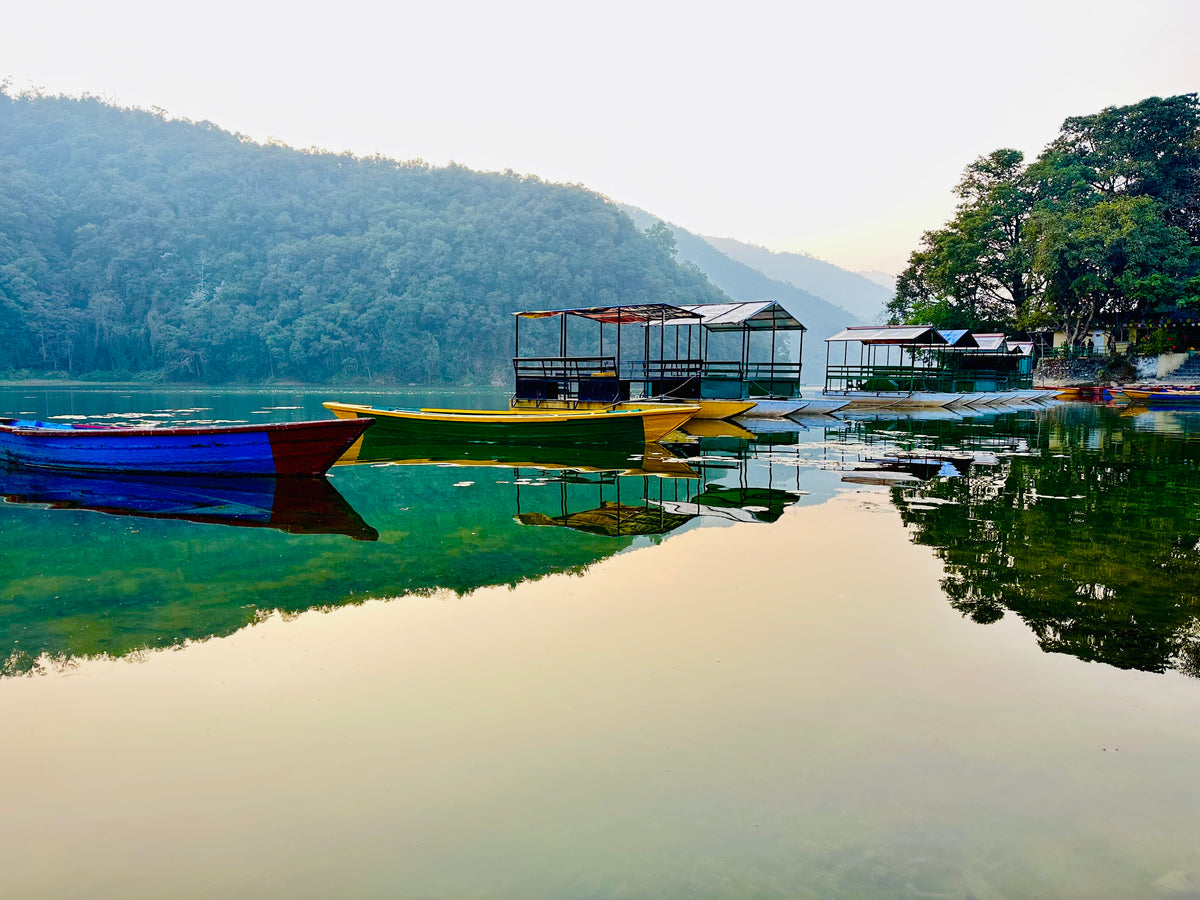
Drive west to Pokhara, Nepal's most beautiful city, where the Annapurna massif and Machhapuchhre reflect in Phewa Lake on clear evenings. The early morning walk to Sarangkot for sunrise over the Annapurna and Dhaulagiri ranges is one of the most celebrated views in Nepal.

Days 13 to 14  |  Nagarkot and Departure

Drive east through the Kathmandu Valley to the hill resort of Nagarkot at 2,195 meters, where the final morning delivers a 360-degree panorama of the central Himalaya from Manaslu in the west to Gauri Shankar in the east. Back to Kathmandu for the international departure.

Day by Day

Day 1  Arrival in Kathmandu

Arrive at Tribhuvan International Airport and transfer to your hotel with a traditional Sherpa welcome. The orientation covers the full itinerary, altitude protocol for the Khumbu section, what to expect at each stage, and what to have ready for the Lukla flight tomorrow morning. Kathmandu at 1,360 meters is a useful night at modest altitude before the rapid gain to Namche. Rest, eat well, sleep early.

Stay: Kathmandu Hotel

Days 2 to 4  Kathmandu to Namche Bazaar  The Khumbu Begins

The Lukla flight leaves early. The 35-minute approach to Tenzing-Hillary Airport crosses the Himalayan foothills at low altitude, threading between ridges before the runway appears on a ledge above the valley: 527 meters of uphill slope ending at a stone wall, with a 600-meter drop behind the departure end. Land, collect gear, and begin walking within the hour.

The trail descends from Lukla to the Dudh Koshi River at Phakding and follows the river north through a valley that changes character with every hour of walking. The forests here are among the finest in the Khumbu: magnolia, giant fir, and rhododendron with trunks as wide as a person's armspan, the branches strung with old-man's-beard lichen. The suspension bridges cross the river repeatedly as the valley narrows, each bridge hung with prayer flags that snap in the valley wind. The climb from the valley floor to Namche gains over 600 meters in the final two hours and arrives at the rim of the natural amphitheater that holds the town. The first view of Namche from above, spread across the curve of the hillside with the ridges of Kongde Ri rising behind it, is one of the arrivals that trekkers remember long after they have forgotten the details of the trail.

Namche Bazaar at 3,446 meters is the Sherpa capital and the last hub before the high peaks. The acclimatization day explores the village and the trail to Khumjung, an older and quieter Sherpa settlement above Namche with a monastery that houses what the local community presents as a Yeti scalp, brought here in the 1950s. The viewpoint above Namche on a clear morning puts Everest above the Lhotse-Nuptse wall for the first confirmed sighting of the route.

Stay: Best Available Mountain Lodges

Days 5 to 8  Thyangboche and the Return  The Sacred Monastery

The trail from Namche to Thyangboche climbs through a transition in vegetation that mirrors the altitude gain precisely. The blue pine and juniper give way to rhododendron as the path rises above 3,500 meters, the branches thickening with moss and lichen. The Tengboche ridge comes into view well before the monastery appears, with Ama Dablam filling the southeast sky above the valley in a profile so clean it looks designed. Thyangboche Monastery sits at 3,875 meters on the crest of the ridge at the junction of the Imja Khola and Dudh Koshi valleys.

The monastery was founded in 1923 and rebuilt after a fire in 1989. It remains the most significant Buddhist institution in the Khumbu region, the site of the annual Mani Rimdu festival, and the spiritual center of Sherpa religious life. The 5-meter figure of Shakyamuni Buddha inside the main prayer hall is one of the largest in the Khumbu. The view from the monastery grounds on a clear morning shows Everest at 8,849 meters, Lhotse at 8,516 meters, Nuptse at 7,861 meters, and Ama Dablam at 6,812 meters simultaneously above the ridgeline. It is the finest unobstructed panorama of the high Himalaya accessible on foot without technical equipment.

Retrace the descent through Namche, Phakding, and back to Lukla over two days. The farewell evening in Lukla with the Sherpa team is a genuine celebration: the small lodges in Lukla have been the departure and arrival point for Himalayan expeditions since the airstrip was built in 1964 and the atmosphere at the end of a successful trek carries its own particular warmth. Morning flight back to Kathmandu and an afternoon at rest in the city.

Stay: Thyangboche Lodge then Mountain Lodges then Kathmandu Hotel

Days 9 to 10  Chitwan National Park  Jungle Safari

Drive south from Kathmandu through the Terai hills, descending from 1,360 meters to roughly 150 meters above sea level over five hours. The air warms noticeably as the road descends, and by the time the flat Terai plains come into view the subtropical landscape feels like a different country from the alpine valley left behind the day before. Chitwan National Park covers 932 square kilometers of riverine forest, tall grassland, and wetland along the Rapti and Narayani rivers. It holds one of the largest populations of the greater one-horned rhinoceros in Asia, along with Bengal tigers, leopards, sloth bears, gharial crocodiles, marsh mugger crocodiles, four species of deer, and over 500 recorded bird species.

The elephant-back safari moves through the tall grass in the early morning, when rhinos are most active and the light through the canopy is still low and golden. The one-horned rhino is a genuinely large animal — adult males can weigh over 2,000 kilograms — and the proximity on elephant back is close enough to hear them move through the grass. The dugout canoe on the Rapti River moves quietly past the sandbanks where gharial crocodiles bask in the morning sun. The gharial is one of the most endangered crocodilian species in the world and the Rapti is one of the few rivers where it remains. The Royal Bengal tiger is present in the park. Sightings depend on the season, the section of forest, and luck. The forest is dense enough that a tiger can be twenty meters away and completely invisible.

Stay: Jungle Safari Resort, Sauraha

Day 11  Pokhara  Lakeside Serenity

Drive west from Chitwan to Pokhara, roughly four hours along the highway that runs parallel to the Narayani River before climbing back into the Himalayan foothills. Pokhara sits at 827 meters beside Phewa Lake, with the Annapurna massif and Machhapuchhre rising directly above the water on clear days. The Fish Tail peak is sacred and has never been climbed by any recorded mountaineering expedition. Its double summit reflected in the lake on a still evening is the image most associated with Pokhara and it earns the association. The afternoon is for the lake: a rowing boat, the small Barahi Temple on its island, the light changing on the water as the afternoon moves toward evening.

Stay: Pokhara Lakeside Hotel

Day 12  Sarangkot Sunrise and Pokhara

Wake before dawn for the walk to Sarangkot hill above Pokhara. The viewpoint looks northwest and north across the full Annapurna massif and west to Dhaulagiri at 8,167 meters, the world's seventh-highest peak. At sunrise on a clear morning the light hits the upper faces of the mountains before the valley below is lit, turning them from deep blue to orange to white in a progression that takes roughly twenty minutes. This is one of the most celebrated sunrise views in Nepal and the altitude of the viewpoint at around 1,600 meters means the peaks are close enough to see individual ridgelines and faces in detail. Remainder of the day at leisure in Pokhara.

Stay: Pokhara Lakeside Hotel

Days 13 to 14  Nagarkot and Departure  The Final Panorama

Drive east from Pokhara back toward Kathmandu and continue past the capital to the hill resort of Nagarkot at 2,195 meters on the eastern rim of the Kathmandu Valley. Nagarkot is known for one thing: the view. On a clear morning the ridgeline to the north is open to a 360-degree panorama that stretches from Manaslu in the west to Gauri Shankar and the peaks above the Rolwaling Valley in the east, with Langtang, Dorje Lakpa, and Choba Bhamare visible between them. Everest is visible on the eastern end of the arc. The view at Nagarkot covers more of the central Himalayan range in a single sightline than almost any accessible viewpoint in Nepal.

Return to Kathmandu on the final morning. The drive from Nagarkot passes through Bhaktapur, the most intact of the medieval cities in the Kathmandu Valley, for a brief stop before the final transfer to Tribhuvan International Airport. Fourteen days. Four landscapes. The highest mountains on earth, one of Asia's finest wildlife sanctuaries, the most beautiful lake city in Nepal, and a final panorama that puts the full arc of the Himalaya in a single view.

Stay: Nagarkot Resort then International Departure

The Sherpa Standard

Every SherpaHolidays journey is fully supported. Here is what that covers for this trip.

Accommodation and Meals

  • Kathmandu: 4 nights of hotel accommodation on a bed and breakfast basis.
  • Mountain and Safari Lodges: 9 nights in hand-selected lodges: the best available teahouses in the Khumbu and a jungle resort in Chitwan.
  • Full Board Trekking and Safari: All meals during the trekking and Chitwan sections: breakfast, lunch, and dinner throughout.
  • Lukla Farewell: Celebratory evening with the Sherpa team in Lukla on the final mountain night.

Leadership and Logistics

  • Lead Guide: One licensed English-speaking trekking guide for the full 14 days.
  • Sherpa Porters: Full porter team at a ratio of one porter per two guests for all heavy luggage on the trek.
  • Altitude Monitoring: Continuous altitude monitoring through the Khumbu section with acclimatization managed by the guide team.

Transport and Logistics

  • Internal Flights: Kathmandu to Lukla and return, for guests and the trekking guide.
  • Private Transfers: All overland travel in private air-conditioned vehicles.
  • Permits and Fees: Everest Conservation Area entry fees, national park fees, and all sightseeing entrance fees covered.


What Is Not Included

  • International airfare to and from Kathmandu
  • Nepal entry visa fees
  • Lunch and dinner while in Kathmandu
  • Personal sleeping bags and specialized trekking clothing
  • Travel and emergency evacuation insurance, mandatory for high-altitude trekking. We can recommend providers.
  • Tips for Sherpa guides and porters
  • Single supplement (for those taking a private room)

Five Moments That Define This Trip

Thyangboche and the Everest Panorama

The view from Thyangboche Monastery at 3,875 meters shows Everest at 8,849 meters, Lhotse, Nuptse, and Ama Dablam simultaneously above the ridgeline, framed by the valley junction below. The monastery has been the spiritual center of the Khumbu since 1923. The panorama from its grounds is the finest view of the high Himalaya accessible on foot without technical climbing. It has no equivalent at this altitude anywhere in the range.

Chitwan and the One-Horned Rhino

The greater one-horned rhinoceros weighs up to 2,000 kilograms and was once hunted almost to extinction across the subcontinent. Chitwan National Park holds one of the last healthy populations in Asia. An elephant-back safari through the tall grass in the early morning puts you at close range in the animal's own habitat, moving quietly enough to observe without disturbing. The Royal Bengal tiger is also present in the park. Whether you see one depends on the forest, the season, and the particular luck of the morning.

Sarangkot at Sunrise

From the viewpoint above Pokhara, the Annapurna massif and Dhaulagiri fill the northern horizon at dawn, turning orange then white as the sun clears the ridges behind you. The altitude of the viewpoint at around 1,600 meters brings the upper faces of the peaks close enough to see individual ridgelines in detail. This is one of the most celebrated sunrise views in Nepal and it earns the reputation every clear morning.

Nagarkot and the Central Himalayan Arc

The ridge at Nagarkot at 2,195 meters is open to a panorama that stretches from Manaslu in the west to Gauri Shankar and the Rolwaling peaks in the east, with Langtang, Dorje Lakpa, and Everest visible across the full arc. This is not a single peak view but a panorama of the entire central Himalayan range in one sightline. On a clear morning it is the most comprehensive view of the Himalaya available from any easily accessible point near Kathmandu.

The Khumbu Ecology

The approach from Lukla to Thyangboche passes through a complete progression of high-altitude forest types: magnolia and giant fir in the lower valley, blue pine and juniper above Namche, rhododendron and moss-draped birch on the approach to the monastery. The forest in the Khumbu is protected within the Sagarmatha National Park and is among the most intact high-altitude forest in the Himalayan region. The suspension bridges, the mani stone walls carved with centuries of accumulated prayer, and the smell of juniper smoke from the lodges along the trail are things that are easy to miss on the ascent and easy to notice on the way down.

Flexible Bookings

Full payment at booking secures your permits, private guides, and all logistics before your departure date. However, there are deposits available to secure your spot.

Travel Dates

Secure your spot with a $500 deposit. The remaining balance is due 60 days before departure.

Trip duration
Availability
Prices from
October 1 – October 14, 2026 (Deposit) Most Popular
Available
$500.00
Remaining spots
10 spots remaining
October 1 – October 14, 2026
Available
$3,175.00
Remaining spots
10 spots remaining
March 1 – March 14, 2027 (Deposit) Most Popular
Available
$500.00
Remaining spots
10 spots remaining
March 1 – March 14, 2027
Available
$3,175.00
Remaining spots
10 spots remaining
November 1 – November 14, 2026 (Deposit) Most Popular
Available
$500.00
Remaining spots
10 spots remaining
November 1 – November 14, 2026
Available
$3,175.00
Remaining spots
10 spots remaining

Things Guests Ask Before Booking

Straight answers about booking, payment and how we run every journey.
  • A $500 deposit secures your spot and your departure date, and the remaining balance is due 60 days before departure. Full payment at booking is also welcome and locks in your permits and logistics immediately.

  • You can cancel free of charge up to 30 days before departure, with full terms on our Terms of Service page. We keep the policy simple because plans change, especially for journeys booked far ahead.

  • Yes. Every guest needs a policy that covers their itinerary, and high-altitude trips need trekking and helicopter evacuation coverage. We are happy to point you to providers our guests have used.

  • Yes. Any departure can run privately on your dates, and we adjust pace, accommodation and rest days around you. If you want a different route entirely, we plan custom itineraries from scratch.

  • Licensed guides from our own Sherpa team lead every journey in Nepal. Beyond Nepal we work with trusted local partners we have known for years, so there is always someone beside you who truly knows the ground.

  • The Sherpa Standard section on this page lists everything included on this journey, from guides and permits to lodges and meals. International flights and travel insurance are the main things you arrange yourself.

Guest Reviews

What Guests Say

5.0 average from 4 Google reviews
Read them on Google

I recently took a trip to Nepal and was met with wonderful service by the staff and amazing tours with the Sherpa guides. The cultural tours were by far my favorite. Highly recommend!!

Avin Fatehi 5/01/2026

Took a trip to Nepal for 10 days and got an amazing tour of the area! Great people, great places 10/10 would go again 🔥🔥

Kevin Ye 4/03/2026

I found Sherpa Holidays when I was looking to do the 23 days Annapurna circuit trek and they not only made me a custom itinerary to fit my needs, but they also made the entire process seamless. Highly recommend Sherpa Holidays for anyone looking to head to Nepal!

Justin Zhang 4/01/2026

The staff were easy to communicate with and I had a wonderful trip.

Jack Cavada 4/01/2026

Reviews shown as published on our Google profile.