
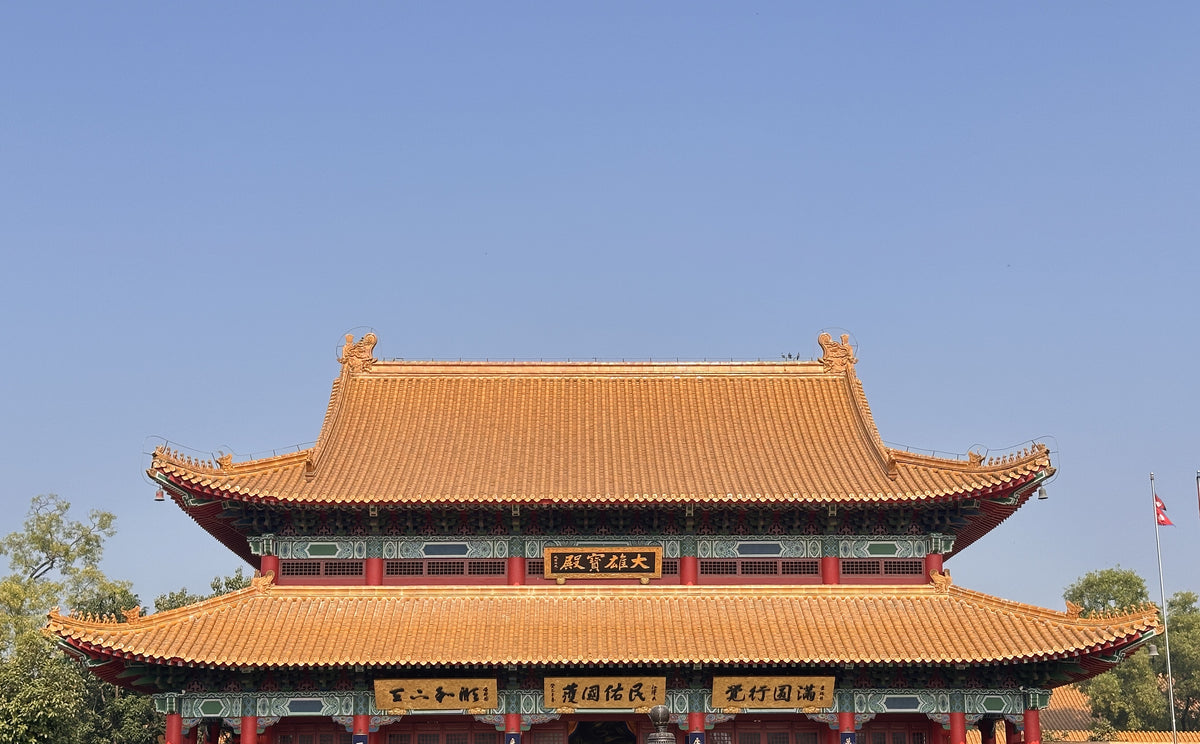
Chinese monastery in Lumbini, Nepal.
Maya Devi Temple in Lumbini, Nepal.
Chinese monastery in Lumbini, Nepal.
Thai monastery in Lumbini, Nepal.
Buddhist Pilgrimage Tour India and Nepal route map

14 Days, Easy

14-Day Buddhist Pilgrimage Tour India & Nepal

From $3,675 per person

  • Next departure Feb 1, 2027
  • Join a group of up to 10, or go private. Large groups welcome.
Duration
14 Days
Best season
Autumn to Spring
Max altitude
1,400m (4,593ft)
Difficulty
Easy

Easy: sightseeing, short walks and gentle hill trails, or a first rafting trip. Nights below 3,000 m (10,000 ft).

We reply within one business day. No payment to ask.

Sherpa guides
Permits & logistics included
Private trips available
Altitude safety expertise
A US company, paid in dollars
Ask about this trip

The four places of the Buddha's life, from his birthplace in Nepal to the place he died in India, in fourteen days.

Buddhism names four places that every serious practitioner should visit once in their lifetime: Lumbini, where Siddhartha Gautama was born; Bodhgaya, where he attained enlightenment under the Bodhi Tree; Sarnath, where he gave his first teaching to five companions in a deer park; and Kushinagar, where he died at the age of eighty, entering the state of final peace that Buddhists call Parinirvana. The four sites span roughly 1,500 kilometers across northern India and southern Nepal, and this fourteen-day trip connects them all.

The circuit is ancient. Buddhist monks have walked these routes since the third century BC, when the Emperor Ashoka marked the sacred sites with stone pillars and paid for monasteries along the way, and many of those pillars still stand. The Bodhi Tree in Bodhgaya is held to be a direct descendant of the tree under which the Buddha meditated, and the deer park at Sarnath has been a place of pilgrimage for over 2,500 years.

The trip begins in Delhi and takes a first-class overnight train to Varanasi, one of the oldest continuously inhabited cities in the world and a fitting place to start. Fourteen days later you are back in Delhi, having walked and driven the whole circuit. Our guides at each site know the Buddhist and Hindu traditions that exist here side by side, and they will tell you what you are looking at and why it matters.

Road travel, rafting, wildlife activities and travel in remote places carry risks of illness, injury and death. Experienced staff, briefings and equipment reduce risk but cannot eliminate it. Your itinerary identifies your guide team, including Sherpa guides on Himalayan routes, and the support and equipment included.

SherpaHolidays Terms and Conditions SH-TC-2026-10-14. Your accepted booking version and mandatory rights remain in effect.

14 Days on the Buddhist Circuit

Days 1 to 2  |  Delhi

Arrive in New Delhi for two days in the capital: the Red Fort, Raj Ghat, the Qutab Minar, at 73 meters the tallest brick minaret in the world, and the Lotus Temple, a Bahai house of worship open to all faiths. Delhi is the gateway, a city built in layers of Mughal grandeur, colonial planning, and the ambitions of independent India, and a good introduction to the subcontinent the Buddha walked across two and a half millennia ago.

Days 3 to 4  |  Varanasi and Sarnath

Take the overnight first-class train from Delhi to Varanasi, one of the oldest continuously inhabited cities in the world and the holiest city in Hinduism. At sunrise a boat takes you along the ghats on the Ganges, where people have bathed and cremated their dead in the same place for at least 3,000 years. Then visit Sarnath, seven kilometers away, where the Buddha gave his first teaching after his enlightenment, the event Buddhists call the First Turning of the Wheel of Dharma.

Days 5 to 6  |  Bodhgaya

A six-hour drive to Bodhgaya, the most sacred site in Buddhism. The Bodhi Tree in the Mahabodhi Temple complex stands on or very near the spot where Siddhartha Gautama sat in meditation for 49 days and attained enlightenment. The 50-meter Mahabodhi Temple was built in its current form in the 5th or 6th century AD and is a UNESCO World Heritage Site. Sit beneath the Bodhi Tree in the early morning, before the crowds arrive. Visitors of every faith, and of none, describe the same deep quiet there.

Days 7 to 8  |  Rajgir and Kushinagar

Drive to Rajgir, the ancient Magadhan capital where the Buddha spent several monsoon seasons, and take the chairlift up Vulture's Peak, the hillside where he gave some of his most important teachings. Continue to Vaishali, the ancient republic where women were first ordained into the Buddhist monastic community and where an Ashokan pillar still marks the spot. End the day in Kushinagar, where the Buddha died at the age of eighty. The 20-foot reclining figure in the Mahaparinirvana Temple shows him in his final posture.

Days 9 to 11  |  Lumbini and Shravasti

Cross the border into Nepal to reach Lumbini, the birthplace of Siddhartha Gautama, in the southwestern Terai. The Mayadevi Temple marks the exact spot of his birth, and the Pushkarni Pool is where the newborn prince had his first bath. The ruins of Tilaurakot in nearby Kapilvastu are all that remain of the palace where he spent the first 29 years of his life, before he left to seek the truth. Then drive to Shravasti, where the Buddha spent 25 monsoon seasons teaching in the Jetavana gardens.

Days 12 to 14  |  Return to Delhi

Leave Shravasti for Lucknow and the connection back to Delhi. Your final day in the capital is free for rest, the National Museum's Buddhist collection, or the last of the city's markets, and then we take you to Indira Gandhi International Airport for your departure.

Day by Day

Days 1 to 2  Imperial Delhi  Mughal Grandeur and Modern Peace

Arrive at Indira Gandhi International Airport, where we welcome you in the traditional way and take you to your hotel. Day One is in the old city. The Red Fort, built by Shah Jahan in 1638, is a complex of palaces and audience halls inside 2.5 kilometers of red sandstone walls, and it was the seat of Mughal power for nearly 200 years. Raj Ghat is the simple black marble platform where Mahatma Gandhi was cremated on January 31, 1948. The eternal flame has burned here since that day, and the garden around it is one of the quietest places in Delhi.

Day Two covers the monuments of India's longer history and its many faiths today. The Qutab Minar, begun in 1193 and completed in the early 13th century, is the tallest brick minaret ever built and part of the first mosque built in India after the Islamic conquest of the subcontinent. The Lotus Temple, completed in 1986, is a Bahai house of worship in the shape of a half-open lotus flower, open to visitors of any faith, who are asked only to keep silent inside. The Qutab Minar is a UNESCO World Heritage Site, and together they show Delhi at its best, a city where different traditions live side by side.

Stay: New Delhi Hotel

Days 3 to 4  Varanasi and Sarnath  The Eternal City and the First Teaching

Board the overnight first-class air-conditioned train from New Delhi to Varanasi, one of the great rail trips in India: 14 hours across the flat Gangetic plains to one of the oldest continuously inhabited cities in the world. Settle into the hotel and go down to the river before the sun rises. A private boat moves slowly along the ghats as the city wakes: pilgrims bathe in the Ganges, priests perform puja on the stone steps, and smoke from the cremation fires at Manikarnika Ghat drifts across the water. Hindus believe the Ganges here can grant liberation from the cycle of rebirth, and the city has lived by that belief for at least 3,000 years.

Sarnath, seven kilometers north of Varanasi, feels very different: quieter and more orderly, with the excavated ruins of monasteries and stupas spread across a park instead of stacked above a riverbank. This is the Deer Park where the Buddha, after attaining enlightenment at Bodhgaya, walked to meet five former companions and gave his first teaching. Buddhists call this event the First Turning of the Wheel of Dharma. The Dhamekh Stupa, built in the 5th century AD to mark the spot, rises 43 meters above the park. The Archaeological Museum holds the Lion Capital of Ashoka, carved in the 3rd century BC and now the national emblem of India.

Stay: Varanasi Hotel

Days 5 to 6  Bodhgaya  The Moment of Enlightenment

A six-hour drive east from Varanasi brings you to Bodhgaya in the afternoon. Bodhgaya is the most sacred site in Buddhism. Here Siddhartha Gautama, after years of ascetic practice that nearly killed him, sat down beneath a fig tree on the banks of the Niranjana River and vowed not to move until he understood the nature of suffering and the way to end it. He stayed in meditation for 49 days, and what he understood beneath that tree became Buddhism.

The Mahabodhi Temple complex surrounds the site. The temple in its current form dates to the 5th or 6th century AD, though there has been a structure here since the time of Ashoka in the 3rd century BC. It is a UNESCO World Heritage Site and one of the oldest brick structures in the Indian subcontinent. The Bodhi Tree in the temple courtyard is held to be a direct descendant of the original, grown from cuttings that Ashoka's daughter took to Sri Lanka and that were brought back to Bodhgaya when the original was destroyed. Whether or not that line is continuous, the tree has been venerated here for over 2,000 years. Come in the early morning, before most pilgrims arrive. Bring something to sit on, and take your time.

Stay: Bodhgaya Hotel

Days 7 to 8  Rajgir and Kushinagar  Peaks of the Magadhan Kings

Drive north to Rajgir, the ancient capital of the Magadha kingdom, where the Buddha spent several monsoon retreats under the patronage of King Bimbisara. Vulture's Peak, the Gridhrakuta hill, was his favorite place to teach during these stays, and it is here that he is said to have given the Lotus Sutra and other foundational Mahayana texts. The chairlift to the top passes the Japanese-funded Viswa Shanti Stupa, a white peace pagoda of the kind built at several sacred sites across Asia after the war. From the peak you look over the valley of Rajgir and the forested ridges on all sides, much as the Buddha would have.

Vaishali, farther north, was an ancient republic rather than a kingdom, one of the first democratic governments in recorded history. The Buddha visited it several times. It is where Ananda, his closest disciple, persuaded him to allow women to be ordained into the monastic community, the first time women were given full ordination in Buddhism. The Ashokan pillar still stands in the field where it was placed in the 3rd century BC. Kushinagar, the final stop, is where the Buddha died at the age of eighty. The Mahaparinirvana Temple houses the 5th-century reclining figure that shows him in his final posture, lying on his right side and facing west, in the state of final peace. The Muktabandhana Stupa nearby marks the site of his cremation.

Stay: Rajgir and Kushinagar Hotels

Days 9 to 11  Lumbini and Shravasti  The Birthplace and the Teaching Years

Cross the border into Nepal and enter the southwestern Terai, a flat subtropical lowland very different from the Himalayan Nepal most visitors picture. Lumbini is a UNESCO World Heritage Site and the confirmed birthplace of Siddhartha Gautama, born here around 563 BC to Queen Mayadevi and King Suddhodana of the Shakya clan. The Mayadevi Temple, rebuilt several times over the centuries and last excavated and restored in the 1990s, stands over the marker stone that identifies the exact spot of his birth. The Pushkarni Pool, in the sacred garden where Queen Mayadevi bathed before the birth, is still part of the complex. The Ashokan pillar raised here in 249 BC, inscribed with the emperor's declaration that this is the birthplace of the Buddha, still stands.

The excursion to Tilaurakot in Kapilvastu, about 27 kilometers from Lumbini, visits the ruins of the palace complex where Siddhartha spent his first 29 years. The remains are modest, but this is where he lived as a prince, married, and had a son, and where, the traditional account says, he looked over the palace wall and saw an old man, a sick man, a corpse, and a wandering ascetic, the four sights that set him on his path. On the last day of this section, drive to Shravasti. The Buddha spent 25 consecutive monsoon seasons teaching in the Jetavana gardens here, given to the monastic community by a merchant who is said to have paid for the land in gold coins laid end to end. The ruins of the Jetavana Monastery complex are the most extensive Buddhist archaeological site in northern India.

Stay: Lumbini and Shravasti Hotels

Days 12 to 14  Return to Delhi

Leave Shravasti for the drive to Lucknow, the capital of Uttar Pradesh, and the rail or road connection back to Delhi. The route follows the general arc of the circuit in reverse, from the teaching years in the west back across the Gangetic plain to the capital. You arrive in Delhi in the evening for the final night.

Day Thirteen is free. The National Museum in Delhi has one of the best collections of Buddhist art in the world: Gandharan sculpture, bronzes, and illuminated manuscripts, along with the full sweep of the subcontinent's art. The markets of Connaught Place and Lodi Colony are your last chance for crafts and textiles, and by the end of the trip you will know what you want to take home. A private transfer takes you to Indira Gandhi International Airport on the morning of Day Fourteen for your departure.

Stay: New Delhi Hotel

The Sherpa Standard

Every SherpaHolidays trip is fully supported. Here is what that means on this one.

Accommodation and Meals

  • Delhi and Varanasi: Luxury hotels on a bed and breakfast basis.
  • Pilgrimage Sites: Premium hotel stays in Bodhgaya, Lumbini, and Shravasti.
  • Full Board on Circuit: All meals from Bodhgaya through to Shravasti: breakfast, lunch, and dinner throughout the pilgrimage section.
  • Airport Welcome: Traditional welcome garlands and a spiritual orientation briefing on arrival.

Leadership and Logistics

  • Circuit Escort: Dedicated English-speaking pilgrimage escort and tour manager for the full 14 days.
  • Site Specialists: Local specialist guides at Sarnath, Bodhgaya, and Lumbini who know Buddhist history and practice in depth.
  • Border Management: Full support for the India-Nepal border crossings into and out of Nepal for the Lumbini visit, including all documentation.
  • 24/7 Support: Round-the-clock in-country support from regional offices for the whole trip.

Transport and Experiences

  • Heritage Rail: First-class air-conditioned sleeper train from New Delhi to Varanasi.
  • Private Vehicles: All overland travel in premium air-conditioned private vehicles.
  • Ganges Boat Charter: Private boat for the sunrise Aarti ceremony on the Ganges in Varanasi.
  • Rajgir Chairlift: Chairlift tickets to Vulture's Peak included.
  • Entry Fees: All monument entrance fees, border fees, and site access charges covered.


What Is Not Included

  • International airfare to and from New Delhi
  • Indian and Nepalese entry visa fees
  • Lunch and dinner while in New Delhi and Varanasi
  • Personal spiritual offerings, incense, and donations at temples
  • Comprehensive travel insurance, which is a condition of every booking. Your policy must cover emergency medical treatment, emergency evacuation, trip cancellation and interruption, and repatriation. We can recommend providers.
  • Tips for the tour escort, local guides, and drivers
  • Personal expenses including laundry and telephone calls
  • Single supplement (for those taking a private room)

Five Highlights

The Bodhi Tree at Bodhgaya

The fig tree in the Mahabodhi Temple courtyard stands on or very near the spot where Siddhartha Gautama attained enlightenment after 49 days of meditation. It is held to be a direct descendant of the original, grown from cuttings taken to Sri Lanka in the 3rd century BC. Whether or not that line is unbroken, the tree has been the most sacred object in Buddhism for over 2,000 years. In the early morning, before most pilgrims arrive, it is one of the quietest places on the whole circuit.

Sunrise on the Ganges at Varanasi

A private boat takes you along the ghats before the sun is fully up, as Varanasi carries out the rituals it has performed in this same place for at least 3,000 years: bathing, puja, cremation, and pilgrims moving up and down the stone steps. This is one of the oldest continuously inhabited cities in the world, seen from the water at first light, on the river whose banks the Buddha walked.

Vulture's Peak at Rajgir

On this hillside above Rajgir the Buddha gave some of the most important teachings in the Mahayana canon, including, by tradition, the Lotus Sutra and the Heart Sutra. A chairlift climbs over forested ridges to the top, where the view has hardly changed in 2,500 years. The peace stupa at the top was built in the 20th century; the hill's importance is much older.

Lumbini and Tilaurakot

Lumbini, in southwestern Nepal, is the UNESCO-listed garden where Queen Mayadevi gave birth to Siddhartha Gautama around 563 BC. The modest ruins of Tilaurakot palace, 27 kilometers away, are where he spent the first 29 years of his life. The Ashokan pillar at Lumbini, inscribed in 249 BC, is the oldest historical record of the Buddha's existence.

The Reclining Buddha at Kushinagar

The 5th-century figure in the Mahaparinirvana Temple shows the Buddha at his death, lying on his right side, face turned west, in the posture Buddhists call the lion's pose. He was eighty years old and had been teaching for forty-five years. The face is calm, and pilgrims come from across the Buddhist world to sit with it. The Muktabandhana Stupa nearby marks the site of his cremation.

Travel dates

The deposit is part of the total price, not an additional fee.

  • February 1 – 14, 2027 Available
    $3,675 per person
  • March 1 – 14, 2027 Available
    $3,675 per person
  • October 15 – 28, 2027 Available
    $3,675 per person

Scheduled departure deposit: $500 per person for bookings more than 90 days before departure

Private journey deposit: 30% of the trip price for bookings more than 90 days before departure

Final balance: Due 90 days before departure. Bookings made 90 days or fewer before departure are paid in full at booking.

Our conditions promise: A qualifying Nepal advisory change or trek-region closure within 60 days of departure lets you move dates free or take full credit for 24 months.

Scheduled departures: No minimum group size

SherpaHolidays Terms and Conditions SH-TC-2026-10-14. Your accepted booking version and mandatory rights remain in effect.

Questions about this trip?

Ask Sam or Gyalgin

We reply within one business day. No payment, no commitment.

Loading the inquiry form…

This is an inquiry, not a booking. Nothing is charged here.

  • Within one business day We reply within one business day.
  • Then A call, if you would like one.
  • When you are ready A deposit holds your place.

Or talk to us directly:

+1 (855) 743-7725 info@sherpaholidays.com

Things guests ask before booking

Straight answers about booking, payment and how we run every trip.

  • Sarnath, where the Buddha gave his first teaching; Bodhgaya and the Mahabodhi Temple; Rajgir and Vulture's Peak; Vaishali; Kushinagar, where he died; Lumbini in Nepal, his birthplace; and Shravasti. You also spend time in Delhi and see the sunrise on the Ganges in Varanasi.

  • By overnight first-class, air-conditioned sleeper train from Delhi to Varanasi, then by private, air-conditioned vehicle. Some drives are long, such as the six hours from Varanasi to Bodhgaya.

  • Yes, you need both. The route crosses from India into Nepal for Lumbini and then back into India for Shravasti, so tell us your nationality and we will tell you which Indian visa to apply for. Visa fees are not included. We help with the paperwork at the border crossing.

  • In hotels in Delhi and Varanasi with breakfast, and in hotels in Bodhgaya, Lumbini and Shravasti. All meals are included from Bodhgaya through Shravasti. In Delhi and Varanasi, lunch and dinner are on your own.

  • An English-speaking escort and tour manager stays with you for all 14 days. At Sarnath, Bodhgaya and Lumbini, local guides who know Buddhist history and practice in depth join you.

  • Groups of up to 10, or private for your own group. Scheduled group dates have no minimum, so they run with any number of guests. Large groups welcome.

  • The deposit is part of the total price, not an additional fee. A scheduled booking made more than 90 days before departure requires $500 per person. A private journey booked more than 90 days before departure requires 30% of the trip price. The balance is due 90 days before departure. At 90 days or fewer, full payment is due at booking. Your disclosure and invoice state the exact amounts and dates.

    Once your deposit is received, your price is locked except for government taxes, park fees or levies introduced after that date. We tell you in writing as soon as we learn of one and identify its amount and basis. A different route, hotel upgrade or optional activity is not an automatic extra charge; any additional cost requires your agreement before it is booked.

    SherpaHolidays Terms and Conditions SH-TC-2026-10-14. Your accepted booking version and mandatory rights remain in effect.

  • Scheduled departure deposit
    $500 per person for bookings more than 90 days before departure

    Private journey deposit
    30% of the trip price for bookings more than 90 days before departure

    Final balance
    Due 90 days before departure. Bookings made 90 days or fewer before departure are paid in full at booking.

    You cancel 90 or more days before departure
    Your deposit becomes credit toward any SherpaHolidays trip for 24 months. Payments above the deposit are refunded, subject only to a specific supplier exception disclosed and accepted before payment.

    You cancel 89 to 60 days before departure
    Cancellation charge: 50% of the total trip price

    You cancel 59 to 46 days before departure
    Cancellation charge: 75% of the total trip price

    You cancel 45 days or fewer before departure
    Cancellation charge: 100% of the total trip price. No refund.

    Our conditions promise
    A qualifying Nepal advisory change or trek-region closure within 60 days of departure lets you move dates free or take full credit for 24 months.

    We cancel or cannot provide contracted services
    Refunds for services not provided as required by California law. An alternative or credit is your choice, not a required substitute.

    Scheduled departures
    No minimum group size

    The traveler-cancellation table does not remove our conditions promise, rights under an already accepted booking, or refunds and other rights required by law.

    If the US State Department raises Nepal to Level 3 or higher, or your trek region is closed, within 60 days of departure, you can move your dates free or take full credit toward any SherpaHolidays trip for 24 months. This applies instead of the normal traveler-cancellation charges, including the 45-day rule and any supplier cancellation exception.

    Full credit means the payments you made for the affected trip, not only the deposit. We record the trigger and your choice in writing. The credit follows Section 4's use and validity terms. A free date move has no change fee; we disclose any price difference for the replacement trip before you decide. The promise does not replace a cash refund owed when we cancel or cannot provide contracted services.

    SherpaHolidays Terms and Conditions SH-TC-2026-10-14. Your accepted booking version and mandatory rights remain in effect.

  • Comprehensive travel insurance is a condition of every booking. Your policy must cover emergency medical treatment, emergency evacuation, trip cancellation and interruption, and repatriation. Confirm with your insurer that it covers your itinerary's activities and maximum altitude, including technical climbing, rafting, helicopter evacuation and search and rescue where applicable. Provide proof before departure. Consider obtaining cover when you book because some benefits have purchase deadlines.

    We are not your insurer. Receiving your documents is not a determination of coverage and does not guarantee payment of a claim. Medical and evacuation providers may require payment in advance. Keep insurer emergency details available during your trip.

    SherpaHolidays Terms and Conditions SH-TC-2026-10-14. Your accepted booking version and mandatory rights remain in effect.

  • Yes. Any departure can run privately on your dates, and we adjust pace, accommodation and rest days around you. If you want a different route entirely, we plan custom itineraries from scratch.

  • Guides from our own Sherpa team lead every trip in Nepal. Beyond Nepal we work with trusted local partners we have known for years, so there is always someone beside you who knows the ground well.

  • The Sherpa Standard section on this page lists everything included on this trip, from guides and permits to lodges and meals. International flights and travel insurance are the main things you arrange yourself.

Guest reviews

What guests say

5.0 average from 5 Google reviews
Read them on Google
I recently took a trip to Nepal and was met with wonderful service by the staff and amazing tours with the Sherpa guides. The cultural tours were by far my favorite. Highly recommend!!
Avin Fatehi
Took a trip to Nepal for 10 days and got an amazing tour of the area! Great people, great places 10/10 would go again 🔥🔥
Kevin Ye
I found Sherpa Holidays when I was looking to do the 23 days Annapurna circuit trek and they not only made me a custom itinerary to fit my needs, but they also made the entire process seamless. Highly recommend Sherpa Holidays for anyone looking to head to Nepal!
Justin Zhang
The staff were easy to communicate with and I had a wonderful trip.
Jack Cavada

Reviews shown as published on our Google profile.