
Square with traditional architecture and people walking around
Person with a backpack reflected in a window with a scenic background
Statue with intricate detailing in front of a traditional building with red roof
Square with traditional architecture and people walking around
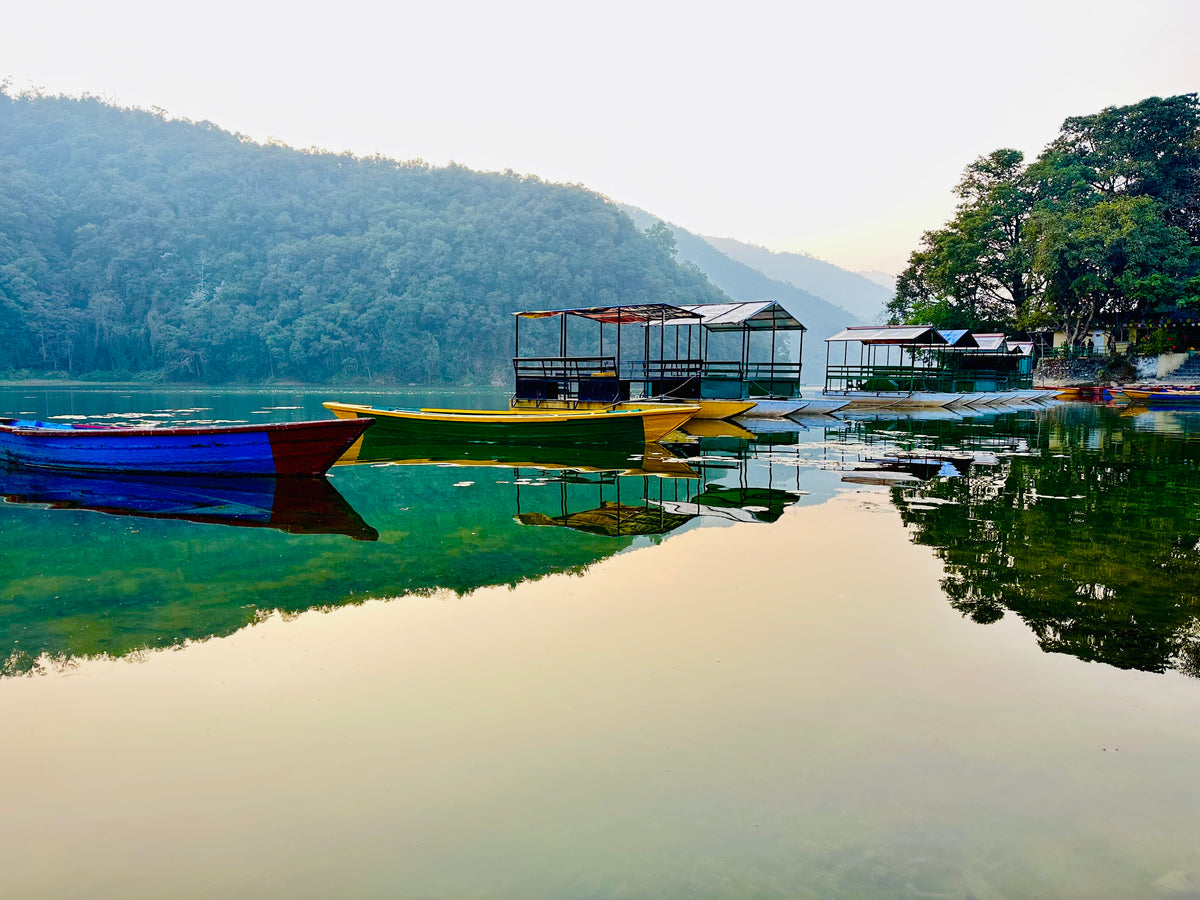
Colorful boats on a lake with green hills and a cloudy sky
Paragliders flying over Pokhara landscape with mountains and a lake.
Map of Chitwan National Park with rhinos and surrounding areas on a light yellow background.
FREE CANCELLATION UP TO 30 DAYS BEFORE DEPARTURE. FULL TERMS APPLY.

9-Day Nepal Highlights Premium Tour

Starting From
$2,675.00
Duration
9 Days
Best Season
Autumn
Max Altitude
1,592m (5223ft)
Comfort Level
Relaxing
Dates & Prices


Full payment at booking secures your permits, private guides, and all logistics before your departure date.

Licensed Sherpa Guides
Permits & Logistics Included
Private Journeys Available
Altitude Safety Expertise

Nine days across the full breadth of Nepal. Ancient cities, jungle wilderness, lakeside mountains, and the sacred streets of the valley: a complete experience of the kingdom in one journey.

Nepal is a small country with an extraordinary range of landscapes and cultures compressed within its borders. The Kathmandu Valley contains more UNESCO World Heritage Sites per square kilometre than almost anywhere else on earth. The Terai lowlands at the base of the Himalayan foothills shelter one of the finest wildlife reserves in Asia. The Pokhara valley sits below the full southern face of the Annapurna range within sight of peaks that most of the world knows only from photographs. This nine-day journey is designed to cover all three in a sequence that builds from the cultural to the natural to the panoramic, and then returns to the sacred for the final days.

The Kathmandu Valley days begin at Swayambhunath, the hilltop stupa above the city that has been a centre of Buddhist practice for over two thousand years, and move through Patan’s medieval Durbar Square and the living tradition of Kumari, the child deity maintained at the heart of the old city. Bhaktapur, the best-preserved of the three medieval royal cities, provides the Golden Gate and the Peacock Window: two of the finest examples of Newari craftsmanship visible anywhere in the valley. Dhulikhel on its hillside above the valley closes the cultural section with panoramic views of the Himalayan chain at sunset.

The drive south to Chitwan crosses the Terai, the subtropical lowland that separates the Himalayan foothills from the Indian plains. Chitwan National Park is a UNESCO World Heritage Site and the habitat of the one-horned rhinoceros, the Bengal tiger, the gharial crocodile, and over 500 species of birds. The elephant-back safari and the canoe journey on the Rapti River are the approaches that allow close contact with the wildlife in its own terrain. Professional naturalists lead every activity, and the knowledge they bring to the jungle is the difference between a wildlife sighting and an understanding of what you are looking at.

Pokhara occupies a position unlike any other lakeside city in the world: the Annapurna range rises directly above the northern shore of Phewa Lake, and on a clear morning the reflection of the peaks on the water is one of the most photographed views in Nepal. The predawn drive to Sarangkot at 1,592 metres provides the sunrise panorama of the full Annapurna massif and Dhaulagiri: a view that requires the early start to catch and rewards it completely. The return to Kathmandu for Boudhanath and Pashupatinath, and the farewell dinner with traditional Newari food and folk dances, closes a journey that has covered Nepal from the medieval to the wild to the sacred.

Nine Days Across Three Worlds

Days 1 to 2  |  Kathmandu Valley

Arrive in Kathmandu and begin with the city’s most significant sites. Swayambhunath, the hilltop stupa known as the Monkey Temple, provides the first overview of the valley from its position above the western edge of the city. Patan Durbar Square, a medieval royal court complex built in the Newari tradition, is among the finest surviving examples of the craftsmanship that produced the stone carvings, gilt rooftops, and intricate timber facades of the valley’s religious architecture. Kathmandu’s Durbar Square in the old city includes the Kumari Ghar, the residence of the living goddess, and the medieval temples and palaces of the former royal precinct. The optional Everest Mountain Flight on the morning of Day 2 offers a fly-past of the Himalayan giants from a small aircraft for those who want to see the peaks before the mountain sections of the journey.

Day 3  |  Bhaktapur and Dhulikhel

The third day moves east from Kathmandu to Bhaktapur and then to Dhulikhel. Bhaktapur is the most intact of the three medieval cities and the one that most rewards slow walking: the lanes within the old city are car-free and the Newari architecture that lines them is preserved in a concentration that the other two valley cities cannot match. The Golden Gate at the entrance to the Palace of Fifty-Five Windows is the most celebrated specimen of gilt repousse metalwork in Nepal. Dhulikhel at 1,440 metres on the valley rim above the city offers panoramic views of the Himalayan chain: on a clear evening, the range from Ganesh Himal in the west to Numbur in the east is visible as a continuous wall of snow above the valley.

Days 4 to 5  |  Chitwan National Park

The drive south to Chitwan crosses the Mahendra Highway through the Terai, the subtropical lowland at the foot of the Siwalik hills. Chitwan National Park protects 932 square kilometres of sal forest, grassland, and riverine habitat that is the primary stronghold of the greater one-horned rhinoceros in Nepal. The elephant-back safari takes the group into grassland and forest terrain that is inaccessible on foot and allows close approach to rhinos, deer, and birds at a height that minimises disturbance. The canoe journey on the Rapti River is quieter still: the dugout moves silently past mugger crocodiles on the sandbars and gharials in the deeper channels, the birds visible on both banks, the forest reflected in the still water. Professional naturalists from the park lead every activity.

Days 6 to 7  |  Pokhara and Sarangkot

The journey west to Pokhara follows the Prithvi Highway through the middle hills, the Annapurna range appearing above the valley rim as the road approaches the lake city. Pokhara sits closer to the high Himalaya than almost any other town of comparable size in Nepal: the south face of the massif rises directly above the northern shore of Phewa Lake and is visible from the city streets. The predawn drive to Sarangkot at 1,592 metres arrives at the viewpoint in time for sunrise: the Annapurna range from Dhaulagiri in the west to Lamjung Himal in the east, lit from below by the first light while the surrounding terrain is still in shadow. The rest of the day is spent at lake level: a boat ride on Phewa Lake, the Barahi Temple on its island in the lake, and David’s Fall nearby.

Days 8 to 9  |  Boudhanath, Pashupatinath, and Farewell

The return to Kathmandu closes the journey with the two sacred sites that the first days did not include. Boudhanath, one of the largest stupas in the world, is the centre of the Tibetan Buddhist community in Kathmandu and the place where the ritual of circumambulation, turning the prayer wheels and walking the circle around the dome, is conducted by monks, nuns, and lay practitioners at all hours of the day. Pashupatinath on the Bagmati river is the most sacred Hindu site in Nepal: the cremation ghats, the sadhus in their ochre robes, and the continuous activity of a living temple make it a place that demands an unhurried visit. The farewell dinner that evening, with traditional Newari cuisine and folk dancing, closes a nine-day journey that has covered the full range of what Nepal offers a traveller.

Day by Day

Days 1 to 2  Kathmandu  The Ancient Valley

Arrive at Tribhuvan International Airport and transfer to the boutique hotel with a warm welcome and the first orientation of the Kathmandu Valley. The city at 1,350 metres sits in a bowl surrounded by forested hills, the valley floor filled with the medieval cities, sacred sites, and residential neighbourhoods that have accumulated here over two millennia of continuous settlement. The briefing that first evening covers the nine-day itinerary in full: the route from the valley to Chitwan and Pokhara and back, the activities at each destination, the accommodation, and the practical details of the journey.

Swayambhunath on the morning of Day 1 is reached by climbing the 365 steps of the eastern staircase, the approach lined with prayer wheels and stone carvings worn smooth from centuries of contact. The stupa at the summit, with its painted eyes and the layers of Buddhist symbolism in its architecture, has been in this position above the valley since before the medieval cities were built below it. The site is called the Self-Existent because the tradition holds that the lotus from which it grew emerged from the valley lake spontaneously, without human agency. Patan Durbar Square in the afternoon is the finest of the three valley squares for its concentration of temple architecture: the stone courtyards, the gilt rooftops, and the Krishna Mandir, a seventeenth-century temple built entirely in stone in a style more common to southern India than to Nepal, reflecting the breadth of the artistic tradition that the Malla kings of Patan drew on.

Kathmandu Durbar Square on Day 2 includes the Kumari Ghar, the residence of the Kumari, a young girl selected through a rigorous process to serve as the living embodiment of the goddess Taleju until puberty. The tradition of the living goddess is specific to the Newar culture of the Kathmandu Valley and has no direct equivalent elsewhere in the world. The square around the Kumari Ghar contains the Hanuman Dhoka palace complex, the former royal residence of the Shah kings before the move to the Narayanhiti Palace in the nineteenth century, its courtyards and museum providing the most detailed account of Kathmandu’s royal history available in the city. The optional Everest Mountain Flight, if taken on this morning, departs from the domestic terminal at sunrise and flies east along the Himalayan chain, the peaks visible through the aircraft windows from Everest at 8,849 metres to Kanchenjunga at 8,586 metres in a single morning arc.

Stay: Luxury Boutique Hotel in Kathmandu

Day 3  Bhaktapur and Dhulikhel  Artistic Horizons

Bhaktapur, the easternmost of the three medieval cities, is reached by road from Kathmandu in forty minutes. The city was the capital of the Malla kingdom from the twelfth to the fifteenth centuries and its historic core has been preserved with a care that the other two cities have not always matched: the lanes within the old town are free of motor traffic, the facades are maintained, and the Newari craftsmanship in stone and timber is visible at a concentration that makes the city feel genuinely medieval rather than restored. The Golden Gate at the entrance to the Palace of Fifty-Five Windows is one of the most cited individual artworks in Nepal: a gilt repousse doorway whose level of detail in the metalwork has led it to be described as the most beautiful example of its kind in the world. The Peacock Window nearby, a carved stone and timber lattice of peacock feathers worked by artisans across generations, represents the woodcarving tradition at its peak.

Dhulikhel at 1,440 metres is a short drive east from Bhaktapur along the Arniko Highway, the road to the Chinese border that passes over the valley rim into the middle hills. The town itself is a quiet Newari settlement whose main claim on visitors is the view from its eastern ridge: the Himalayan chain from Ganesh Himal in the west to the Numbur group in the east, visible as a continuous wall of snow above the lower ridgelines when the air is clear. In the late afternoon and at sunset, the light on the peaks changes through the full range from gold to orange to pink to grey, and the view from the hilltop resorts above the town is one of the finest Himalayan panoramas available without leaving the road network. The evening here is quieter than Kathmandu and the pace appropriate for a last night before the journey south.

Stay: Panoramic Hillside Resort in Dhulikhel

Days 4 to 5  Chitwan National Park  Into the Wild

The drive south from Dhulikhel to Chitwan drops through the Terai in a sequence of ecological zones that covers more than 1,000 metres of altitude in two hours: the middle hills, the Siwalik foothills, and then the flat subtropical lowland of the Rapti valley where the national park begins. Chitwan is Nepal’s first national park, established in 1973 and declared a UNESCO World Heritage Site in 1984. The park protects 932 square kilometres of sal forest, riverine grassland, and wetland that is the primary habitat of the greater one-horned rhinoceros in Nepal, with a population that has recovered from fewer than 100 individuals in the 1960s to over 700 today. The recovery is one of the most successful large-mammal conservation stories in Asia and the park staff who led it are still working here.

The elephant-back safari on Day 4 enters the grassland and sal forest terrain in the morning, when the wildlife is most active. The height of the elephant allows a vantage over the tall grass that is not possible on foot, and the approach to rhinos at close range is something the elephant’s presence facilitates in a way that a vehicle cannot replicate. The professional naturalists who lead the safari provide identification and ecological context for everything encountered: the birds, the deer species, the signs of tiger presence, and the rhinos themselves. The canoe journey on the Rapti River the following morning is a different experience: the dugout moves in silence past the sandbar crocodiles and the gharials in the deeper channels, the river birding excellent at this hour, the forest on both banks reflected in the still water before the morning wind arrives.

The evenings at the jungle lodge include presentations by the naturalist team on the ecology of the park, the conservation history, and the wildlife most likely to be encountered. The lodge itself sits at the park boundary with the forest visible from the rooms and the sounds of the jungle present at night. The full-board arrangement at Chitwan, with all meals provided at the lodge, reflects the reality that the park is not a place where independent restaurant dining makes sense.

Stay: Premium Jungle Lodge in Chitwan

Days 6 to 7  Pokhara and Sarangkot  Lakeside Romance

The drive west from Chitwan to Pokhara follows the Prithvi Highway along the base of the Himalayan foothills, the mountains visible above on the left for much of the journey. Pokhara at 800 metres is the second city of Nepal and its most visited tourist destination, a position it holds because the combination it offers, an attractive lake city in a warm subtropical climate directly below a major Himalayan massif, is not replicated anywhere else in Nepal or the region. The Annapurna range rises above the northern shore of Phewa Lake in a wall that on clear days is visible from the city streets, and Machhapuchhre, the sacred and unclimbed peak whose double summit gives it the local name Fishtail, occupies the centre of the view in a position of dramatic proximity.

The predawn drive to Sarangkot on the morning of Day 7 starts before 5am, the road climbing the hillside above Pokhara in darkness to arrive at the viewpoint at 1,592 metres before the first light. The sunrise from Sarangkot is the most visited mountain viewpoint in Nepal: the full Annapurna range from Dhaulagiri in the west through Annapurna I, Annapurna South, Hiunchuli, Machhapuchhre, and the Annapurna II and IV group to Lamjung Himal in the east, lit from below while the surrounding hills are still dark. The quality of the light in the minutes around sunrise, the colour moving across the faces of the peaks as the sun clears the eastern ridge, is different from what a midday view of the same mountains offers. The boat ride on Phewa Lake after breakfast, with the reflection of the peaks on the water in the still morning air, provides a different encounter with the same view from a lower angle. The Barahi Temple on its small island in the lake is reached by rowing boat and offers both a place of active Hindu worship and a position in the middle of the lake with the mountains on all sides.

Stay: Luxury Lakeside Hotel in Pokhara

Days 8 to 9  Kathmandu  Boudhanath, Pashupatinath, and Farewell

The return to Kathmandu is by road or a short flight that passes the Manaslu and Ganesh Himal groups on the eastern approach, the mountains visible from the aircraft in the clear morning air. The final days in Kathmandu are devoted to the two sacred sites that the first days did not include. Boudhanath, one of the largest stupas in the world, was built in the eighth century at a crossroads on the old trade route between Nepal and Tibet and has been in continuous use since. The Tibetan Buddhist community that has made the neighbourhood around the stupa its centre since 1959 has built monasteries on all four sides of the dome, and the ritual of circumambulation, conducted by monks, nuns, and lay practitioners from early morning until late evening, gives the site a quality of continuous spiritual activity that the purely architectural account of it does not convey.

Pashupatinath on the Bagmati river is the most sacred Hindu site in Nepal and one of the most important Shiva temples in the world. The main temple complex is accessible only to Hindus, but the surrounding ghats, the courtyards, the sadhus who receive visitors in the open areas, and the cremation fires on the river bank are all visible from the eastern bank and observable with the unhurried attention they deserve. The site is not staged for tourism: the cremations, the rituals, the sadhus, and the pilgrims are all there because this is a living place of worship, not because visitors have been arranged to see them. The farewell dinner that evening at a traditional Newari restaurant, with the full menu of a cuisine that is specific to the Newar people of the Kathmandu Valley and the folk dancing that accompanies it, is the appropriate close to a journey that began in the medieval streets of the same valley nine days earlier.

Stay: Luxury Boutique Hotel in Kathmandu

The Sherpa Standard

Every SherpaHolidays journey is fully supported from arrival to departure. Here is what that covers for this nine-day programme.

Accommodation and Meals

  • Boutique Hotels: Luxury boutique hotel accommodation in Kathmandu on arrival and return, a panoramic hillside resort in Dhulikhel, and a luxury lakeside hotel in Pokhara.
  • Jungle Lodge: Two nights at a premium jungle lodge on the boundary of Chitwan National Park.
  • Daily Breakfast: Gourmet breakfast included at all city and resort hotels throughout the nine-day journey.
  • Full Board at Chitwan: All meals provided during the two-night stay at the Chitwan jungle lodge, including breakfast, lunch, dinner, and afternoon refreshments.
  • Farewell Dinner: A celebratory farewell dinner on the final evening in Kathmandu with traditional Newari cuisine and a cultural folk dance programme.

Leadership and Support

  • City and Heritage Guide: Dedicated, professional English-speaking local guide for all Kathmandu Valley, Bhaktapur, and Pokhara sightseeing throughout.
  • Wildlife Naturalists: Expert naturalists and park rangers at Chitwan to lead the elephant-back safari, canoe journey, and nature walks, with professional orientation on the park’s ecology and wildlife.
  • Orientation Briefings: Professional arrival briefing and daily programme presentations covering local culture, heritage, and wildlife at each destination.

Transport and Access

  • Private Transfers: All land transportation by private, air-conditioned vehicle for the full nine-day journey, including airport collection, all inter-city drives, and all sightseeing transfers.
  • Heritage Access: All entrance fees to UNESCO World Heritage Sites, national park entry fees, temples, and monuments fully covered.
  • Airport Service: Private airport collection on arrival and drop-off on departure according to the flight schedule.


What Is Not Included

  • International airfare to and from Kathmandu and Nepal entry visa fees
  • Lunch and dinner in Kathmandu and Pokhara, except the farewell dinner
  • Optional activities: the Everest Mountain Flight, paragliding from Sarangkot, white-water rafting, or zip-lining above Pokhara
  • Travel insurance, tips for guides and naturalists, beverages, laundry, and personal shopping
  • Single supplement (for those taking a private room)

Five Things That Define This Journey

The Annapurna Reflection

Pokhara sits closer to a major Himalayan massif than almost any other city of its size in the world. Phewa Lake in the early morning, before the afternoon wind disturbs the surface, reflects the full southern face of the Annapurna range and the sacred pyramid of Machhapuchhre directly above the far shore. The predawn drive to Sarangkot at 1,592 metres arrives at the viewpoint before the first light, and the sunrise from the ridge delivers the full panorama from Dhaulagiri in the west to Lamjung Himal in the east: the Annapurna massif lit from below while the surrounding hills are still dark, the colour moving across the faces of the peaks as the sun clears the eastern ridge. It is the most visited mountain viewpoint in Nepal and the most visited for good reason.

Medieval Bhaktapur

Bhaktapur is the most intact of the three medieval cities of the Kathmandu Valley. The lanes within the historic core are car-free and the Newari architecture that lines them is preserved in a concentration that makes the city feel genuinely medieval rather than restored. The Golden Gate at the entrance to the Palace of Fifty-Five Windows is the most celebrated single example of gilt repousse metalwork in Nepal: a doorway whose detail in the metalwork has been described as the finest of its kind in the world. The Peacock Window nearby, a latticed stone and timber carving of peacock feathers worked by artisans across generations, represents the woodcarving tradition at its height. Arriving at Bhaktapur with enough time to walk the lanes slowly, rather than covering the square in an hour, is what this itinerary provides.

The Wildlife of Chitwan

Chitwan National Park is the primary stronghold of the greater one-horned rhinoceros in Nepal, with a population that has recovered from fewer than 100 individuals in the 1960s to over 700 today through one of the most successful large-mammal conservation programmes in Asia. The elephant-back safari enters the tall grass and sal forest terrain where rhinos feed, the height of the elephant allowing close approach that is not possible on foot and minimises disturbance to the animals. The canoe journey on the Rapti River is quieter still: the dugout moves in silence past mugger crocodiles and gharials on the sandbars, the birds on both banks visible at close range. Professional naturalists from the park lead every activity and provide the context that turns a wildlife sighting into an understanding.

Boudhanath and Pashupatinath

The two sacred sites of the Kathmandu Valley’s final days represent the two great religious traditions that Nepal holds simultaneously. Boudhanath, one of the largest stupas in the world, has been the centre of Tibetan Buddhist practice in Kathmandu since the community arrived in exile in 1959: the circumambulation of the dome, conducted by monks, nuns, and lay practitioners at all hours, gives the site a quality of continuous spiritual activity that is unlike any other religious site in the region. Pashupatinath on the Bagmati river is the most sacred Hindu site in Nepal, its ghats and sadhus and cremation fires representing a living religious practice of unbroken continuity. Both sites are encountered here not as tourist attractions but as places that are still doing what they were built to do.

Seven UNESCO Sites in One Journey

Nepal has ten UNESCO World Heritage Sites, and this nine-day journey covers seven of them: Swayambhunath, Kathmandu Durbar Square, Patan Durbar Square, Bhaktapur Durbar Square, Boudhanath, Pashupatinath, and Chitwan National Park. Each represents a different aspect of what Nepal has preserved: the Buddhist hilltop stupa, the three medieval royal cities of the valley, the two sacred river and mountain sites, and the subtropical wildlife reserve at the foot of the hills. Covering all seven in nine days without rushing any of them is the function that a well-organised itinerary and private transport performs, and it is the reason this journey is structured the way it is.

Flexible Bookings

Full payment at booking secures your permits, private guides, and all logistics before your departure date. However, there are deposits available to secure your spot.

Travel Dates

Secure your spot with a $500 deposit. The remaining balance is due 60 days before departure.

Trip duration
Availability
Prices from
April 5 – April 13, 2027 (Deposit) Most Popular
Available
$500.00
Remaining spots
10 spots remaining
April 5 – April 13, 2027
Available
$2,675.00
Remaining spots
10 spots remaining
October 5 – October 13, 2026 (Deposit) Most Popular
Available
$500.00
Remaining spots
10 spots remaining
October 5 – October 13, 2026
Available
$2,675.00
Remaining spots
10 spots remaining
November 2 – November 10, 2026 (Deposit) Most Popular
Available
$500.00
Remaining spots
10 spots remaining
November 2 – November 10, 2026
Available
$2,675.00
Remaining spots
10 spots remaining

Things Guests Ask Before Booking

Straight answers about booking, payment and how we run every journey.
  • A $500 deposit secures your spot and your departure date, and the remaining balance is due 60 days before departure. Full payment at booking is also welcome and locks in your permits and logistics immediately.

  • You can cancel free of charge up to 30 days before departure, with full terms on our Terms of Service page. We keep the policy simple because plans change, especially for journeys booked far ahead.

  • Yes. Every guest needs a policy that covers their itinerary, and high-altitude trips need trekking and helicopter evacuation coverage. We are happy to point you to providers our guests have used.

  • Yes. Any departure can run privately on your dates, and we adjust pace, accommodation and rest days around you. If you want a different route entirely, we plan custom itineraries from scratch.

  • Licensed guides from our own Sherpa team lead every journey in Nepal. Beyond Nepal we work with trusted local partners we have known for years, so there is always someone beside you who truly knows the ground.

  • The Sherpa Standard section on this page lists everything included on this journey, from guides and permits to lodges and meals. International flights and travel insurance are the main things you arrange yourself.

Guest Reviews

What Guests Say

5.0 average from 4 Google reviews
Read them on Google

I recently took a trip to Nepal and was met with wonderful service by the staff and amazing tours with the Sherpa guides. The cultural tours were by far my favorite. Highly recommend!!

Avin Fatehi 5/01/2026

Took a trip to Nepal for 10 days and got an amazing tour of the area! Great people, great places 10/10 would go again 🔥🔥

Kevin Ye 4/03/2026

I found Sherpa Holidays when I was looking to do the 23 days Annapurna circuit trek and they not only made me a custom itinerary to fit my needs, but they also made the entire process seamless. Highly recommend Sherpa Holidays for anyone looking to head to Nepal!

Justin Zhang 4/01/2026

The staff were easy to communicate with and I had a wonderful trip.

Jack Cavada 4/01/2026

Reviews shown as published on our Google profile.