
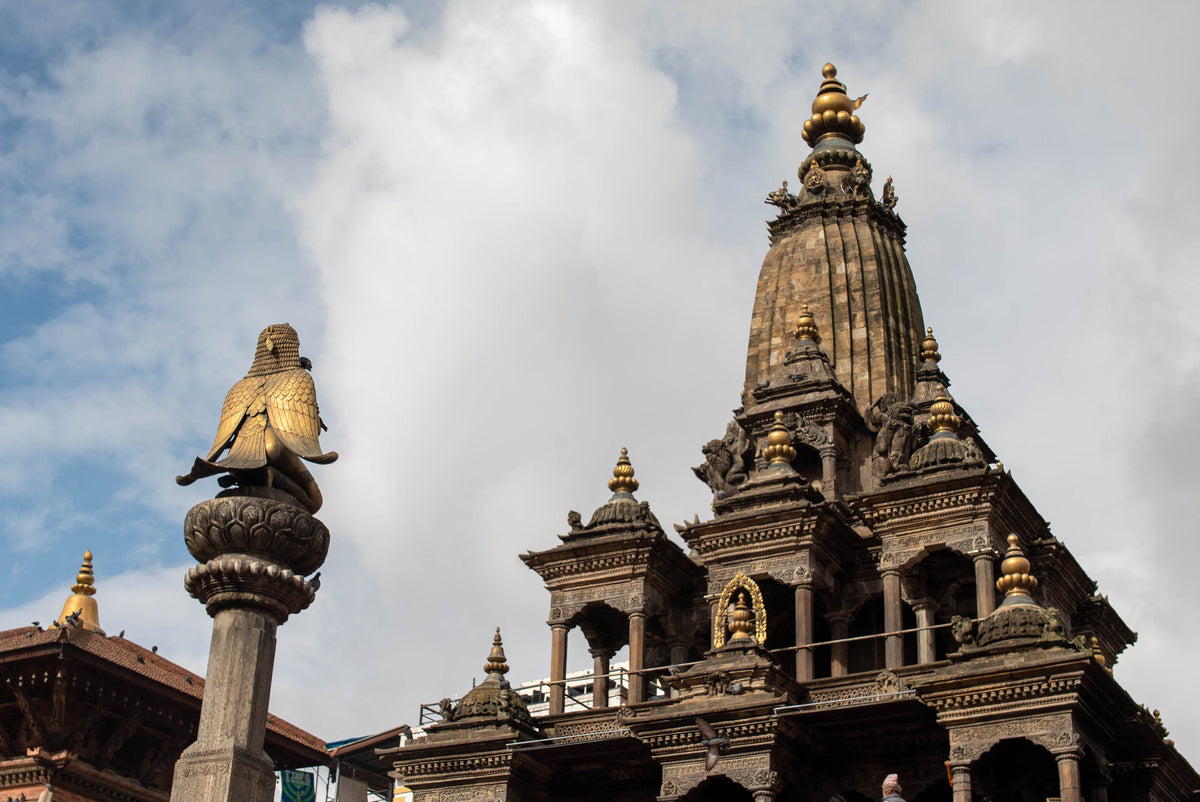
Krishna Mandir and Garuda column in Patan, Nepal.
Turquoise mountain lake ringed by pine forest and autumn shrubs below snow peaks
Krishna Mandir and Garuda column in Patan, Nepal.
King Bhupatindra Malla statue in Bhaktapur, Nepal.
Upper Dolpo Trek Nepal route map

29 Days, Strenuous

29-Day Upper Dolpo Trek Nepal

From $7,475 per person

  • Next departure May 1, 2027
  • Join a group of up to 10, or go private. Large groups welcome.
Duration
29 Days
Best season
Spring & Autumn
Max altitude
5,450m (17,881ft)
Difficulty
Strenuous

Strenuous: long, steep days in remote country, often camping, with passes or camps near or above 5,000 m (16,400 ft), or a climb above 6,000 m (19,700 ft) with crampons and fixed ropes.

We reply within one business day. No payment to ask.

Sherpa guides
Permits & logistics included
Private trips available
Altitude safety expertise
A US company, paid in dollars

The climb to Kiriphuk La

From Juphal at 2,400 m to Kiriphuk La at 5,450 m (17,881 ft), the highest point of the trip.

Ask about this trip

A trek into one of the most isolated corners of Nepal: old Tibetan culture, sacred lakes, and passes above 5,000 meters, in a region very few outsiders have ever walked through.

Dolpo lies in the rain shadow of the Dhaulagiri range in the far northwest of Nepal, closed off to the south by glaciated mountain walls and to the north by the Tibetan Plateau. For most of recorded history, only the people who lived there could reach it. Nepal opened the region to trekking permits in the 1980s, and even now the restricted-area rules and the long approach keep visitor numbers to a fraction of what the better-known circuits see. The terrain, more than the permit system, is what keeps Dolpo remote.

The approach starts with a flight from Kathmandu to Nepalgunj on the Terai plains, then a short flight northeast to Juphal at 2,400 meters, a dirt airstrip cut into a hillside above the Bheri River valley. The walk to Phoksundo Lake takes four days, through river gorges, forest trails, and the first villages of the Dolpo Tibetans. The lake sits at 3,611 meters in a bowl of peaks, and the limestone geology of the basin turns its water an intense blue-green. It is the deepest lake in Nepal. The community of Ringmo at its southern end has kept a Bon religious tradition here for centuries and regards the lake as sacred ground.

Beyond Phoksundo the trek enters restricted high Dolpo through the Ganda La, at 5,130 meters. On the far side the landscape changes completely: the vegetation thins to nothing, the valleys widen into high plateaus, and the villages along the route are built from the same red and gray stone as the cliffs above them. Shey Gompa, the spiritual heart of the region, is a monastery complex below the Crystal Mountain that has been a center of Bon and Buddhist practice for over a thousand years. The nomadic yak caravans that carry salt from Tibet through these valleys follow routes that have not changed in centuries.

The highest point of the trek is the Kiriphuk La at 5,450 meters, a crossing that connects the high Dolpo plateau to the country above Mustang. On the far side you descend through the Kali Gandaki corridor to Jomsom, then fly to Pokhara and on to Kathmandu, completing a traverse of Nepal’s northern borderlands. Our guides have crossed these passes before, and they know the altitude, the weather, and the communities along the route from years of experience.

High-altitude travel can cause serious illness, even in fit travelers. Acclimatization reduces risk but cannot eliminate it. Tell your guide promptly about symptoms. Your guide may stop an ascent, change the route or arrange descent. Rescue and medical treatment depend on location, weather, access and available resources and cannot be guaranteed.

SherpaHolidays Terms and Conditions SH-TC-2026-10-14. Your accepted booking version and mandatory rights remain in effect.

29 Days Across Upper Dolpo

Days 1 to 4  |  Kathmandu and the Flight to Juphal

Arrive in Kathmandu for a full briefing on the 29-day route, the restricted-area rules, and the altitude of the high passes ahead. The next day, fly to Nepalgunj on the southern plains, with the Dhaulagiri and Manaslu massifs visible from the aircraft window. A second short flight the next morning takes the group north to Juphal at 2,400 meters, a hillside airstrip above the Bheri River valley. The trek starts right away, following the river upstream to the market town of Dunai before turning north toward Phoksundo.

Days 5 to 9  |  Phoksundo Lake and the Restricted Zone

The trail to Phoksundo climbs through mixed forest and river gorge, past waterfalls and small settlements, until the lake comes into view from a ridge above. The water is an opaque blue-green from the minerals in the basin, with snow-capped peaks on three sides. The village of Ringmo sits at the southern end, where the community keeps a Bon religious practice that predates Buddhism in the region, and two old gompas stand above the village. From there you continue into the restricted zone and start the approach to the Ganda La base camp through steep glacial valleys.

Days 10 to 16  |  High Dolpo and the Shey Gompa

Cross the Ganda La at 5,130 meters onto the high Dolpo plateau, a quiet landscape of red cliffs and wind-shaped rock. The Tsakhang monastery is cut into the cliff face above the valley. Shey Gompa, below the Crystal Mountain, is one of the oldest active religious sites in Nepal, and its monks keep up their daily practice in one of the most remote places on the subcontinent. Continue through the hamlets of Saldang and open plateau country toward Yangser Gompa, where yak caravans carrying salt from Tibet pass through on routes used for generations.

Days 17 to 23  |  Pang La, Tarap, and Kiriphuk La

Cross the Pang La at 5,260 meters and descend into the Tarap valley, one of the most densely settled high-altitude communities in Nepal. The villages here are built of stone for very hard winters, and the Bon religious tradition sets the calendar of daily life. The approach to the Kiriphuk La at 5,450 meters, the highest point of the trek, follows stone-paved paths through narrow gorges above loud meltwater streams. The camp at Lanio Lungba, at 5,130 meters, is the highest camp of the route.

Days 24 to 29  |  Mustang and the Return

Cross four unnamed cols above 4,000 meters to reach the edge of the Mustang Valley and the Kali Gandaki corridor, then descend to Jomsom for the last lodge night of the trek. Fly from Jomsom to Pokhara and on to Kathmandu for two final days in the Kathmandu Valley, with time for the temples and courtyards of Patan and Bhaktapur before your international flight.

Day by Day

Days 1 to 4  Kathmandu to Juphal  The Flight West

Arrive at Tribhuvan International Airport and transfer to the hotel with the usual Sherpa welcome. The trek briefing that evening is detailed and unhurried: the Dolpo trek is one of the longest and most remote in Nepal, and it needs matching preparation. We go through the full 29-day route: the restricted-area permits, the acclimatization schedule for the high passes, the altitude profile from Juphal at 2,400 meters to the Kiriphuk La at 5,450 meters, the camping logistics for 22 nights in the field, and the physical demands of terrain with no bail-out options for most of its length. The briefing also covers the cultural etiquette of the Bon communities on the Dolpo plateau. By dinner you will have a clear picture of the month ahead.

The flight to Nepalgunj the next morning drops from the Kathmandu Valley to the flat heat of the Terai. Nepalgunj is around 150 meters above sea level, and the air is thick and warm after the capital. The next day a short flight north takes a small aircraft over the foothills into the northern ranges, with Dhaulagiri and Manaslu visible to the east as it tracks northeast. Juphal appears as a strip of flat ground on a hillside above a deep valley, and the landing is firm. The trek begins as soon as you land, down to the Bheri River and along its bank to Dunai, the administrative center of Dolpo district and the last town of any size before the mountains close in.

Stay: Hotel in Kathmandu then Hotel in Nepalgunj then Professional Tented Camp

Days 5 to 9  Phoksundo Lake to Ganda La Base Camp  The Sacred Waters

The trail north from Dunai enters Shey Phoksundo National Park and starts climbing at once. The approach follows the gorge of the Suli Gad river, a narrow valley cut through red and orange cliffs, with the river loud and brown below the trail and waterfalls dropping from the walls above. The forest here is pine and juniper, and the air smells of resin. The trail crosses the river on suspension bridges and climbs the valley walls where the gorge gets too narrow to pass at river level. It is beautiful country and hard work from the first day.

Phoksundo Lake appears suddenly from a ridge. One moment you are climbing through scrub and rock in the forest, and the next the valley opens and the lake is below you. The color of the water is the first thing you notice. The blue-green comes from the limestone and glacial minerals in the basin, and it gets stronger as the trail descends to the shore. The village of Ringmo sits at the southern end, its flat-roofed stone houses clustered around two old gompas on a rocky promontory above the lake. The gompas are Bon, a religious tradition that preceded Buddhism in Tibet and the Himalaya by centuries, and the monks here still keep up their daily practice.

Beyond Ringmo the trail enters the restricted zone. The permit requirement for high Dolpo exists because the Nepalese government chose to protect this country from the heavy traffic that has changed the character of more accessible regions. The valleys above the lake are steep and glacier-carved, the paths are narrow and exposed in places, and the camps are set on whatever flat ground the terrain allows. The approach to the Ganda La base camp takes two days from the lake, climbing steadily through the last of the vegetation onto bare moraine.

Stay: Professional Tented Camp

Days 10 to 16  Shey Gompa to Saldang  High Dolpo

The Ganda La at 5,130 meters is a long day from base camp: an early start, a steady climb through loose scree and snow, and from the top, views north across the high Dolpo plateau and south back toward the Phoksundo basin. The descent on the far side drops into country with nothing in common with the forested valleys of the approach. The vegetation is gone, the exposed rock is red and orange from the minerals in the plateau, and the air is noticeably thinner.

Tsakhang monastery appears from below as a cluster of white-painted walls cut into a red cliff. It is old and still active, kept by monks who chose to practice here because of the altitude and the remoteness. Shey Gompa, below the Crystal Mountain, is the most important religious site in the region. The Crystal Mountain itself, a peak of white limestone that catches the light in a way that gives it its name, stands above the gompa complex on the eastern side of the valley. The monks at Shey keep the oldest continuously operating religious community in high Dolpo, a tradition that has survived at altitude and in isolation for over a thousand years.

The hamlets of Saldang sit on the plateau to the east of Shey, flat-roofed stone houses surrounded by barley fields at around 3,900 meters. The yak caravans that pass through Saldang carry salt south from the Tibetan plateau and grain north from the lower valleys, on routes that have shaped the economy of this region for as long as people have lived here. Yangser Gompa, further along the plateau, is less visited and more austere, and the trails between the gompas have been walked for a very long time.

Stay: Professional Tented Camp

Days 17 to 23  Chharka to Sangdak  The High Passes

The Pang La at 5,260 meters is the second of the trek’s major crossings. The approach from the Dolpo plateau is gradual, up a long valley to a wide col where the wind never stops and the views reach north toward the Tibetan border and south toward the Dhaulagiri massif. On the far side you descend into the Tarap valley, one of the most densely populated high-altitude communities in Nepal, a string of villages built from the same gray and brown stone as the hillsides behind them. As in the rest of high Dolpo, the Bon religious tradition shapes life in Tarap: the prayer flags, the mani walls, the gompas above each village, and the yearly festivals that set the community calendar all reflect a practice kept here for many centuries.

The Crystal Mountain School in the Tarap valley is a small school that has taught children from the surrounding communities for decades. A visit shows you the practical side of life at this altitude: the school day, the lessons, and the children who walk for hours from the more remote hamlets to attend.

The approach to the Kiriphuk La at 5,450 meters follows stone-paved paths that the communities of the upper Tarap valley have kept up for generations, the stones set by hand into the steep ground so that loaded yaks and people can manage the gradient. The gorges here are narrow, with loud glacial streams below the trail and cliff walls rising straight up on both sides. The high camp at Lanio Lungba, at 5,130 meters, is the highest camp of the trek, and the night is cold under a very clear sky. The pass the next morning is the highest point of the trip.

Stay: Professional Tented Camp

Days 24 to 29  Sangdak to Kathmandu  The Return

The route from the Kiriphuk La to the Mustang Valley crosses four unnamed cols above 4,000 meters, a day of constant climbing and descending through the high country above the Kali Gandaki watershed. The ground is nontechnical but relentless, and the altitude makes it feel longer than the distance suggests. From the last col the Mustang Valley appears as a wide, dry canyon of orange and brown rock, and you can see the wind that funnels up the Kali Gandaki from the south in the dust it carries. The descent to Jomsom is a long afternoon of switchbacks into dry, open country after weeks of glaciers and forest. Jomsom, with its stone guest houses and the sound of the river below town, is a comfortable and welcome end to the high section of the trek.

The flight from Jomsom to Pokhara takes twenty minutes over terrain that took weeks to approach from the other side. Pokhara sits at 800 meters, with the Annapurna range visible to the north across Phewa Lake and the air warm after the cold of the plateau. After one night here you fly back to Kathmandu, where two days remain for the temples and courtyards of Patan and Bhaktapur. These cities deserve unhurried attention, and after four weeks of moraine and red cliffs, their stone carvings, festival courtyards, and busy Newari streets are a welcome change.

Stay: Lodge in Jomsom then Hotel in Pokhara then Hotel in Kathmandu

The Sherpa Standard

Every SherpaHolidays trip is fully supported from arrival to departure. Here is what that means on this one.

Accommodation and Meals

  • City Stays: 3 nights in Kathmandu, 1 night in Nepalgunj, and 1 night in Pokhara in the hotels listed in the itinerary.
  • Full Expedition Camping: 22 nights in professional tented camps, with high-quality two-person sleeping tents, a dedicated dining tent, and toilet tents at every campsite.
  • Full Board on Trek: Three freshly prepared meals a day throughout the trek, cooked by a dedicated kitchen team at every camp.
  • City Dining: Bed and breakfast on all city nights in Kathmandu, Nepalgunj, and Pokhara.

Leadership and Support

  • Expedition Guide: An English-speaking Sherpa trekking guide with experience of the Dolpo restricted zone and its high passes, for the full trek.
  • City Guide: A guide for Kathmandu sightseeing on the final days in the capital.
  • Sherpa Support Team: A full team of local porters and camp assistants who carry all heavy loads and handle the tents and camp logistics throughout.
  • Staff Care: Full insurance and internal flight tickets for all local crew members as standard.

Transport and Permits

  • Private Transfers: All airport pickups, drop-offs, and transfers between cities as listed in the itinerary.
  • Internal Flights: All domestic flights: Kathmandu to Nepalgunj, Nepalgunj to Juphal, Jomsom to Pokhara, and Pokhara to Kathmandu.
  • Permits: All Dolpo restricted area permit fees, Shey Phoksundo National Park entry fees, and sightseeing entry fees for Patan and Bhaktapur.


What Is Not Included

  • International airfare to and from Nepal and international airport taxes
  • Lunch and dinner in Kathmandu, and personal extras including drinks, laundry, and tips
  • Comprehensive travel insurance, which is a condition of every booking. Your policy must cover emergency medical treatment, emergency evacuation, trip cancellation and interruption, and repatriation. We can recommend providers.
  • Single supplement (for those taking a private room)

Five Highlights

Phoksundo Lake

The deepest lake in Nepal sits at 3,611 meters in a basin of peaks, its water turned blue-green by the limestone and minerals in the surrounding rock. The color you see in photographs is real, and at dawn the lake is completely quiet. The Bon community of Ringmo has regarded the lake as sacred ground for centuries, and the gompas above the village at the southern end are among the oldest active religious buildings in the region.

Shey Gompa and the Crystal Mountain

The Crystal Mountain is a peak of white limestone above the Shey valley, and from a long way off you can see how it catches the light and got its name. The gompa complex below it is the oldest continuously operating religious institution in high Dolpo, kept by monks who chose this altitude and this isolation as their place of practice. The Bon and Buddhist traditions that meet at Shey go back further than many of the institutions the Western world thinks of as ancient.

The Yak Caravans of the High Plateau

The salt trade between Tibet and the lower Himalayan valleys is one of the oldest continuous trading traditions in the region. The yak caravans that carry it cross the Dolpo plateau on routes used for centuries, the animals loaded with salt on the way south and with grain on the way back. Meeting a caravan on the trail is ordinary for the families who run them and a highlight for most trekkers: the animals and their handlers moving through red cliffs and bare plateau at 4,000 meters, a sight you will not see on the standard trekking circuits.

The Bon Religion in Its Homeland

Bon is the pre-Buddhist religious tradition of Tibet and the Himalayan borderlands, and high Dolpo is one of the few places where communities still practice it in its original form, without interruption. The gompas of Ringmo are Bon institutions, and the festivals, prayers, building styles, and daily routines along this route all reflect a tradition that Buddhism absorbed or replaced across most of its former territory. In Dolpo you walk through villages where a faith most of the world knows only from history is still part of everyday life.

A Trek Captured on Film

The 1999 film Caravan, directed by Eric Valli, followed a yak salt caravan across the Dolpo plateau and introduced the region to audiences outside Nepal. The landscapes, communities, and high crossings in the film are the same ones this trek passes through, and you will walk some of the same ground. The film is worth watching before you leave, as a portrait of the place you are about to see.

Travel dates

The deposit is part of the total price, not an additional fee.

  • May 1 – 29, 2027 Available
    $7,475 per person
  • September 15 – October 13, 2027 Available
    $7,475 per person
  • October 1 – 29, 2027 Available
    $7,475 per person

Scheduled departure deposit: $500 per person for bookings more than 90 days before departure

Private journey deposit: 30% of the trip price for bookings more than 90 days before departure

Final balance: Due 90 days before departure. Bookings made 90 days or fewer before departure are paid in full at booking.

Our conditions promise: A qualifying Nepal advisory change or trek-region closure within 60 days of departure lets you move dates free or take full credit for 24 months.

Scheduled departures: No minimum group size

SherpaHolidays Terms and Conditions SH-TC-2026-10-14. Your accepted booking version and mandatory rights remain in effect.

Questions about this trip?

Ask Sam or Gyalgin

We reply within one business day. No payment, no commitment.

Loading the inquiry form…

This is an inquiry, not a booking. Nothing is charged here.

  • Within one business day We reply within one business day.
  • Then A call, if you would like one.
  • When you are ready A deposit holds your place.

Or talk to us directly:

+1 (855) 743-7725 info@sherpaholidays.com

Things guests ask before booking

Straight answers about booking, payment and how we run every trip.

  • It is rated strenuous, and at 29 days it is our longest trek. You cross the Ganda La (5,130 meters), the Pang La (5,260 meters) and the Kiriphuk La, the highest point at 5,450 meters (17,881 ft). The highest camp, at Lanio Lungba, is at 5,130 meters.

  • Yes. Upper Dolpo is a restricted area. The Dolpo restricted area permit fees and the Shey Phoksundo National Park entry fees are included, and your guide knows the restricted-area rules and covers them at the briefing in Kathmandu.

  • By air, and all four flights are included. You fly from Kathmandu to Nepalgunj, then on to Juphal (2,400 meters), where the trek starts. The trek ends at Jomsom, and you fly from Jomsom to Pokhara and on to Kathmandu.

  • On the trek you sleep in two-person tents, with a dining tent and toilet tents at every campsite, and the kitchen team cooks three meals a day. The last trek night is in a lodge in Jomsom. Hotel nights in Kathmandu, Nepalgunj and Pokhara include breakfast, and lunch and dinner in Kathmandu are on your own.

  • Groups of up to 10, or private for your own group. Scheduled group dates have no minimum, so they run with any number of guests. Large groups welcome.

  • The deposit is part of the total price, not an additional fee. A scheduled booking made more than 90 days before departure requires $500 per person. A private journey booked more than 90 days before departure requires 30% of the trip price. The balance is due 90 days before departure. At 90 days or fewer, full payment is due at booking. Your disclosure and invoice state the exact amounts and dates.

    Once your deposit is received, your price is locked except for government taxes, park fees or levies introduced after that date. We tell you in writing as soon as we learn of one and identify its amount and basis. A different route, hotel upgrade or optional activity is not an automatic extra charge; any additional cost requires your agreement before it is booked.

    SherpaHolidays Terms and Conditions SH-TC-2026-10-14. Your accepted booking version and mandatory rights remain in effect.

  • Scheduled departure deposit
    $500 per person for bookings more than 90 days before departure

    Private journey deposit
    30% of the trip price for bookings more than 90 days before departure

    Final balance
    Due 90 days before departure. Bookings made 90 days or fewer before departure are paid in full at booking.

    You cancel 90 or more days before departure
    Your deposit becomes credit toward any SherpaHolidays trip for 24 months. Payments above the deposit are refunded, subject only to a specific supplier exception disclosed and accepted before payment.

    You cancel 89 to 60 days before departure
    Cancellation charge: 50% of the total trip price

    You cancel 59 to 46 days before departure
    Cancellation charge: 75% of the total trip price

    You cancel 45 days or fewer before departure
    Cancellation charge: 100% of the total trip price. No refund.

    Our conditions promise
    A qualifying Nepal advisory change or trek-region closure within 60 days of departure lets you move dates free or take full credit for 24 months.

    We cancel or cannot provide contracted services
    Refunds for services not provided as required by California law. An alternative or credit is your choice, not a required substitute.

    Scheduled departures
    No minimum group size

    The traveler-cancellation table does not remove our conditions promise, rights under an already accepted booking, or refunds and other rights required by law.

    If the US State Department raises Nepal to Level 3 or higher, or your trek region is closed, within 60 days of departure, you can move your dates free or take full credit toward any SherpaHolidays trip for 24 months. This applies instead of the normal traveler-cancellation charges, including the 45-day rule and any supplier cancellation exception.

    Full credit means the payments you made for the affected trip, not only the deposit. We record the trigger and your choice in writing. The credit follows Section 4's use and validity terms. A free date move has no change fee; we disclose any price difference for the replacement trip before you decide. The promise does not replace a cash refund owed when we cancel or cannot provide contracted services.

    SherpaHolidays Terms and Conditions SH-TC-2026-10-14. Your accepted booking version and mandatory rights remain in effect.

  • Comprehensive travel insurance is a condition of every booking. Your policy must cover emergency medical treatment, emergency evacuation, trip cancellation and interruption, and repatriation. Confirm with your insurer that it covers your itinerary's activities and maximum altitude, including technical climbing, rafting, helicopter evacuation and search and rescue where applicable. Provide proof before departure. Consider obtaining cover when you book because some benefits have purchase deadlines.

    We are not your insurer. Receiving your documents is not a determination of coverage and does not guarantee payment of a claim. Medical and evacuation providers may require payment in advance. Keep insurer emergency details available during your trip.

    SherpaHolidays Terms and Conditions SH-TC-2026-10-14. Your accepted booking version and mandatory rights remain in effect.

  • Yes. Any departure can run privately on your dates, and we adjust pace, accommodation and rest days around you. If you want a different route entirely, we plan custom itineraries from scratch.

  • Guides from our own Sherpa team lead every trip in Nepal. Beyond Nepal we work with trusted local partners we have known for years, so there is always someone beside you who knows the ground well.

  • The Sherpa Standard section on this page lists everything included on this trip, from guides and permits to lodges and meals. International flights and travel insurance are the main things you arrange yourself.

Guest reviews

What guests say

5.0 average from 5 Google reviews
Read them on Google
I recently took a trip to Nepal and was met with wonderful service by the staff and amazing tours with the Sherpa guides. The cultural tours were by far my favorite. Highly recommend!!
Avin Fatehi
Took a trip to Nepal for 10 days and got an amazing tour of the area! Great people, great places 10/10 would go again 🔥🔥
Kevin Ye
I found Sherpa Holidays when I was looking to do the 23 days Annapurna circuit trek and they not only made me a custom itinerary to fit my needs, but they also made the entire process seamless. Highly recommend Sherpa Holidays for anyone looking to head to Nepal!
Justin Zhang
The staff were easy to communicate with and I had a wonderful trip.
Jack Cavada

Reviews shown as published on our Google profile.