
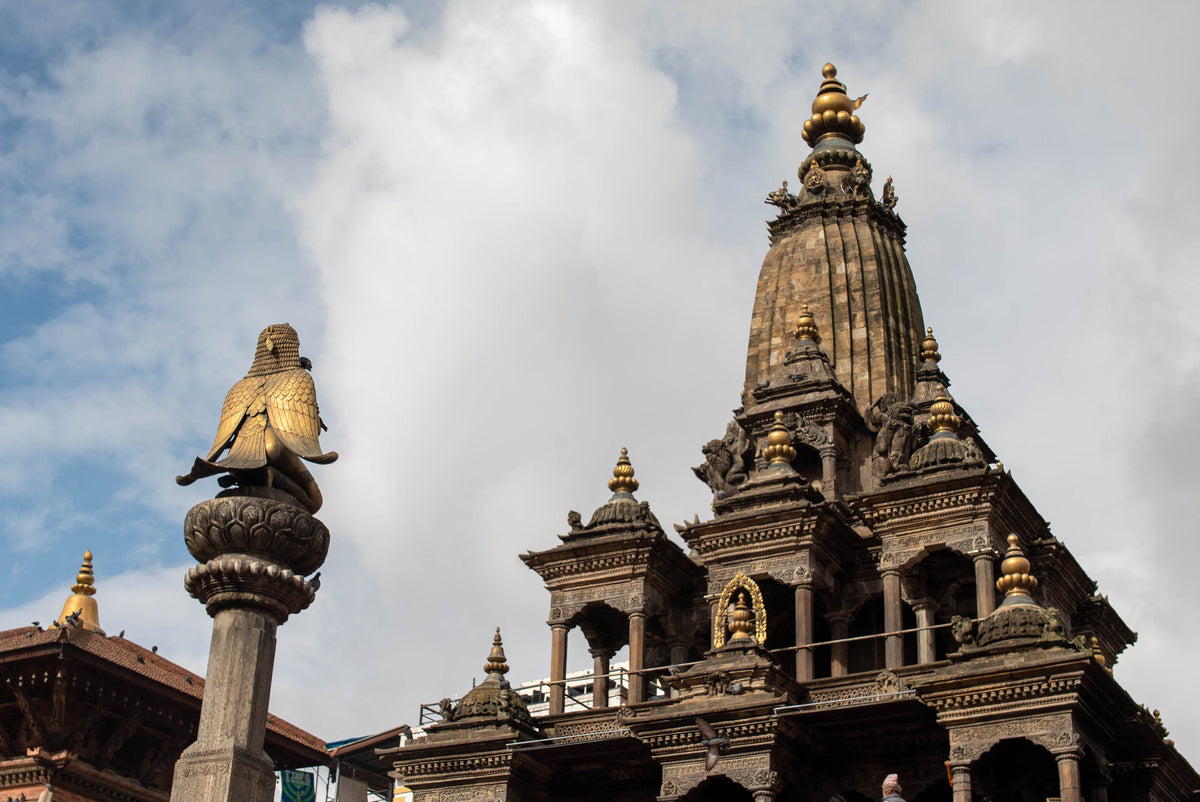
Krishna Mandir and Garuda column in Patan, Nepal.
Kali Gandaki valley in Mustang, Nepal.
Krishna Mandir and Garuda column in Patan, Nepal.
King Bhupatindra Malla statue in Bhaktapur, Nepal.
Pashupatinath temple roofs in Kathmandu, Nepal.
Upper Mustang Trek to Lo Manthang route map

21 Days, Moderate

21-Day Upper Mustang Trek to Lo Manthang

From $5,475 per person

  • Next departure Mar 15, 2027
  • Join a group of up to 10, or go private. Large groups welcome.
Duration
21 Days
Best season
Spring & Autumn
Max altitude
4,180m (13,714ft)
Difficulty
Moderate

Moderate: up to about 6 hours of walking a day on good trails, or several days of Class III and IV rapids. Nights up to about 4,300 m (14,000 ft).

We reply within one business day. No payment to ask.

Sherpa guides
Permits & logistics included
Private trips available
Altitude safety expertise
A US company, paid in dollars

The climb to Paa Pass

From Jomsom at 2,720 m to Paa Pass at 4,180 m (13,714 ft), the highest point of the trip.

Ask about this trip

The walled city of Lo Manthang, capital of its own kingdom for six centuries, on a desert plateau above the world's deepest gorge, in a corner of Nepal where Tibetan culture survived intact.

Upper Mustang was closed to foreign visitors until 1992. When Nepal opened the region, it set a restricted area permit fee well above any other trekking permit in the country, on purpose, to keep visitor numbers low and protect the character of the place. Three decades on, Lo Manthang is one of the best-preserved examples of medieval Tibetan culture in the world. The walled city was built in the fourteenth century as the capital of the Kingdom of Lo. Its walls, royal palace, and gompas, and the way its community is organized, have lasted in a form that the Chinese annexation of Tibet erased from most of the plateau farther north.

The approach follows the Kali Gandaki, by some measures the deepest river gorge on earth, a corridor cut between Dhaulagiri and Annapurna where the wind funnels north toward the Tibetan plateau, strong enough to make afternoon walking hard. Within a day of Jomsom the landscape changes: the monsoon greenery of the lower valley gives way to the rain shadow desert of the upper gorge, the cliffs turn red and orange, and the villages change from stone and timber to mud-brick compounds built into the hillsides. It is a very different Nepal from the one most visitors see.

Lo Manthang sits at 3,780 meters inside its wall on a wide plain above the gorge. The wall is the first thing you see from the Nyi La pass on the approach: a white band across the brown plateau with the old city rising inside it. The royal palace, four stories of mud-brick, stands at the northern end. The gompas date from the fifteenth century and hold murals and thankas of very high quality. The kingdom's legal status within Nepal ended in 2008, and its last king died in 2016.

The eastern valleys beyond Lo Manthang hold the hermitages and cliff monasteries of the region's more solitary religious life. Luri Gompa is built into a cave in a cliff face, and a community that has used the site for centuries still looks after its frescoes. Muktinath, at the southern end of the return route, is sacred to both Hindus and Buddhists: a temple complex where a natural gas seep feeds a flame that burns above water, a meeting of elements that has drawn pilgrims for over two thousand years. The expedition ends in Pokhara and then Kathmandu, which both feel very lively after the desert plateau of Mustang.

High-altitude travel can cause serious illness, even in fit travelers. Acclimatization reduces risk but cannot eliminate it. Tell your guide promptly about symptoms. Your guide may stop an ascent, change the route or arrange descent. Rescue and medical treatment depend on location, weather, access and available resources and cannot be guaranteed.

SherpaHolidays Terms and Conditions SH-TC-2026-10-14. Your accepted booking version and mandatory rights remain in effect.

21 Days in Upper Mustang

Days 1 to 3  |  Kathmandu

Arrive in Kathmandu and transfer to the hotel for the expedition briefing. The first three days are in the Kathmandu Valley, visiting the UNESCO World Heritage Sites that make it one of the densest collections of cultural monuments in the world: Swayambhunath on its hilltop above the city, Pashupatinath on the Bagmati River, and the medieval Durbar Squares of Kathmandu, Patan, and Bhaktapur. These days matter for the trek, because the temples, iconography, and religious traditions of the valley help you make sense of Lo Manthang when you get there. We arrange the restricted area permits for Upper Mustang during this time.

Days 4 to 8  |  Jomsom to Tsarang

Fly from Kathmandu to Pokhara and continue by small plane to Jomsom at 2,720 meters, the administrative center of the Mustang district. The trek starts right away, heading into the Kali Gandaki corridor, where the wind is already up even in the morning. The trail north to Kagbeni passes juniper scrub and red cliffs before the checkpoint into the restricted area. Above Kagbeni the landscape empties. Chele, Syangboche, and Ghami are mud-brick villages built into the hillsides, their walls the same color as the cliffs behind them. Lo Gekar, one of the oldest monasteries in Nepal, stands on a ridge above the trail. Continue to Tsarang, a large village below the last ridge before Lo Manthang.

Days 9 to 11  |  Lo Manthang

Cross the Nyi La pass at 3,950 meters for your first view of Lo Manthang from above: the walled city on the plain below, with the buildings of the old capital rising inside the wall. Spend two full days in the city: the four-story royal palace at the northern end, the fifteenth-century gompas with their original murals and thankas, the narrow lanes between the mud-brick houses, and the daily life of a community that has kept its traditions here for six centuries.

Days 12 to 16  |  The Eastern Valleys

Trek east from Lo Manthang into a valley system few visitors explore. The cliff monastery of Luri Gompa is built into a cave in a sheer rock face, and its frescoes are among the finest surviving examples of fourteenth-century Tibetan Buddhist art. The village of Tangya, farther into the eastern valleys, is small, largely self-sufficient, and sees almost no passing trekkers. The return south to Muktinath crosses high ground above 4,000 meters, topping out at the Paa Pass (4,180 meters), with views across the upper Mustang plain to the ridges on the Tibetan border. Muktinath at 3,800 meters is the most important pilgrimage site in the region: a temple complex sacred to both Hindus and Buddhists, with an eternal flame that burns above water from a natural gas seep.

Days 17 to 21  |  Pokhara and Kathmandu

Descend the Kali Gandaki to Jomsom for a last evening with the expedition crew and a proper celebration of a trek that very few people complete. Fly to Pokhara for two nights on the shore of Phewa Lake, with the Annapurna range reflected in the water to the north. Return to Kathmandu for a final day of sightseeing in the valley before your international departure.

Day by Day

Days 1 to 3  Kathmandu  Kathmandu Valley

Arrive at Tribhuvan International Airport, where the SherpaHolidays team welcomes you and takes you to the hotel. The expedition briefing that first evening covers the full 21-day itinerary: the rules for the Upper Mustang restricted area, the customs to follow in Lo Manthang, the altitude profile of the trek, and the arrangements for the internal flights. It also covers the background: the history of the Kingdom of Lo, the Tibetan Buddhist traditions of the region, and the religious sites you will visit. By breakfast the next morning, you will know clearly what the next three weeks involve.

Kathmandu deserves these three days in its own right. The valley has seven UNESCO-listed monument zones and a living religious culture that runs straight through to what you will see in Mustang. Swayambhunath sits on a hilltop at the western edge of the city, its whitewashed stupa and painted eyes looking out over the valley from a site that has been a center of Buddhist practice for over two thousand years. Pashupatinath on the Bagmati River is the most sacred Hindu temple in Nepal, where the dead are cremated on the ghats and the living come to pray in the courtyards, all day long. The Durbar Squares of Kathmandu, Patan, and Bhaktapur are medieval royal courts in various states of preservation, still in daily use. Their stone carvings, timber lattice windows, and pagoda temples come from a Newari tradition of religious art that has produced fine work for over a thousand years. The restricted area permits for Upper Mustang are processed during these three days, so there is no delay when you reach Jomsom.

Stay: Luxury Hotel in Kathmandu

Days 4 to 8  Jomsom to Tsarang  The Desert Plateau

The flights from Kathmandu to Pokhara and on to Jomsom make one of the more dramatic entries to any trekking region in Nepal. From Pokhara the plane climbs north over the Annapurna foothills and turns west through the gap in the main range, with the walls of Dhaulagiri and the Annapurna massif on both sides, before it drops into the wide Kali Gandaki valley and lands at Jomsom. The airstrip is at 2,720 meters, and by mid-morning the wind is already blowing in the upper valley. This wind shapes life in the Mustang corridor: a thermal flow that funnels north through the gap between the two massifs, strong enough in the afternoons to make walking slow and uncomfortable. In this valley we trek in the mornings.

The trail north from Jomsom to Kagbeni follows the river, and the landscape changes with every kilometer. The lower valley is still green in the monsoon season, with juniper and scrub on the lower slopes and the river gray with glacial silt. By Kagbeni (2,810 meters), the last village before the restricted zone checkpoint, the plants have thinned and the cliffs have started to show the red and orange of the upper desert. The checkpoint at Kagbeni is where your restricted area permit is checked, and north of it the country changes. The villages above Kagbeni are mud-brick, the color of the hillsides behind them, with flat roofs and enclosed courtyards built for cold winters and almost no rain. Lo Gekar monastery stands on a ridge above the valley above Ghami. It is one of the oldest religious sites in Nepal, and its founding is credited to Padmasambhava, the eighth-century master who brought Buddhism to Tibet. Continue south of Tsarang to camp at one of the best spots on the route, with the red cliffs of the eastern wall above and the trail to Lo Manthang visible on the ridge ahead.

Stay: Traditional Mountain Lodges

Days 9 to 11  Lo Manthang  The Walled City

The Nyi La pass at 3,950 meters is a short, steep climb from Tsarang (3,560 meters), and the view from the top is the best of the approach. Lo Manthang (3,780 meters) sits on the plain below, a rectangle of white wall around a city that has been lived in continuously since the fourteenth century. The plain around it is brown and flat, with the mountains of Tibet on the northern horizon, and the city in the middle looks like what it is: a walled capital built to be seen from far away, in an otherwise empty landscape.

The city inside the wall is smaller than it looks from above, with narrow lanes and buildings close together, planned for defense as much as convenience. The royal palace at the northern end, four stories of mud-brick and timber, has been the seat of the Lo royal family since the kingdom was founded. The gompas are the reason art historians and religious scholars have been coming here since the restricted zone opened. Champa Lhakhang and Thugchen Gompa hold original fifteenth-century murals and thankas of a quality and completeness that survived because the isolation that made Lo Manthang hard to reach also protected it from the destruction and looting that hit most similar sites on the Tibetan plateau in the twentieth century. A local guide takes the group through the gompas on both days in the city and explains what you are seeing.

The Kingdom of Lo lost its formal legal status within Nepal in 2008, when Nepal became a republic and the government ended the recognition of hereditary monarchies. Its last king, Jigme Palbar Bista, died in 2016.

Stay: Local Lodge and Professional Tented Camp

Days 12 to 16  Luri Gompa to Muktinath  The Hidden Valleys

The eastern valleys beyond Lo Manthang are the least visited part of a region that already sees few visitors. The trail leaves the city through the eastern gate and crosses open plateau toward a valley system that drops into a series of narrow gorges cut through the red sandstone of upper Mustang. Luri Gompa appears in the cliff face above the valley floor as a cluster of painted facades built across the mouth of a cave. Inside the cave are a temple and a chorten that archaeologists have dated to the fourteenth century. The dry, high air has kept the murals in good condition: the pigments are still bright, and the figures and compositions are still clear. Very few people see these paintings each year, and the small community that looks after the monastery clearly takes great care of what is inside.

The village of Tangya lies farther into the eastern valleys, a small community off the main trekking routes. The people here are Loba, the traditional inhabitants of Lo, and the village follows the same seasonal pattern it has for centuries: farming in the summer, trading in the autumn, and the long cold of winter. The return south from Tangya crosses high ground above 4,000 meters, topping out at the Paa Pass (4,180 meters), with clear views across the upper Mustang plain to the ridges of the Tibetan border, then drops to rejoin the Kali Gandaki corridor for the final approach to Muktinath.

Muktinath at 3,800 meters is a different kind of religious site from the gompas of Lo Manthang. It is sacred to both Hindus and Buddhists, which is unusual in a region where the two traditions usually keep separate institutions and pilgrimage routes. The site is sacred because of a natural gas seep that produces a flame burning above water, fire and water in the same place, which both traditions have seen as a divine sign for over two thousand years. Hindu pilgrims bathe under the 108 water spouts around the temple, believing the water purifies them. The gompa above the spring serves Buddhist pilgrims. Both are in use every day of the pilgrimage season.

Stay: Professional Tented Camp and Lodge

Days 17 to 21  Jomsom to Kathmandu  The Return

The walk down the Kali Gandaki from Muktinath to Jomsom is one long day, and the wind makes the trail harder going south than it was going north. The plants come back as you lose altitude: first scrub juniper, then the larger trees of the middle valley, then the green lower slopes near Jomsom. The last evening in Jomsom is the traditional expedition dinner, with the full crew together to mark the end of the mountain section. For many guests, getting to know the people who carried the loads, cooked the meals, and kept the camp for three weeks is one of the best parts of the trip.

The flight from Jomsom to Pokhara retraces the Day 4 flight in reverse, with Dhaulagiri and Annapurna on either side as the plane turns south through the gap. After two weeks above 3,500 meters, Pokhara, at 800 meters, feels warm, busy, and very green. Two nights on the shore of Phewa Lake, with the Annapurna range reflected in the water to the north, give you a proper rest after the high-altitude section instead of a rushed transit. The last flight takes you back to Kathmandu, where the trip began, with a final day to explore the UNESCO temples and medieval courtyards at your own pace before your international departure.

Stay: Luxury Hotel in Pokhara then Luxury Hotel in Kathmandu

The Sherpa Standard

Every SherpaHolidays trip is fully supported, from arrival to departure. Here is what that means on this one.

Accommodation and Meals

  • City Hotels: Premier hotels in Kathmandu and Pokhara, with breakfast.
  • Mountain Stays: A mix of traditional mountain lodges in the villages of Upper Mustang and high-quality tented camps in the more remote parts of the eastern valleys.
  • Full Board on Trek: All meals throughout the trekking and touring days, cooked daily by the expedition kitchen team.

Leadership and Support

  • Expedition Guide: A dedicated English-speaking Sherpa guide who knows the Upper Mustang restricted zone and its religious sites, with you for the whole trip.
  • Sherpa Support Team: A full professional crew, including porters, handling all logistics, equipment, and camp management.
  • Permits and Briefing: A full pre-departure briefing, all handling of the Upper Mustang restricted area permits, and insurance for all local staff as standard.

Transport and Permits

  • Private Transfers: All airport pickups and sightseeing transfers in Kathmandu and Pokhara by private vehicle.
  • Internal Flights: All domestic flights included: Kathmandu to Pokhara, Pokhara to Jomsom, Jomsom to Pokhara, and Pokhara to Kathmandu.
  • Restricted Area Permits: Full handling of the special Upper Mustang restricted area permits, Annapurna Conservation Area entry fees, and entry fees for Kathmandu Valley heritage sites.


What Is Not Included

  • International airfare to and from Kathmandu and Nepal entry visa fees
  • Lunch and dinner in Kathmandu and Pokhara
  • Comprehensive travel insurance, which is a condition of every booking. Your policy must cover emergency medical treatment, emergency evacuation, trip cancellation and interruption, and repatriation. We can recommend providers.
  • Personal items including technical gear, beverages, laundry, and personal shopping
  • Tips for guides and porters
  • Single supplement (for those taking a private room)

Five Highlights

Lo Manthang, the Walled City

The walled city of Lo Manthang was founded in the fourteenth century as the capital of the Kingdom of Lo, and people have lived there continuously ever since. While the Tibetan plateau to the north lost most of its old monasteries and royal institutions in the twentieth century, Lo Manthang's isolation protected what it had: the royal palace, the gompas, the murals, the traditions, and the social structure of a Himalayan kingdom. In the lanes of the old city you walk through a medieval town that is still lived in, with nothing rebuilt or staged for visitors.

The Kali Gandaki Corridor

The Kali Gandaki River cuts between Dhaulagiri at 8,167 meters and Annapurna at 8,091 meters, and measured from the river to the summits on either side, its gorge is the deepest in the world. Walking north through it, the landscape changes from green Himalayan valley to red desert plateau within a day, and the wind picks up as it funnels between the two massifs until the afternoons are hard going. The red cliffs of the upper valley, the abandoned cave dwellings cut into the rock above the trail, and the mud-brick villages tucked into the hillsides are very different from the standard Nepal trekking routes.

Luri Gompa and the Cliff Monasteries

The cave monasteries of the eastern Mustang valleys come from a tradition of retreat that puts the practitioner as far from the world below as possible. Luri Gompa is built across the mouth of a cave in a cliff, and its fourteenth-century murals have survived in a condition that the dry air and high altitude make possible in few other places. Paintings from this period and style have mostly been destroyed elsewhere. Here you see them where they were made, in a working monastery on a trail that very few people walk each year.

Muktinath, Sacred to Hindus and Buddhists

The pilgrimage site of Muktinath at 3,800 meters is sacred to both Hindus and Buddhists, and each tradition gives it deep religious meaning of its own. For over two thousand years, both faiths have seen the natural gas seep at the center of the site, which feeds a flame burning on water, as a sign of divine power. Hindu pilgrims bathe under the 108 water spouts around the temple, and Buddhist pilgrims walk around the gompa above the spring. On a busy pilgrimage day you see both communities there at once, each with its own practices, in the same place.

The Landscape of the Rain Shadow

Upper Mustang sits in the rain shadow of the Annapurna and Dhaulagiri ranges, which block the monsoon rain that falls on the rest of Nepal in summer. The result is a desert plateau at 3,000 to 4,000 meters with annual rainfall measured in tens of millimeters: colored sandstone canyons, wind-carved rock, and a clear, bright sky that the monsoon clouds rule out south of the ranges. Himalayan blue sheep and snow leopards live on the high ridges above the valley. The amber and red cliffs of the canyon country between Kagbeni and Lo Manthang have been shaped by the wind over millions of years, and it is still at work on them.

Travel dates

The deposit is part of the total price, not an additional fee.

  • March 15 – April 4, 2027 Available
    $5,475 per person
  • May 1 – 21, 2027 Available
    $5,475 per person
  • October 1 – 21, 2027 Available
    $5,475 per person

Scheduled departure deposit: $500 per person for bookings more than 90 days before departure

Private journey deposit: 30% of the trip price for bookings more than 90 days before departure

Final balance: Due 90 days before departure. Bookings made 90 days or fewer before departure are paid in full at booking.

Our conditions promise: A qualifying Nepal advisory change or trek-region closure within 60 days of departure lets you move dates free or take full credit for 24 months.

Scheduled departures: No minimum group size

SherpaHolidays Terms and Conditions SH-TC-2026-10-14. Your accepted booking version and mandatory rights remain in effect.

Questions about this trip?

Ask Sam or Gyalgin

We reply within one business day. No payment, no commitment.

Loading the inquiry form…

This is an inquiry, not a booking. Nothing is charged here.

  • Within one business day We reply within one business day.
  • Then A call, if you would like one.
  • When you are ready A deposit holds your place.

Or talk to us directly:

+1 (855) 743-7725 info@sherpaholidays.com

Things guests ask before booking

Straight answers about booking, payment and how we run every trip.

  • Yes. Upper Mustang is a restricted area, and you need a special permit to enter it. We handle the restricted area permits and the Annapurna Conservation Area entry fees for you, and sort them out in Kathmandu during the first three days.

  • It is rated moderate, but it is remote. The Nyi La pass at 3,950 meters comes just before Lo Manthang, and the highest point is on the return south, where the route crosses the Paa Pass at 4,180 meters (13,714 ft). The Kali Gandaki valley is windy, often from the morning on.

  • Yes, all four domestic flights: Kathmandu to Pokhara, Pokhara to Jomsom, and the same two back. The trek starts at Jomsom, at 2,720 meters.

  • In hotels in Kathmandu and Pokhara with breakfast, then in village lodges in Upper Mustang and tented camps in the remote eastern valleys. All meals on the trekking days are included, cooked by the expedition kitchen team. In Kathmandu and Pokhara, lunch and dinner are on your own.

  • Two full days. You have time for the royal palace, the fifteenth-century gompas and their murals, and the lanes of the walled city. Then the route heads into the eastern valleys to the cliff monastery of Luri Gompa.

  • Groups of up to 10, or private for your own group. Scheduled group dates have no minimum, so they run with any number of guests. Large groups welcome.

  • The deposit is part of the total price, not an additional fee. A scheduled booking made more than 90 days before departure requires $500 per person. A private journey booked more than 90 days before departure requires 30% of the trip price. The balance is due 90 days before departure. At 90 days or fewer, full payment is due at booking. Your disclosure and invoice state the exact amounts and dates.

    Once your deposit is received, your price is locked except for government taxes, park fees or levies introduced after that date. We tell you in writing as soon as we learn of one and identify its amount and basis. A different route, hotel upgrade or optional activity is not an automatic extra charge; any additional cost requires your agreement before it is booked.

    SherpaHolidays Terms and Conditions SH-TC-2026-10-14. Your accepted booking version and mandatory rights remain in effect.

  • Scheduled departure deposit
    $500 per person for bookings more than 90 days before departure

    Private journey deposit
    30% of the trip price for bookings more than 90 days before departure

    Final balance
    Due 90 days before departure. Bookings made 90 days or fewer before departure are paid in full at booking.

    You cancel 90 or more days before departure
    Your deposit becomes credit toward any SherpaHolidays trip for 24 months. Payments above the deposit are refunded, subject only to a specific supplier exception disclosed and accepted before payment.

    You cancel 89 to 60 days before departure
    Cancellation charge: 50% of the total trip price

    You cancel 59 to 46 days before departure
    Cancellation charge: 75% of the total trip price

    You cancel 45 days or fewer before departure
    Cancellation charge: 100% of the total trip price. No refund.

    Our conditions promise
    A qualifying Nepal advisory change or trek-region closure within 60 days of departure lets you move dates free or take full credit for 24 months.

    We cancel or cannot provide contracted services
    Refunds for services not provided as required by California law. An alternative or credit is your choice, not a required substitute.

    Scheduled departures
    No minimum group size

    The traveler-cancellation table does not remove our conditions promise, rights under an already accepted booking, or refunds and other rights required by law.

    If the US State Department raises Nepal to Level 3 or higher, or your trek region is closed, within 60 days of departure, you can move your dates free or take full credit toward any SherpaHolidays trip for 24 months. This applies instead of the normal traveler-cancellation charges, including the 45-day rule and any supplier cancellation exception.

    Full credit means the payments you made for the affected trip, not only the deposit. We record the trigger and your choice in writing. The credit follows Section 4's use and validity terms. A free date move has no change fee; we disclose any price difference for the replacement trip before you decide. The promise does not replace a cash refund owed when we cancel or cannot provide contracted services.

    SherpaHolidays Terms and Conditions SH-TC-2026-10-14. Your accepted booking version and mandatory rights remain in effect.

  • Comprehensive travel insurance is a condition of every booking. Your policy must cover emergency medical treatment, emergency evacuation, trip cancellation and interruption, and repatriation. Confirm with your insurer that it covers your itinerary's activities and maximum altitude, including technical climbing, rafting, helicopter evacuation and search and rescue where applicable. Provide proof before departure. Consider obtaining cover when you book because some benefits have purchase deadlines.

    We are not your insurer. Receiving your documents is not a determination of coverage and does not guarantee payment of a claim. Medical and evacuation providers may require payment in advance. Keep insurer emergency details available during your trip.

    SherpaHolidays Terms and Conditions SH-TC-2026-10-14. Your accepted booking version and mandatory rights remain in effect.

  • Yes. Any departure can run privately on your dates, and we adjust pace, accommodation and rest days around you. If you want a different route entirely, we plan custom itineraries from scratch.

  • Guides from our own Sherpa team lead every trip in Nepal. Beyond Nepal we work with trusted local partners we have known for years, so there is always someone beside you who knows the ground well.

  • The Sherpa Standard section on this page lists everything included on this trip, from guides and permits to lodges and meals. International flights and travel insurance are the main things you arrange yourself.

Guest reviews

What guests say

5.0 average from 5 Google reviews
Read them on Google
I recently took a trip to Nepal and was met with wonderful service by the staff and amazing tours with the Sherpa guides. The cultural tours were by far my favorite. Highly recommend!!
Avin Fatehi
Took a trip to Nepal for 10 days and got an amazing tour of the area! Great people, great places 10/10 would go again 🔥🔥
Kevin Ye
I found Sherpa Holidays when I was looking to do the 23 days Annapurna circuit trek and they not only made me a custom itinerary to fit my needs, but they also made the entire process seamless. Highly recommend Sherpa Holidays for anyone looking to head to Nepal!
Justin Zhang
The staff were easy to communicate with and I had a wonderful trip.
Jack Cavada

Reviews shown as published on our Google profile.