
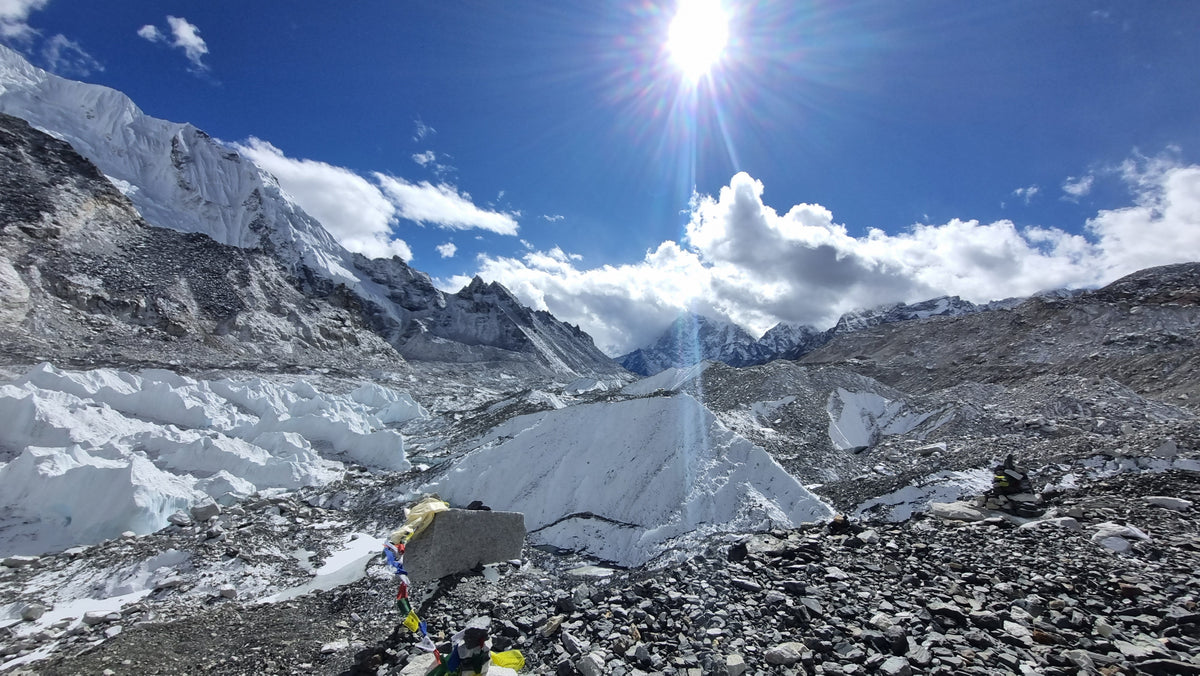
Glacier and mountains at Everest Base Camp on the Nepal side.
Everest, Lhotse and Ama Dablam above the trail to Everest Base Camp
Glacier and mountains at Everest Base Camp on the Nepal side.
Namche Bazaar at dusk, Khumbu, Nepal.
Ama Dablam and a trail in Khumbu, Nepal.
Tengboche Monastery facade, Khumbu, Nepal.
Snow-covered face of Ama Dablam, Nepal.
Boudhanath stupa in Kathmandu, Nepal.
Lobuche Peak Climbing Expedition Nepal route map

19 Days, Strenuous

19-Day Lobuche Peak Climbing Expedition Nepal

From $5,725 per person

  • Next departure Apr 5, 2027
  • Join a group of up to 10, or go private. Large groups welcome.
Duration
19 Days
Best season
Spring & Autumn
Max altitude
6,119m (20,075ft)
Difficulty
Strenuous

Strenuous: long, steep days in remote country, often camping, with passes or camps near or above 5,000 m (16,400 ft), or a climb above 6,000 m (19,700 ft) with crampons and fixed ropes.

Technical climbing: Crampons, ice axe and harness on fixed ropes up 55 to 60 degree snow and ice. You practice at base camp before summit day.

We reply within one business day. No payment to ask.

Sherpa guides
Permits & logistics included
Private trips available
Altitude safety expertise
A US company, paid in dollars

The climb to Lobuche Peak

From Lukla at 2,840 m to Lobuche Peak at 6,119 m (20,075 ft), the highest point of the trip.

Ask about this trip

Everest Base Camp, sunrise on Kala Pattar, and then the summit of Lobuche Peak at 6,119 meters. This expedition follows the full Khumbu trek and adds a real Himalayan summit.

Most Everest Base Camp treks turn around at 5,364 meters. This expedition goes to base camp and up Kala Pattar, the best-known viewpoint for Everest, and then moves on to a climbing objective: the summit of Lobuche Peak at 6,119 meters. Lobuche is the most accessible technical peak in the Khumbu, and the effort pays off. From the summit you can see Everest (8,849 meters), Lhotse (8,516 meters), Nuptse, and Makalu all at once, a view you do not get anywhere on the trekking route.

The approach follows the classic Everest Base Camp route up the Khumbu valley: Lukla at 2,840 meters, the suspension bridges and porters of the Dudh Kosi gorge, the Saturday market and tea houses of Namche Bazaar at 3,440 meters, the gompa of Tengboche at 3,860 meters with Ama Dablam above it, and the high meadows of Dingboche and Lobuche before the glacier moraine to base camp. The route is well established and the lodges along it are reliable, but above Namche the altitude calls for careful acclimatization, and the schedule is built around it.

Lobuche Peak was first climbed in 1984. It has become the most popular technical trekking peak in the Khumbu because it shares its approach with the base camp route, and climbers with basic alpine skills and good preparation can reach the top. The eastern summit at 6,119 meters is the usual objective. The route crosses a glacier, climbs a fixed-rope section on steep snow and ice, and finishes along a knife-edged snow ridge. You need crampons, an ice axe, and a harness, and the group gets instruction and practice before the summit push. Summit day starts at 3am and ends back at high camp by mid-afternoon, ten to twelve hours of climbing in all.

The Kathmandu days at the start and end of the expedition give the mountain days some background. Pashupatinath on the Bagmati River, the most sacred Hindu site in Nepal, and Boudhanath, the great stupa at the center of Kathmandu's Tibetan Buddhist community, both deserve time. The Sherpa culture you see all through the Khumbu, in the gompas, the mani walls, the prayer flags on the ridges, and the villages of Namche and Tengboche, grew from the same Tibetan Buddhist tradition as Boudhanath, so a visit there first helps you understand the high valley.

High-altitude travel can cause serious illness, even in fit travelers. Acclimatization reduces risk but cannot eliminate it. Tell your guide promptly about symptoms. Your guide may stop an ascent, change the route or arrange descent. Rescue and medical treatment depend on location, weather, access and available resources and cannot be guaranteed.

SherpaHolidays Terms and Conditions SH-TC-2026-10-14. Your accepted booking version and mandatory rights remain in effect.

Nineteen Days from Kathmandu to 6,119 Meters

Days 1 to 2  |  Kathmandu

Arrive in Kathmandu for the expedition briefing and two days in the city. The briefing covers the full nineteen-day itinerary: the altitude profile from Lukla to Lobuche Peak, the acclimatization plan for the approach and the summit, the gear you need for trekking and for climbing, and the arrangements for permits, flights, and logistics. Pashupatinath and Boudhanath give you background for the Sherpa valley above. The welcome dinner that evening is the first time the full expedition team is together.

Days 3 to 5  |  Lukla to Namche Bazaar

The flight from Kathmandu to Lukla at 2,840 meters is famous: the plane comes down steeply toward an upward-sloping runway on the edge of a valley wall, with the Himalaya in the windows from takeoff. From Lukla the trail follows the Dudh Kosi upstream through the gorge to Namche Bazaar, the Sherpa trading town at 3,440 meters. The Saturday market draws traders from across the Khumbu and from the Tibetan plateau beyond, and the lodges and bakeries make Namche livelier than any village higher up. The acclimatization day includes a walk to the Everest View Hotel at 3,880 meters, where you get your first clear view of Everest above the Lhotse-Nuptse ridge.

Days 6 to 8  |  Tengboche and Dingboche

The trail from Namche to Tengboche drops to the Dudh Kosi and climbs again through rhododendron forest to the monastery at 3,860 meters. Tengboche Gompa is the most important monastery in the Khumbu: its head lama is the religious authority for the Sherpa communities of the high valley, and the morning and evening puja in the main hall is one of the best chances a trekker has to see Tibetan Buddhist monastic practice. Ama Dablam, above the monastery as you approach, is widely considered the most beautiful mountain in the Khumbu. The trail continues through Pangboche to Dingboche at 4,410 meters. On the acclimatization day there, you walk up to 5,000 meters above the village, which speeds up your body's adjustment without a night at that height.

Days 9 to 12  |  Lobuche, Base Camp, and Kala Pattar

The trail from Dingboche climbs through the high moraines above the Khumbu Glacier to Lobuche at 4,930 meters and on to Gorak Shep at 5,140 meters, the last permanent settlement before base camp. The memorials at the Thukla Pass below Lobuche, chortens built for climbers who died on Everest and the other Khumbu peaks, mark the point where trekking country gives way to climbing country. You reach Everest Base Camp at 5,364 meters across the lateral moraine of the Khumbu Glacier, with the tents of the commercial expeditions around you and the Khumbu Icefall above. The next morning, Kala Pattar at 5,550 meters gives you the sunrise view of Everest's whole southwest face: the most photographed view of the mountain, with both the summit pyramid and the Hillary Step in sight.

Days 13 to 14  |  Lobuche Peak Summit

The group goes back from Gorak Shep to Lobuche Peak high camp, at about 5,600 meters, for the summit push. From high camp the route follows the glacier to the start of the technical section, where fixed ropes run up steep snow and ice to the east ridge. The knife-edged snow ridge to the eastern summit at 6,119 meters needs ice axe and crampon technique and careful footwork. Summit day starts at 3am, and you should be back at high camp by early afternoon, after ten to twelve hours of climbing. From the summit you see Everest, Lhotse, Nuptse, Makalu, Cho Oyu, and the rest of the Khumbu peaks all around.

Days 15 to 19  |  Descent and Return

The descent retraces the approach through Lobuche, Tengboche, and Namche to Lukla, covering in three days what took eight days on the way up. The last night in Lukla with the full Sherpa team is the traditional expedition celebration: tea houses on the main street, dancing, raksi, and the whole team together. Then you fly back to Kathmandu for two final days: shopping in Thamel, a farewell dinner, and your departure from Tribhuvan International Airport.

Day by Day

Day 1  Kathmandu  Arrival and Welcome

Someone from SherpaHolidays meets you at Tribhuvan International Airport for a private transfer to the Malla Hotel, or a similar luxury boutique hotel, in Kathmandu's Lazimpat district. The rest of the afternoon is free for a first walk around the neighborhood or a visit to the nearby temples. At the welcome dinner that evening the full expedition team meets for the first time: guides, climbers, and support staff are introduced, and the briefing covers the whole nineteen-day program.

Stay: Malla Hotel (or similar) in Kathmandu

Day 2  Kathmandu  City of Temples

The second day in Kathmandu is for the two sacred sites that tell you most about the culture of the Khumbu above. Pashupatinath on the Bagmati River is the most sacred Hindu site in Nepal and one of the most important Shiva temples in the world. From the eastern bank you can watch the cremation ghats, the sadhus, and the steady religious life of the temple without hurrying. Boudhanath, one of the largest stupas in the world, is the center of Kathmandu's Tibetan Buddhist community. The monasteries around the stupa's ring road, the monks and lay people walking around it at all hours, and the butter lamp shrines in the courtyard belong to the same tradition that built the gompas of Tengboche and Pangboche, so seeing it first helps you understand the high valley. In the afternoon, Bhaktapur shows you one of the valley's medieval Newari cities and the Golden Gate at the Palace of Fifty-Five Windows.

Stay: Malla Hotel (or similar) in Kathmandu

Days 3 to 4  Lukla to Namche Bazaar  Flight to Lukla

The flight from Kathmandu to Lukla at 2,840 meters in the Solu Khumbu takes about thirty-five minutes in a small plane, with the mountains close on both sides. The runway at Lukla is short and slopes steeply uphill, with a wall at the top end and a drop at the bottom, and the pilots who fly it regularly rate it one of the most challenging approaches in the world. From Lukla the trail drops to the Dudh Kosi River and follows it upstream through the gorge, over high suspension bridges and through the Sherpa villages of Phakding and Monjo, before the long climb to Namche Bazaar.

Namche Bazaar at 3,440 meters sits in a natural amphitheater on the hillside above the meeting of the Dudh Kosi and Bhote Kosi rivers. It is the administrative and trading center of the Khumbu, with government offices, a police checkpoint, banks, bakeries, gear shops, and a Saturday market that drew traders from across the region and from the Tibetan plateau long before trekkers arrived. Your first clear view of Everest, above the Lhotse-Nuptse ridge, comes on the climb from Monjo to Namche, and we give you time to stop and look.

Stay: Best Available Mountain Lodges in Namche Bazaar

Day 5  Namche Bazaar  Acclimatization

This acclimatization day is one of the most important days of the approach. The rule is to walk high and sleep low: you gain altitude during the day and come back down for the night. The walk from Namche up to the Everest View Hotel at 3,880 meters gains 440 meters and gives you the first clear panorama of the Everest region: Everest above the Nuptse-Lhotse ridge, Ama Dablam to the southeast, and Thamserku and Kangtega above the valley. The Sherpa Museum in Namche covers the history of the Khumbu people, their migration from Tibet, their farming and trading traditions, and how the region has changed since the first ascent of Everest in 1953. The afternoon is free for rest and preparation.

Stay: Best Available Mountain Lodges in Namche Bazaar

Days 6 to 7  Tengboche and Pangboche  The Monastery and the High Valley

The trail from Namche to Tengboche crosses the Dudh Kosi on the bridge at Phunki Tenga and climbs steeply through rhododendron forest to the monastery ridge at 3,860 meters. Tengboche Gompa was founded in 1916 and rebuilt after a fire in 1989. Its main assembly hall holds the religious artifacts, thangka paintings, and ritual instruments of the Khumbu's principal Buddhist monastery, and its head lama is the religious authority for the Sherpa communities of the high valley. The morning and evening puja in the main hall, with the deep dungchen horns, drums, and cymbals, is one of the best chances a trekker has to see Tibetan Buddhist monastic practice. The expedition team receives the traditional blessing here before going higher.

Ama Dablam, 6,812 meters, rises above the monastery and is in view from the approach trail and the courtyard. The twin ice flutings on its southwest face and the hanging glacier known locally as the dablam, the mother's charm box, give the mountain its name and its shape. For many visitors it is the mountain they remember best, Everest included. From Tengboche the trail continues through Pangboche to Dingboche at 4,410 meters, a high village above the Imja Khola valley, where flat meadows and stone walls shelter the lodges for the second acclimatization day.

Stay: Best Available Mountain Lodges in Tengboche then Dingboche

Day 8  Dingboche  High Altitude Acclimatization

The second acclimatization day is a walk from Dingboche at 4,410 meters to the ridge above the village at about 5,000 meters, then back down to sleep. From the ridge you look across the Imja Khola valley to Island Peak, a popular trekking peak whose route you can see on the far side, and above it to the south face of Lhotse at 8,516 meters, the sheer southern wall of the world's fourth-highest mountain and one of the hardest faces in Himalayan climbing. The walk takes a full day, and the high point is high enough to help your body adjust. High-altitude travel can cause serious illness, even in fit travelers. Acclimatization reduces risk but cannot eliminate it. Tell your guide promptly about symptoms. Your guide may stop an ascent, change the route or arrange descent. Rescue and medical treatment depend on location, weather, access and available resources and cannot be guaranteed.

Stay: Best Available Mountain Lodges in Dingboche

Days 9 to 10  Lobuche and Gorak Shep  The Glacier Moraine

The trail from Dingboche climbs up the Khumbu valley, above the lateral moraine of the Khumbu Glacier, to Lobuche at 4,930 meters. Memorial chortens for climbers who died on the Khumbu peaks line the Thukla Pass below the village, and the names on them include some of the best-known figures in Himalayan climbing. The next morning you reach Gorak Shep at 5,140 meters, the last permanent settlement before base camp: a cluster of lodges beside a seasonal lake on the glacier moraine, high enough that most people feel the thin air.

Stay: Best Available Mountain Lodges in Lobuche then Gorak Shep

Days 11 to 12  Everest Base Camp and Kala Pattar  The Icons of the Khumbu

From Gorak Shep you reach Everest Base Camp at 5,364 meters by crossing the lateral moraine of the Khumbu Glacier and following the glacier to the site below the Khumbu Icefall, where the commercial expeditions set up their camps each spring. From camp you can see the whole icefall, the first major obstacle on the South Col route and the section where the most Everest climbers have died: a jumble of ice seracs and crevasses that keeps collapsing as it moves down from the Western Cwm above. Standing below it, you get a clear sense of what climbing Everest involves.

For Kala Pattar at 5,550 meters, you leave Gorak Shep early and climb the black scree ridge above the settlement in the dark, reaching the viewpoint before first light touches the peaks. At sunrise the southwest face of Everest is in front of you: the whole summit pyramid, the Hillary Step on the southeast ridge, the South Col between Everest and Lhotse, and the Khumbu Icefall below. It is the most photographed view of the mountain, and the one where you can see all of these features at once.

Stay: Best Available Mountain Lodges in Gorak Shep

Days 13 to 14  Lobuche Peak  The Summit Push

The group goes back from Gorak Shep to Lobuche Peak high camp, at about 5,600 meters on the moraine below the east face. In the afternoon, the final technical briefing covers the route to the summit, crampon and ice axe technique for the steep section, using the fixed ropes, how to move on the knife-edged ridge, and what we do if the weather or conditions change. You will already have practiced ice climbing at base camp earlier in the expedition, so the skills are in place before summit day. Evenings at high camp end early: asleep before 8pm for a 3am start.

Summit day starts in the dark and cold. For the first hours you cross the glacier by headlamp, with the Khumbu peaks outlined against the stars. The fixed ropes start at the base of the technical section and run up 55 to 60-degree snow and ice slopes to the east ridge. The knife-edged ridge to the summit needs careful footwork and a steady pace: the drop on both sides is big, and conditions on summit day change with the weather and the season. From the eastern summit at 6,119 meters you get a 360-degree view of the Khumbu: Everest, Lhotse, Nuptse, and Makalu to the east, Ama Dablam to the southeast, and Cho Oyu to the northwest. The round trip from high camp to the summit and back takes ten to twelve hours.

Stay: Lobuche Peak High Camp then Best Available Mountain Lodges

Days 15 to 17  Descent through the Khumbu  The Homeward Trail

The descent follows the approach route in reverse. The trail from Lobuche back through Pangboche to Tengboche covers in one day what took three days on the way up, and below Tengboche you are back in the rhododendron forest and the widening Dudh Kosi valley. A last night at Tengboche gives you one more visit to the gompa and its monks before the trail drops to Namche for the second-to-last night of the trek.

Namche feels different on the way down. The Saturday market, the bakeries, and the gear shops are the same, but the altitude that felt hard two weeks ago is now comfortable, and the last stages of the descent go quickly. The trail from Namche to Lukla follows the Dudh Kosi downstream through the gorge, past the suspension bridges, the porters, and the monastery walls you passed on the way up. The last night in Lukla, before the flight to Kathmandu, is the expedition celebration: the full team together, raksi, and dancing on the main street.

Stay: Best Available Mountain Lodges

Days 18 to 19  Kathmandu  Return and Departure

The thirty-five-minute flight from Lukla takes you back to Kathmandu, with the mountains in the windows as the plane comes down into the valley. The last two days in Kathmandu are for rest, shopping in Thamel, and a farewell dinner with the full guide team. The Sherpa guides, climbing staff, and high-altitude porters who carried the expedition's gear and looked after every member of the team through nineteen days in the Khumbu did more than anyone for the summit and the safe descent, and the farewell dinner is the time to thank them.

On Day 19 we take you to Tribhuvan International Airport for your flight home.

Stay: Malla Hotel (or similar) in Kathmandu

The Sherpa Standard

Every SherpaHolidays trip is fully supported, from arrival to departure. Here is what that means on this nineteen-day expedition.

Accommodation and Meals

  • Kathmandu Hotel: 3 nights at the Malla Hotel (or similar boutique hotel) in Kathmandu, with daily breakfast.
  • Mountain Lodges: 14 nights in the best available high-altitude guesthouses in the Khumbu, chosen by our local team for comfort and location on the route, plus 1 night at Lobuche Peak high camp before the summit.
  • Full Board on Trek: All standard meals on the trek and climb, with the food you need at high altitude.
  • Staff Provisions: Food, accommodation, insurance, and equipment for all local staff and porters throughout the expedition.

Leadership and Support

  • Expedition Guide: One English-speaking Sherpa lead guide who knows the history, culture, and terrain of the Khumbu and has high-altitude climbing experience on the region's peaks.
  • Climbing Staff: All the local climbing staff and high-altitude porters needed to carry the technical equipment, so you trek with only a daypack.
  • Safety and Ethics: Comprehensive insurance, fair wages, and medical support for all staff. SherpaHolidays is committed to the standards of the International Porter Protection Group.
  • Government Compliance: All government taxes, official expedition expenses, and regulatory requirements covered.

Transport and Permits

  • Private Transfers: All airport and hotel transfers in Kathmandu by private car, van, or bus.
  • Domestic Flights: Round-trip flights between Kathmandu and Lukla, including all airport departure taxes.
  • Permits: All Sagarmatha National Park entry permits, Lobuche Peak climbing permits, and every other climbing permission, handled for you.


What Is Not Included

  • International airfare to and from Kathmandu and Nepal entry visa fees (USD $50 for a 30-day visa)
  • Lunch and dinner in Kathmandu, so you can try the city's restaurants on your own
  • Comprehensive travel insurance, which is a condition of every booking. Your policy must cover emergency medical treatment, emergency evacuation (including helicopter rescue at high altitude), trip cancellation and interruption, and repatriation.
  • Personal trekking and technical climbing equipment: boots, crampons, ice axe, harness, helmet, and warm layers
  • Personal extras: alcoholic beverages, cold drinks, hot showers, battery charging, laundry, and WiFi at lodges
  • Tips for Sherpa guides, climbing staff, porters, and drivers
  • Single supplement (for those taking a private room)

Five Highlights

The Summit of Lobuche Peak at 6,119 Meters

Lobuche Peak is the most accessible technical trekking peak in the Khumbu. The route crosses a glacier, climbs a fixed-rope section on snow and ice at 55 to 60 degrees, and follows a knife-edged snow ridge to the eastern summit. Summit day starts from high camp at 3am and takes ten to twelve hours in all. From the top, Everest, Lhotse, Nuptse, Makalu, Cho Oyu, and Ama Dablam stand in a full 360-degree circle, a view you cannot get from the trekking route. The climb is the reason for this expedition and what sets it apart from a standard Everest Base Camp trek.

Everest Base Camp and the Khumbu Icefall

Everest Base Camp at 5,364 meters sits below the Khumbu Icefall on the lateral moraine of the Khumbu Glacier. From camp you see the whole icefall, the first major obstacle on the South Col route and the part of the mountain where the most climbers have died: a mass of ice seracs and crevasses that keeps collapsing as it moves down from the Western Cwm. Standing below it gives you a clear sense of what climbing Everest involves. In the spring season the camp holds the tents, the fixed ropes, and the organized chaos of the world's most famous mountain approach.

Kala Pattar at Sunrise

Kala Pattar at 5,550 meters has the most complete view of Everest anywhere on the standard trekking route. You climb from Gorak Shep in the dark to reach the viewpoint before first light touches the summit, and at sunrise the whole southwest face is in front of you: the summit pyramid, the Hillary Step on the southeast ridge, the South Col between Everest and Lhotse, and the Khumbu Icefall below. It is one of the most photographed mountain views in the world, and it is cold up there as the light slowly arrives from the east.

Tengboche Monastery and Sherpa Culture

Tengboche Gompa at 3,860 meters is the most important monastery in the Khumbu and the center of Sherpa religious life in the high valley. Its head lama is the spiritual authority for the Sherpa communities whose culture shaped the Khumbu for climbers and trekkers alike. The morning and evening puja in the main hall, with the deep dungchen horns and the steady beat of the drums, is one of the best chances on any trekking route to see Tibetan Buddhist monastic practice up close. The expedition team receives the traditional blessing here before going higher. The Namche Saturday market, the mani walls along the trail, and the prayer flags on the ridges are the same tradition in everyday life.

A Technical Alpine Ascent

Lobuche Peak is a technical climb. The route crosses a glacier, uses crampon and ice axe technique on the steep fixed-rope section, and needs careful footwork on the knife-edged east ridge, where the drop on both sides is big. You learn the skills you need through instruction and ice climbing practice before the summit push. Summit day starts at 3am, in the dark and cold at over 5,600 meters. The preparation, the alpine start, the moves on the ridge, and the summit at 6,119 meters, with the big Himalayan peaks all around you, make this a real step up from trekking.

Travel dates

The deposit is part of the total price, not an additional fee.

  • April 5 – 23, 2027 Available
    $5,725 per person
  • October 5 – 23, 2027 Available
    $5,725 per person
  • November 1 – 19, 2027 Available
    $5,725 per person

Scheduled departure deposit: $500 per person for bookings more than 90 days before departure

Private journey deposit: 30% of the trip price for bookings more than 90 days before departure

Final balance: Due 90 days before departure. Bookings made 90 days or fewer before departure are paid in full at booking.

Our conditions promise: A qualifying Nepal advisory change or trek-region closure within 60 days of departure lets you move dates free or take full credit for 24 months.

Scheduled departures: No minimum group size

SherpaHolidays Terms and Conditions SH-TC-2026-10-14. Your accepted booking version and mandatory rights remain in effect.

Questions about this trip?

Ask Sam or Gyalgin

We reply within one business day. No payment, no commitment.

Loading the inquiry form…

This is an inquiry, not a booking. Nothing is charged here.

  • Within one business day We reply within one business day.
  • Then A call, if you would like one.
  • When you are ready A deposit holds your place.

Or talk to us directly:

+1 (855) 743-7725 info@sherpaholidays.com

Things guests ask before booking

Straight answers about booking, payment and how we run every trip.

  • You need basic alpine skills and good preparation. Fixed ropes run up snow and ice of 55 to 60 degrees to the east ridge, and the ridge to the summit is narrow, with big drops on both sides. You use crampons, an ice axe and a harness.

    You practice ice climbing at base camp earlier in the trip, and the team gives a final technical briefing before summit day.

  • You start at 3am from high camp, at about 5,600 meters. The summit is 6,119 meters (20,075 ft). The round trip takes ten to twelve hours, and you should be back at high camp in the afternoon.

  • Yes. Before the climb, the route goes up to Gorak Shep, Everest Base Camp and Kala Pattar for the sunrise view of Everest. There are acclimatization days at Namche Bazaar and at Dingboche, where you walk up to 5,000 meters and come back down to sleep.

  • Your own boots, crampons, ice axe, harness, helmet and warm layers. These are not included in the price. The climbing staff carry the technical equipment, so you trek with only a daypack.

  • No. At the lodges these are paid extras, along with drinks and laundry.

  • If weather delays your Lukla flight and you need to wait, we cover up to 2 extra nights while you wait, and more when the situation calls for it. Nights you choose to add, or a helicopter you choose instead of waiting, are your cost, quoted before anything is booked.

    We suggest booking your flight home one or two days after the trip ends.

  • Groups of up to 10, or private for your own group. Scheduled group dates have no minimum, so they run with any number of guests. Large groups welcome.

  • The deposit is part of the total price, not an additional fee. A scheduled booking made more than 90 days before departure requires $500 per person. A private journey booked more than 90 days before departure requires 30% of the trip price. The balance is due 90 days before departure. At 90 days or fewer, full payment is due at booking. Your disclosure and invoice state the exact amounts and dates.

    Once your deposit is received, your price is locked except for government taxes, park fees or levies introduced after that date. We tell you in writing as soon as we learn of one and identify its amount and basis. A different route, hotel upgrade or optional activity is not an automatic extra charge; any additional cost requires your agreement before it is booked.

    SherpaHolidays Terms and Conditions SH-TC-2026-10-14. Your accepted booking version and mandatory rights remain in effect.

  • Scheduled departure deposit
    $500 per person for bookings more than 90 days before departure

    Private journey deposit
    30% of the trip price for bookings more than 90 days before departure

    Final balance
    Due 90 days before departure. Bookings made 90 days or fewer before departure are paid in full at booking.

    You cancel 90 or more days before departure
    Your deposit becomes credit toward any SherpaHolidays trip for 24 months. Payments above the deposit are refunded, subject only to a specific supplier exception disclosed and accepted before payment.

    You cancel 89 to 60 days before departure
    Cancellation charge: 50% of the total trip price

    You cancel 59 to 46 days before departure
    Cancellation charge: 75% of the total trip price

    You cancel 45 days or fewer before departure
    Cancellation charge: 100% of the total trip price. No refund.

    Our conditions promise
    A qualifying Nepal advisory change or trek-region closure within 60 days of departure lets you move dates free or take full credit for 24 months.

    We cancel or cannot provide contracted services
    Refunds for services not provided as required by California law. An alternative or credit is your choice, not a required substitute.

    Scheduled departures
    No minimum group size

    The traveler-cancellation table does not remove our conditions promise, rights under an already accepted booking, or refunds and other rights required by law.

    If the US State Department raises Nepal to Level 3 or higher, or your trek region is closed, within 60 days of departure, you can move your dates free or take full credit toward any SherpaHolidays trip for 24 months. This applies instead of the normal traveler-cancellation charges, including the 45-day rule and any supplier cancellation exception.

    Full credit means the payments you made for the affected trip, not only the deposit. We record the trigger and your choice in writing. The credit follows Section 4's use and validity terms. A free date move has no change fee; we disclose any price difference for the replacement trip before you decide. The promise does not replace a cash refund owed when we cancel or cannot provide contracted services.

    SherpaHolidays Terms and Conditions SH-TC-2026-10-14. Your accepted booking version and mandatory rights remain in effect.

  • Comprehensive travel insurance is a condition of every booking. Your policy must cover emergency medical treatment, emergency evacuation, trip cancellation and interruption, and repatriation. Confirm with your insurer that it covers your itinerary's activities and maximum altitude, including technical climbing, rafting, helicopter evacuation and search and rescue where applicable. Provide proof before departure. Consider obtaining cover when you book because some benefits have purchase deadlines.

    We are not your insurer. Receiving your documents is not a determination of coverage and does not guarantee payment of a claim. Medical and evacuation providers may require payment in advance. Keep insurer emergency details available during your trip.

    SherpaHolidays Terms and Conditions SH-TC-2026-10-14. Your accepted booking version and mandatory rights remain in effect.

  • Yes. Any departure can run privately on your dates, and we adjust pace, accommodation and rest days around you. If you want a different route entirely, we plan custom itineraries from scratch.

  • Guides from our own Sherpa team lead every trip in Nepal. Beyond Nepal we work with trusted local partners we have known for years, so there is always someone beside you who knows the ground well.

  • The Sherpa Standard section on this page lists everything included on this trip, from guides and permits to lodges and meals. International flights and travel insurance are the main things you arrange yourself.

Guest reviews

What guests say

5.0 average from 5 Google reviews
Read them on Google
I recently took a trip to Nepal and was met with wonderful service by the staff and amazing tours with the Sherpa guides. The cultural tours were by far my favorite. Highly recommend!!
Avin Fatehi
Took a trip to Nepal for 10 days and got an amazing tour of the area! Great people, great places 10/10 would go again 🔥🔥
Kevin Ye
I found Sherpa Holidays when I was looking to do the 23 days Annapurna circuit trek and they not only made me a custom itinerary to fit my needs, but they also made the entire process seamless. Highly recommend Sherpa Holidays for anyone looking to head to Nepal!
Justin Zhang
The staff were easy to communicate with and I had a wonderful trip.
Jack Cavada

Reviews shown as published on our Google profile.