
Decorative items on a market stall with people walking in the background
Stairway leading up to a temple with prayer flags against a mountainous background
Scenic view of a mountainous landscape with a stream, wooden bridge, and stone wall.
Gold prayer wheel in front of a traditional building with a blurred background
Traditional building with black and white architecture in a garden setting
FREE CANCELLATION UP TO 30 DAYS BEFORE DEPARTURE. FULL TERMS APPLY.

15 Day Mustang and Poon Hill Trek Nepal | SherpaHolidays

Starting From
$4,175.00
Duration
15 Days
Best Season
Spring
Max Altitude
3,710m (12,172ft)
Comfort Level
Moderate / Rewarding
Dates & Prices


Full payment at booking secures your permits, private guides, and all logistics before your departure date.

Licensed Sherpa Guides
Permits & Logistics Included
Private Journeys Available
Altitude Safety Expertise

A pilgrimage route, a geological marvel, and one of the great sunrises on earth. In fifteen days.

At Muktinath Temple, at 3,710 meters in the high rain shadow north of the Annapurna massif, a natural flame burns on the surface of a spring. Underground gas seeps through a fissure in the rock and ignites on contact with water. Hindus call the site one of 108 sacred Vishnu shrines. Buddhists recognize it as one of the 24 Tantric power places of the Himalayan world. Both traditions have been sending pilgrims here for centuries, and the flame has been burning through all of it. This is where the trek is going.

The route that reaches Muktinath is built around the Kali Gandaki, the river that carved the deepest gorge on earth between the massifs of Annapurna I at 8,091 meters and Dhaulagiri at 8,167 meters, a canyon that drops over 5,500 meters from the surrounding peaks to the river below. The trail follows the gorge north from Jomsom through the ancient walled town of Kagbeni and up to the shrine, then turns south and descends through the Thakali villages of Marpha and Tukuche to the hot springs at Tatopani. The final section climbs west to Ghorepani and up to Poon Hill at 3,210 meters for the sunrise panorama of the full Annapurna range.

Three landscapes. One valley. A Hindu-Buddhist shrine that stops both traditions in their tracks. The world's deepest gorge. The most famous sunrise viewpoint in Nepal. Fifteen days connects them all.

15 Days from the Sacred Flame to Poon Hill

Days 1 to 3  |  Kathmandu

Arrive in Kathmandu and spend two full days in the valley. Swayambhunath, Pashupatinath, Boudhanath, the Durbar Squares, and the medieval town of Kirtipur. The cultural foundation before the mountains begin.

Days 4 to 7  |  Pokhara, Jomsom, and Muktinath

Drive 200 kilometers west to Pokhara, then take the mountain flight to Jomsom through the Kali Gandaki corridor, passing between the summits of Annapurna and Dhaulagiri. Trek north through the ancient walled town of Kagbeni to Muktinath, where the eternal flame burns on water and the 108 water spouts of the Jwala Mai temple have been running cold and clear for centuries. The highest point of the trek.

Days 8 to 10  |  The Kali Gandaki Gorge

Descend south through twisted rock formations to Marpha, the whitewashed Thakali town famous across Nepal for its apple orchards and apple brandy. Continue through Tukuche, the historic Thakali trade center, into the narrowing gorge where the canyon walls close in and Dhaulagiri and Nilgiri loom overhead. Reach the hot springs at Tatopani, where the thermal pools on the riverbank are the most welcome arrival in the lower Kali Gandaki.

Days 11 to 12  |  Ghorepani and Poon Hill

Climb steeply west from the valley floor to Ghorepani at 2,853 meters, the traditional horse-watering stop on the old salt trade route. Rise before dawn on Day 12 and walk the final 45 minutes to Poon Hill at 3,210 meters for the sunrise. Dhaulagiri, Annapurna I through IV, Machhapuchhre, Hiunchuli, and the layered ridges of the Annapurna range turn orange and then white as the sun clears the eastern horizon. This is the most celebrated sunrise viewpoint in Nepal and it earns it every clear morning.

Days 13 to 15  |  Return to Pokhara and Kathmandu

Descend through stone staircases to Birethanti and return to Pokhara by the afternoon. Final celebration dinner on the lakeside. Drive or fly back to Kathmandu for the last night and international departure.

Day by Day

Days 1 to 2  Arrival in Kathmandu  Sacred Sites and the Briefing

Arrive at Tribhuvan International Airport and transfer to your hotel with a traditional Sherpa welcome. The briefing covers the full route: the mountain flight, the high-altitude acclimatization at Muktinath, the gorge descent, and the Poon Hill approach. Evening in Thamel.

Day Two is a full circuit of the Kathmandu Valley's most significant sites. Swayambhunath on its hilltop, where the stupa's painted eyes have watched over the city since the 5th century. Pashupatinath on the Bagmati River, Nepal's most sacred Hindu complex, where the riverside cremation ghats have operated continuously for centuries. Boudhanath, the great white stupa at the heart of the Tibetan Buddhist community. Patan Durbar Square, the finest medieval Newari architecture in the valley. The historic town of Kirtipur, one of the oldest settlements in the valley and the last to resist unification under Prithvi Narayan Shah.

Stay: Kathmandu Hotel

Day 3  Kathmandu to Pokhara  The Drive West

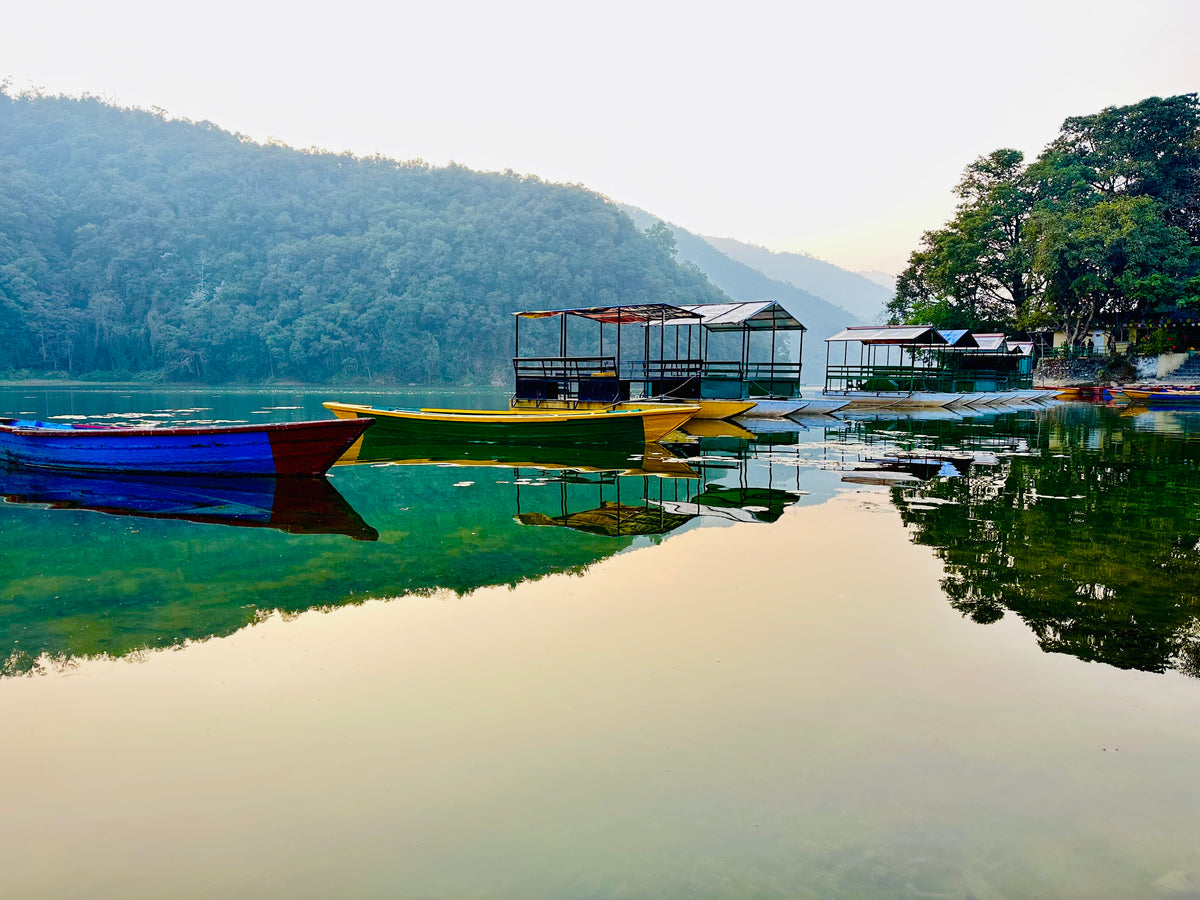
Drive 200 kilometers west from Kathmandu to Pokhara along the Prithvi Highway, which follows the Trishuli and Mardi rivers through the Himalayan foothills before arriving at Nepal's second city. Pokhara sits at 827 meters beside Phewa Lake with the Annapurna massif and the sacred Fish Tail peak, Machhapuchhre, rising directly above the water. The afternoon is for settling in and the evening for the lakeside: the restaurants, the reflection of the mountains in the water, and the preparation for the Jomsom flight tomorrow morning.

Stay: Pokhara Hotel

Days 4 to 7  Jomsom to Muktinath  Into the High Rain Shadow

The Jomsom flight is one of the most spectacular short mountain flights in Nepal: the aircraft tracks north up the Kali Gandaki corridor, passing between the flanks of Annapurna and Dhaulagiri at close enough range to see the glaciers and the upper ridges clearly from the window, before landing on the airstrip at Jomsom at 2,720 meters. The flight operates in the morning because the Kali Gandaki wind, which funnels up the gorge from the south every afternoon with enough force to strip a camp in an hour, makes afternoon flying impractical. Early starts matter here.

From Jomsom the trail moves north through the Mustang landscape: dry, windswept, high rain shadow country that receives very little monsoon moisture and looks more like the Tibetan plateau than Nepal's green hill country. The ancient walled town of Kagbeni sits at the junction of the Kali Gandaki and Jhong rivers, its medieval mud-brick architecture and narrow alleyways largely intact. Kagbeni marks the boundary of Upper Mustang; the trail north continues toward Lo Manthang for those with the restricted area permit. This itinerary turns east toward Muktinath.

Muktinath Temple at 3,710 meters is one of the most significant pilgrimage sites in the Himalayan world, recognized by both Hindu and Buddhist traditions as a place of profound spiritual power. For Hindus it is one of 108 Divya Desams, sacred Vishnu shrines, and the bathing in its 108 water spouts, each carved in the form of a cow's head, is an act of purification that Vaishnava pilgrims travel enormous distances to perform. For Buddhists it is one of the 24 Tantric pilgrimage sites of the Himalayan region, associated with the Dakini Yogmaya. The natural flame that burns on the surface of the spring inside the Jwala Mai shrine is fed by underground methane and has been lit, continuously, for as long as the site has been in use. The combination of fire and water in a single sacred location is the theological core of what makes Muktinath unusual even among Himalayan shrines.

Stay: Best Available Mountain Lodges

Days 8 to 10  Marpha to Tatopani  The World's Deepest Gorge

The descent south from Muktinath follows the Kali Gandaki downstream through terrain that changes rapidly with every hour of walking. The high rain shadow of Mustang gives way within a day's descent to a more temperate landscape, the rock formations twisting into layered sedimentary columns and the first vegetation beginning to appear on the lower slopes. Marpha is the first significant stop: a whitewashed town built around a central lane of flat-roofed houses, apple orchards on the slopes above the village, and a strong reputation for the apple brandy and apple products that the Thakali families of Marpha have been producing and trading for generations. The town is one of the best-preserved examples of traditional Thakali architecture in the valley.

Tukuche, further south, was historically the most important trading center on the Kali Gandaki route, the point where Tibetan salt caravans from the north met the grain traders coming up from the south. The Thakali people of this valley built their prosperity on that trade and the architecture of Tukuche reflects it: substantial courtyard houses, community granaries, and a layout that reflects a community organized around commerce as much as agriculture. The salt trade largely ended with the opening of alternative routes in the 20th century but the Thakali communities remain and the buildings endure.

The gorge narrows dramatically south of Tukuche. The Kali Gandaki here cuts through the deepest canyon on earth: the river at roughly 2,500 meters, Dhaulagiri's summit at 8,167 meters above it to the west, Annapurna I at 8,091 meters to the east. The vertical interval between river and peaks is over 5,500 meters, more than three times the depth of the Grand Canyon. Walking through the narrow section of the gorge with both massifs visible above the canyon walls on either side is one of those Himalayan moments where the scale of the landscape simply exceeds what the human eye is calibrated to process. Tatopani at the southern end of the gorge sits at roughly 1,190 meters, and the natural hot spring pools on the riverbank have been receiving exhausted trekkers for as long as the trail has been in use. The Rupse Chhahara waterfall on the approach, dropping in a single long cascade above the trail, is the best lunch stop on the southern section.

Stay: Traditional Mountain Lodges

Days 11 to 12  Ghorepani and Poon Hill  The Sunrise

The climb from Tatopani to Ghorepani gains nearly 1,700 meters in elevation through rhododendron forest that is among the finest in the Annapurna Conservation Area: enormous trees with trunks as wide as a person's armspan, the branches flowering red and pink in spring, the forest floor deep with moss and leaf litter. Ghorepani at 2,853 meters takes its name from the Nepali words for horse and water: it was the staging post on the old Jomsom trade route where pack animals were watered before or after the high section. The village today is a trekking hub, but the rhododendron forest that surrounds it is the same forest that the salt caravans moved through.

The walk to Poon Hill on Day 12 leaves before dawn, a 45-minute climb through the forest by torchlight to arrive at the viewpoint as the sky begins to lighten. Poon Hill at 3,210 meters looks north and northwest over the full Annapurna range: Dhaulagiri I at 8,167 meters to the far west, then Tukuche Peak, Nilgiri, Annapurna I through IV across the northern arc, Hiunchuli, and Machhapuchhre, the Fish Tail, to the southeast. The sun rises behind the eastern ridges and the light moves westward across the peaks in a progression that takes roughly twenty minutes from the first orange on Annapurna I to the full illumination of Dhaulagiri. On a clear morning it is the most complete single panorama of the central Himalaya available from any viewpoint accessible without technical climbing.

Stay: Mountain Lodges

Days 13 to 15  Return to Pokhara and Kathmandu

Descend from Ghorepani through the stone-paved staircases to Hile and Birethanti, where the trail meets the road at the edge of the Annapurna Conservation Area. Return to Pokhara by the afternoon: the lake, the celebratory dinner, and the particular pleasure of being back at low altitude after ten days in the high country. Drive or fly back to Kathmandu on Day 14 for the final evening in the city. Thamel, the last walk, the last meal. International departure on Day 15 or the following morning.

Stay: Pokhara Luxury Hotel then Kathmandu Hotel

The Sherpa Standard

Every SherpaHolidays journey is fully supported. Here is what that covers for this trip.

Accommodation and Meals

  • Kathmandu and Pokhara: Premium hotel accommodations at the start and end of the journey.
  • Mountain Lodges: Hand-selected courtyard lodges throughout the trekking section, chosen for location and local hospitality.
  • Full Board on Trek: All meals during the trekking days: breakfast, lunch, and dinner throughout.
  • Welcome and Farewell: Traditional welcome experience on arrival and celebratory farewell dinner in Pokhara.

Leadership and Logistics

  • Lead Guide: Dedicated licensed English-speaking guide with deep knowledge of the Kali Gandaki region and the Muktinath pilgrimage tradition.
  • Sherpa Porters: Professional porters for all heavy luggage management on the trekking section.
  • Acclimatization Schedule: Careful altitude progression and daily health briefings through the Muktinath section.

Transport and Logistics

  • Jomsom Flight: Mountain flight from Pokhara to Jomsom, one of the most spectacular short flights in Nepal.
  • Private Transfers: All airport pickups, drops, and the overland drive between Kathmandu and Pokhara.
  • Permits and Fees: ACAP entry fees, all trekking permits, and monument entry fees fully covered.


What Is Not Included

  • International airfare to and from Kathmandu
  • Nepal entry visa fees
  • Lunch and dinner while in Kathmandu
  • Specialized trekking clothing, boots, and personal medications
  • Travel and emergency evacuation insurance. We can recommend providers.
  • Tips for guides and porters
  • Single supplement (for those taking a private room)

Five Moments That Define This Trek

The Flame That Burns on Water

Inside the Jwala Mai shrine at Muktinath, a natural flame burns on the surface of a spring fed by underground methane seeping through a rock fissure. Fire and water in the same place, continuously, for as long as the site has been in religious use. Hindus recognize Muktinath as one of 108 sacred Vishnu shrines. Buddhists identify it as one of the 24 Tantric power places of the Himalayan world. The 108 water spouts of the main temple complex have been running cold and clear through pilgrim seasons for centuries. There is no equivalent site in Nepal and very few in the world.

The Deepest Gorge on Earth

The Kali Gandaki cuts between Dhaulagiri I at 8,167 meters and Annapurna I at 8,091 meters, with the river running at roughly 2,500 meters below their summits. The vertical interval exceeds 5,500 meters, more than three times the depth of the Grand Canyon, making this the deepest gorge on the planet by any standard measurement. Walking through the narrow section of the canyon with both massifs visible above the walls on either side is one of those Himalayan experiences where the scale simply exceeds what the eye is prepared to process.

Poon Hill at Sunrise

The viewpoint at 3,210 meters looks north and northwest over the complete Annapurna range: Dhaulagiri, Tukuche, Nilgiri, Annapurna I through IV, Hiunchuli, and Machhapuchhre in a single unobstructed arc. The sun rises behind the eastern ridges and the light moves westward across the peaks over roughly twenty minutes, from the first orange on Annapurna I to the full illumination of Dhaulagiri. This is the most celebrated sunrise in Nepal. It earns the reputation every clear morning.

Marpha and the Thakali Heritage

The whitewashed town of Marpha is the finest example of traditional Thakali architecture in the Kali Gandaki valley: flat-roofed mud-brick houses built around a central paved lane, apple orchards on the terraces above, and a community that has been producing apple brandy from these orchards for generations. The Thakali people built the prosperity of the upper Kali Gandaki on the salt trade between Tibet and the southern hills, a commerce that ran through Tukuche and Marpha for centuries before alternative routes ended it. The architecture and the community remain.

The Jomsom Mountain Flight

The early morning flight from Pokhara to Jomsom tracks north up the Kali Gandaki corridor between Annapurna and Dhaulagiri, close enough to both massifs to see the glaciers and upper ridges from the aircraft window. The flight operates only in the morning because the valley wind, which builds through the afternoon with enough force to make flying dangerous, grounds aircraft by midday. It is one of the most dramatic short flights in commercial aviation and a genuinely different way to enter the high country than walking up from the south.

Flexible Bookings

Full payment at booking secures your permits, private guides, and all logistics before your departure date. However, there are deposits available to secure your spot.

Travel Dates

Secure your spot with a $500 deposit. The remaining balance is due 60 days before departure.

Trip duration
Availability
Prices from
October 1 – October 15 (Deposit) Most Popular
Available
$500.00
Remaining spots
10 spots remaining
October 1 – October 15
Available
$4,175.00
Remaining spots
10 spots remaining
March 15 – March 29 (Deposit) Most Popular
Available
$500.00
Remaining spots
10 spots remaining
March 15 – March 29
Available
$4,175.00
Remaining spots
10 spots remaining
November 1 – November 15 (Deposit) Most Popular
Available
$500.00
Remaining spots
10 spots remaining
November 1 – November 15
Available
$4,175.00
Remaining spots
10 spots remaining

Things Guests Ask Before Booking

Real questions, answered by people who have actually made these crossings.
  • Yes, and they vary by country. Nepal's visa is available on arrival for most nationalities. Tibet requires a special Tibet Travel Permit, arranged through us it cannot be obtained independently through us. Bhutan requires a Bhutan visa, which we handle as part of the booking process. India requires a tourist visa applied for in advance. We
    walk every guest through exactly what's needed for their specific journey, well before departure.

  • Every journey we offer can be adjusted in duration, pace, accommodation tier, specific sites, and rest days. If none of our fixed routes match what you have in mind, we can build a multi-country itinerary from scratch. That's not an upsell, it's actually how most of our returning guests book.

  • Flights from your home country to Kathmandu are not included, as these vary
    significantly by departure city, and we want you to book what works for your schedule and budget. All regional flights within the journey, Kathmandu to Lhasa, Kathmandu to Paro, and so on, are included unless your itinerary specifies otherwise. We'll confirm every included and excluded flight clearly before you book.

  • Autumn (September to November) and spring (March to May) are the strongest
    windows for most multi-country journeys. That said, each destination has its own rhythm. Tibet is best visited before the summer rains, Bhutan has a spring festival season worth planning around, and India's north is at its finest from October through February. When you book with us, we advise on the exact timing based on where you're going and what you want to see.

  • In Nepal, your journey is led entirely by our Sherpa team. In Bhutan, Tibet, and India, we work with trusted local guides who meet our standard people we've partnered with for years, who know their regions the way our Sherpas know the Himalayas. You will always have someone beside you who actually knows where they are.

  • We handle everything: permits, accommodations, inter-country transfers, regional flights, border crossings, and on-the-ground coordination in each country. The only thing you arrange independently is your international flight to Kathmandu. From the moment you land, it's ours to manage.