
Decorative items on a market stall with people walking in the background
Decorative architectural element with a statue on top against a cloudy sky
People walking through a traditional wooden doorway in a mountainous area.
FREE CANCELLATION UP TO 30 DAYS BEFORE DEPARTURE. FULL TERMS APPLY.

17 Day Island Peak Climbing Nepal | SherpaHolidays

Starting From
$4,975.00
Duration
17 Days
Best Season
Autumn
Max Altitude
6,189m (20,305ft)
Comfort Level
Challenging / Technical
Dates & Prices


Full payment at booking secures your permits, private guides, and all logistics before your departure date.

Licensed Sherpa Guides
Permits & Logistics Included
Private Journeys Available
Altitude Safety Expertise

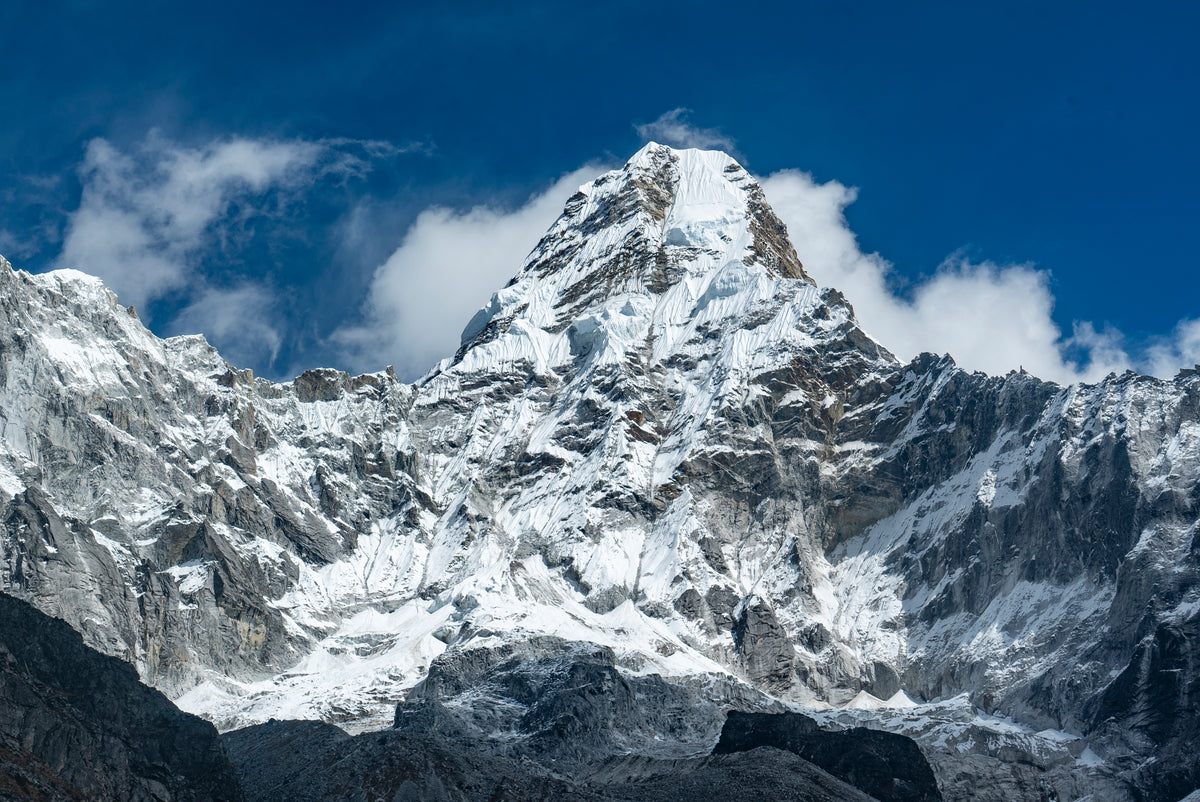
Island Peak sits at the heart of the Khumbu, surrounded by Lhotse, Nuptse, and Makalu on every side. The approach follows the Everest Base Camp trail through the most famous Sherpa valley in Nepal. The summit at 6,189 metres is the reward for both.

Island Peak, known in Nepali as Imja Tse, was named by Eric Shipton’s 1951 Everest reconnaissance expedition, which observed it from the Kongma La as a peak that appeared to rise like an island from the surrounding glaciers. First climbed in 1953 by members of the successful Everest expedition as a training exercise for acclimatization, it has since become one of the most sought-after technical trekking peaks in Nepal. The technical demands are real: glacier travel, a bergschrund crossing, and a steep summit headwall of 50 to 60 degrees require crampons, ice axe, and harness, and the summit day is an alpine start with ten to twelve hours of total climbing. But the approach, the position, and the summit view make Island Peak one of the most rewarding objectives in the Khumbu.

The seventeen-day itinerary is built on the premise that the approach through the Khumbu deserves as much time as the summit push, and that the cultural and landscape experience of the Sherpa heartland is integral to what the expedition is. The route from Lukla to Namche Bazaar follows the turquoise Dudh Kosi through pine forest and suspension bridges, the Hillary Bridge high above the river gorge among the most iconic crossing points in Nepal. The acclimatization day at Namche includes the walk to the Everest View Hotel above the town and the visit to the Hillary School in Khumjung, the school that Edmund Hillary built for the Sherpa community in 1961 and that still operates as the primary school for the villages of the upper Khumbu.

Tengboche Monastery at 3,867 metres is the spiritual centre of the Khumbu, its head lama the religious authority for the Sherpa communities of the high valley. The afternoon puja in the main hall, with the deep tones of the dungchen horns and the percussion of the religious instruments, is one of the most complete encounters with Tibetan Buddhist monastic practice available on any trekking route. Ama Dablam, visible above the monastery from the approach trail and from the courtyard, is the mountain that most visitors to the Khumbu carry home in memory above all others. The expedition team receives the traditional monastery blessing before continuing to Dingboche and the Chukung valley above.

The Chukung valley, below the south face of Lhotse at 8,516 metres, is the approach corridor to Island Peak. The high base camp above Chukung and the summit push on Day 11 are the technical conclusion of seventeen days that began in the medieval streets of Kathmandu. The descent through the Khumbu is faster on legs acclimatized to altitude, and the final celebratory night in Lukla and the farewell dinner in Kathmandu close an expedition whose full range, from Bhaktapur’s medieval courts to a 6,000-metre summit, is the complete version of what a Khumbu expedition can be.

Seventeen Days from Kathmandu to 6,189 Metres and Back

Days 1 to 3  |  Kathmandu and Bhaktapur

Three days in Kathmandu for the expedition briefing and the cultural sites of the valley. The trekking permits and climbing permits are confirmed on Day 1. Day 2 covers Kathmandu Durbar Square with the Kumari Ghar and the living goddess, and Swayambhunath on its hilltop above the western city, the Buddha’s four eyes painted on each side of the stupa’s central tower looking out across the valley in all directions. Day 3 is devoted to Bhaktapur: the Nyatapola Temple rising five tiers above Taumadhi Square, Pottery Square where the traditional craft of the Bhaktapur potters is practised in the open air, and the medieval lanes of the most intact Newari city in the valley.

Days 4 to 5  |  Lukla to Namche Bazaar

The morning flight to Lukla at 2,800 metres is one of the most dramatic domestic approaches in the world. The trail from Lukla descends to the Dudh Kosi river and follows it through pine forest and across successive suspension bridges to Phakding on Day 4, the river turquoise with glacial melt and the forest on both banks dense and shaded. Day 5 crosses into Sagarmatha National Park at Monjo, climbs to the Hillary Bridge high above the river gorge, and then makes the long sustained climb to Namche Bazaar at 3,440 metres, the trading hub of the Sherpa people and the largest settlement in the Khumbu.

Days 6 to 8  |  Namche, Tengboche, and Dingboche

The acclimatization day at Namche on Day 6 includes the walk to the Everest View Hotel at 3,880 metres, the first clear panoramic view of Everest and Ama Dablam from this approach. The visit to the Hillary School in Khumjung provides the cultural context for the Sherpa community’s relationship with education and with the mountaineering world that Edmund Hillary opened for them. Tengboche on Day 7 is the spiritual heart of the Khumbu: the monastery, the puja, the blessing for the expedition team, and Ama Dablam above the courtyard. Dingboche at 4,410 metres on Day 8, in the high alpine meadows above the treeline, marks the transition to the upper Khumbu terrain.

Days 9 to 10  |  Chukung and Base Camp

The short move from Dingboche to Chukung at 4,730 metres on Day 9 is the physiologically essential step before the base camp approach: a day that gains altitude slowly, allowing the body to consolidate the acclimatization achieved in the days below before the higher terrain above. The Chukung valley sits beneath the south face of Lhotse and the Nuptse wall, the scale of the surrounding terrain one of the most dramatic in the Khumbu. Day 10 moves from the lodges of Chukung to the Island Peak high camp: the tented camp in the boulder field below the glacier, the technical briefing for the summit day, and the early sleep required for a 3am alpine start.

Day 11  |  Island Peak Summit

Summit day begins before dawn. The glacier approach from the high camp in the first hours is by headlamp, the headwall visible above as the team moves up the snow slopes to the bergschrund crossing and the fixed ropes on the steep summit headwall. The summit at 6,189 metres delivers the full panorama of the Khumbu’s giants: Lhotse directly above, Nuptse to the west, Makalu to the east, Ama Dablam to the south, and the long ridge of Baruntse beyond. The descent from the summit returns to Dingboche the same day, the lodges and the warmth of the teahouse after the cold of the summit.

Days 12 to 17  |  Descent and Farewell

The descent from Dingboche retraces the approach through Tengboche and Namche to Lukla, the terrain covered faster on legs that are now acclimatized to the altitude rather than adjusting to it. The final night in Lukla is the expedition’s closing celebration with the full Sherpa team before the flight back to Kathmandu. Three final days in the capital provide the free day for shopping in Thamel and the farewell dinner on Day 16 with traditional Nepali food and folk dances, followed by departure from Tribhuvan International Airport on Day 17.

Day by Day

Day 1  Kathmandu  The Gateway to the Himalayas

Arrive at Tribhuvan International Airport and receive the traditional Sherpa welcome: the white Khata scarf placed around your neck by the guide team, a gesture that marks the beginning of the expedition in the Sherpa tradition. The private transfer to the luxury boutique hotel in the Lazimpat or Thamel district of Kathmandu is followed by an evening free to explore the vibrant alleyways of Thamel, the concentrated market district whose shops carry Eastern handicrafts, Tibetan carpets, singing bowls, thangka paintings, and the accumulated inventory of three generations of mountain outfitters. The expedition briefing that evening covers the full seventeen-day itinerary and introduces the guide team.

Stay: Luxury Boutique Hotel in Kathmandu

Day 2  Kathmandu  City of Temples Discovery

The valley’s UNESCO World Heritage Sites provide the cultural foundation for the expedition before the mountains take over. Kathmandu Durbar Square holds the Kumari Ghar, the residence of the living goddess, and the Hanuman Dhoka palace complex whose courtyards and museum trace the history of the Kathmandu kingdom from the Licchavi period to the present century. Swayambhunath on its hilltop above the western edge of the city is the oldest Buddhist site in the valley: the stupa at the summit, with the Buddha’s eyes painted on each of its four cardinal faces looking out across the valley, is reached by the 365 steps of the eastern staircase, the approach lined with prayer wheels and stone carvings. The trekking and climbing permits are finalised during the afternoon and the permit briefing with the guide team confirms the expedition’s logistics for the seventeen days ahead.

Stay: Luxury Boutique Hotel in Kathmandu

Day 3  Bhaktapur  Slow Immersion

Bhaktapur, the easternmost and most intact of the three medieval Newari cities of the Kathmandu Valley, is the last destination before the expedition moves to altitude. The Malla-era art and architecture of the old town, whose car-free lanes and stone courtyards represent the most complete surviving example of the Newari urban tradition, provide the deepest cultural encounter of the Kathmandu days. The Nyatapola Temple in Taumadhi Square, at 30 metres the tallest temple in Nepal, was built in 1702 during the reign of King Bhupatindra Malla: its five diminishing tiers, each guarded by paired figures of increasing supernatural power, are the most ambitious single example of Newari pagoda architecture in existence. Pottery Square, where the potters of Bhaktapur practise their wheel and kiln tradition in the open air on the square in front of their houses, is the most direct encounter with traditional Bhaktapur craftsmanship available to a visitor.

Stay: Luxury Boutique Hotel in Kathmandu

Day 4  Lukla to Phakding  Flight to the Clouds

The morning domestic flight from Kathmandu to Lukla at 2,800 metres is one of the most dramatic civil aviation approaches in the world: the aircraft descends steeply toward the upward-sloping runway at the valley wall, the mountains visible through the cabin windows from the moment of takeoff. The thrilling forty-five minute flight ends at Lukla, the starting point for the majority of Khumbu expeditions. The mountain briefing with the full guide and Sherpa team follows at the airstrip before the trail begins: the route descends from Lukla toward the Dudh Kosi river, the turquoise glacial water visible through the pine forest below as the trail switchbacks down toward Phakding. The first suspension bridges of the approach are crossed on this day, the valley floor of the Dudh Kosi below and the forest on both banks dense and shaded. The trek to Phakding takes three to four hours.

Stay: Premium Mountain Lodge at Phakding

Day 5  Phakding to Namche Bazaar  Gateway to the Khumbu

The trail from Phakding follows the Dudh Kosi upstream through pine and rhododendron forest, crossing the river on successive suspension bridges whose height above the gorge increases with each crossing. The formal entry into Sagarmatha National Park at Monjo requires the permits confirmed in Kathmandu, and the checkpoint marks the beginning of the most intensively protected mountain landscape in Nepal. The Hillary Bridge, the highest of the suspension bridges on this section, crosses the Dudh Kosi at a height that makes the river below appear as a thread of turquoise in the gorge. The long sustained climb from the river to Namche Bazaar, a continuous ascent of 600 metres through forest that opens to the amphitheatre of stone houses and lodges at the top, is the most physically demanding section of the standard Khumbu approach. The first clear view of Everest appears above the Lhotse-Nuptse ridge on the final approach to town.

Stay: Premium Mountain Lodge in Namche Bazaar

Day 6  Namche Bazaar  The Sherpa Capital and Acclimatization

The acclimatization day at Namche is the most important physiological day of the Khumbu approach. The principle of sleeping low and walking high requires a walk that gains altitude during the day without spending the night at the higher point. The trail from Namche to the Everest View Hotel at 3,880 metres gains 440 metres above the sleeping altitude and provides the first clear panoramic view of the Everest region: Everest above the Nuptse-Lhotse ridge, Ama Dablam to the south-east in the full visibility of its twin ice flutings, Thamserku and Kangtega above the valley. The Sherpa community of Khumjung, a short walk from the Everest View Hotel, is home to the Hillary School built by Edmund Hillary in 1961: the school that the Sherpa community requested and that Hillary funded and built as his first act of service to the community whose members had made the first ascent of Everest possible. The school still operates as the primary school for the children of Khumjung, Khunde, and the surrounding villages.

Stay: Premium Mountain Lodge in Namche Bazaar

Day 7  Namche to Tengboche  The Spiritual Heart

The trail from Namche to Tengboche follows the ridge above the Dudh Kosi valley before descending to the river at Phunki Tenga and climbing steeply through rhododendron forest to the monastery ridge at 3,867 metres. The approach to Tengboche through the forest is one of the most beautiful sections of the entire Khumbu trail: the rhododendron in bloom in the spring months and the forest dense and mossy through the rest of the year, the monastery visible above the treeline as the climb nears the top. Tengboche Gompa, founded in 1916 and rebuilt after a fire in 1989, is the most important monastery in the Khumbu and the religious centre of Sherpa life in the high valley. The afternoon puja in the main assembly hall, with the dungchen long horns, the cymbals, and the drums of the monastic orchestra, is one of the most complete encounters with Tibetan Buddhist monastic practice available on any trekking route in Nepal.

The expedition team receives the traditional monastery blessing before the day ends: the head lama or a senior monk places the Khata scarves around each team member’s neck and recites the prayers for safe passage through the mountains. Ama Dablam, visible from the monastery courtyard in the full profile of its south-west face, is the mountain above Tengboche that most visitors to the Khumbu carry home in memory more than any other, including Everest. The summit of Ama Dablam at 6,812 metres and the hanging glacier known as the dablam, the mother’s charm box, are visible from the monastery in the late afternoon light.

Stay: Premium Mountain Lodge at Tengboche

Day 8  Tengboche to Dingboche  Above the Tree Line

The trail from Tengboche descends through the forest to the Imja Khola river crossing at Pangboche and then climbs steadily through the upper Khumbu to the high-alpine meadows of Dingboche at 4,410 metres. The crossing of the Imja Khola marks the transition from the forested lower valley to the open alpine terrain above: the treeline is left behind at Pangboche, and the landscape above becomes rock, grass, and the stone walls of the high-altitude yak pastures that the Sherpa communities of the Khumbu have maintained for centuries. The Danphe, the Himalayan monal pheasant and the national bird of Nepal, is regularly sighted in the open terrain above the treeline: the male’s iridescent plumage, visible in the right light, is one of the most striking bird sightings available on the Khumbu approach.

Dingboche at 4,410 metres in the Imja Khola valley is the last settlement of any size before the approach to Island Peak. The flat meadows of the village, bounded by stone walls that have been built and maintained over generations, provide a landscape that is distinctive to the high Khumbu: the yaks grazing in the meadows, the lodges with their corrugated metal roofs weighted against the wind, and the immense south face of Lhotse visible above the valley to the north. The altitude at Dingboche is substantial enough that most trekkers notice the reduced oxygen clearly for the first time: the slower pace, the slight breathlessness on flat ground, and the need for more sleep are all normal responses to the elevation.

Stay: Premium Mountain Lodge at Dingboche

Day 9  Dingboche to Chukung  Chukung Valley Transition

The move from Dingboche to Chukung at 4,730 metres is a short day of four to five kilometres through the Imja Khola valley, the trail gaining altitude gradually through the high pasture terrain below the south face of Lhotse. The brevity of the day is intentional: the physiological purpose is to consolidate the acclimatization achieved at Dingboche and add a further 320 metres of sleeping altitude without the stress of a longer climbing day. The Chukung valley, enclosed on three sides by the southern walls of Lhotse, the Nuptse ridge, and the glaciated peaks above the Imja Glacier, is one of the most dramatically positioned mountain settlements in the Khumbu. Island Peak is visible from the upper section of the trail and from the lodges of Chukung: the south-west face of the peak, the summit headwall, and the approaching ridge are all identifiable from below, and seeing the objective from the approach adds a specific quality of anticipation to the final preparation day.

Stay: High-Altitude Lodge at Chukung

Day 10  Island Peak Base Camp  The Final Preparation

The trek from Chukung to the Island Peak high camp leaves the lodges and the regular accommodation of the Khumbu behind. The trail climbs through the boulder field below the peak and then across the glacier approach to the camp position in the rocks above the glacier at approximately 5,500 metres. At this altitude the air is noticeably thin and the effects of the reduced oxygen are present in the pace and the breathing of every member of the team. The camp in the rocks, with the summit headwall visible above and the Chukung valley invisible in the depth below, is the last camp before the alpine start.

The technical briefing at high camp covers everything the summit route requires: crampon fitting and technique, ice axe use, harness and rope system, the bergschrund crossing, the fixed-rope section on the summit headwall at 50 to 60 degrees, the timing of the alpine start, the turnaround criteria, and the contingency protocols for weather and individual fitness. The summit day begins at approximately 3am and the full team is briefed on every element of the route before the early sleep required for that start time.

Stay: Professional Tented Camp at Island Peak High Camp

Day 11  Island Peak 6,189m  The Summit Push

Summit day begins in the dark. The team moves from the high camp before 3am, the headlamps casting the only light on the glacier below the stars. The glacier approach to the bergschrund crossing is on moderate terrain and well-established by previous expeditions. The bergschrund, the crevasse at the head of the glacier where the moving ice separates from the rock above, is crossed at a fixed point and leads to the base of the summit headwall: the steep snow and ice slope at 50 to 60 degrees whose fixed ropes provide the protection for the upper section of the climb. The headwall is the technical crux of the route and the section that requires the most careful and deliberate movement. The summit ridge above the headwall leads to the eastern summit at 6,189 metres.

The summit of Island Peak delivers the panorama that gives the expedition its purpose: Lhotse at 8,516 metres directly above and to the north, the full south face of the world’s fourth-highest mountain visible at close range. Nuptse’s long ridge to the west, Makalu at 8,485 metres to the east, and Ama Dablam’s distinctive profile to the south complete the 360-degree view of Khumbu giants. The time at the summit is limited by the cold and the oxygen, but the position in the centre of that panorama, at 6,189 metres after seventeen days that began in Kathmandu, is absorbed in the minutes available before the descent begins. The descent from the summit returns the team to Dingboche the same day, the lodge warmth and the teahouse food closing a summit day of approximately ten to twelve hours total.

Stay: Premium Mountain Lodge at Dingboche

Days 12 to 14  The Khumbu Descent  The Homeward Path

The descent from Dingboche retraces the approach through Tengboche and Namche, the terrain that took seven days to ascend now covered in three on legs that are acclimatized rather than adjusting. The familiar waypoints of the approach pass in reverse with the specific quality of a return journey after achievement: Tengboche’s monastery, seen again from below on the descent through the forest, carries the memory of the blessing and the puja. Namche, with its bakeries and its tea houses and the Saturday market on the ridge, provides the last encounter with the Sherpa heartland before the trail descends to the river and Lukla above.

The final night in Lukla with the full Sherpa team is the expedition’s closing celebration on the mountain side. The guides, the climbing staff, and the porters who have carried the equipment through seventeen days of the Khumbu approach and summit gather in the tea houses on Lukla’s main street for the stories of the summit and the descent, the acknowledgement of what the team has accomplished together. The flight to Kathmandu the following morning takes forty-five minutes and ends the mountain section of the journey.

Stay: Premium Mountain Lodges

Days 15 to 17  Kathmandu  Return and Farewell Family Dinner

The final mountain flight returns the expedition to Kathmandu and the comfort of the boutique hotel. The free day in Kathmandu is available for last-minute shopping in the market district of Thamel, whose gear shops and craft stalls are a different experience after seventeen days in the mountains than they were on the first evening of the journey. The altitude that the body has been carrying since Dingboche begins to dissipate in the lower air of the valley, and the physical recovery of the final city days is a transition that experienced expedition members recognise as one of the best parts of the return.

The farewell family dinner on Day 16, with traditional Nepali food and the folk dance programme at one of the cultural restaurants of the old city, is the formal close of the expedition. The lead climbing Sherpa, the trekking guide, the kitchen crew, and the porters who made the summit possible are the people at the centre of that gathering. The Khata scarves placed at the welcome ceremony on Day 1 are matched by the ones exchanged at the farewell: the gesture that opened the expedition closes it in the same form. Departure from Tribhuvan International Airport on Day 17.

Stay: Luxury Boutique Hotel in Kathmandu

The Sherpa Standard

Every SherpaHolidays expedition is fully supported from arrival to departure. Here is what that covers for this seventeen-day programme.

Accommodation and Meals

  • Kathmandu Hotel: 5 nights of luxury boutique hotel accommodation in twin-sharing rooms with gourmet daily breakfast included.
  • Premier Mountain Lodges: 10 nights in the finest available high-altitude lodges on the Khumbu route, hand-selected by our family for position, quality, and proximity to the day’s destination.
  • Base Camp Camping: 1 night of full-service expedition camping at the Island Peak high camp, with premium double-occupancy tents, waterproof sleeping mattresses, and heated dining tent.
  • Full Board on Trek: All meals provided throughout the trekking and climbing section: breakfast, lunch, and dinner each day, featuring freshly prepared expedition cuisine.
  • Professional Kitchen: A dedicated expedition cook and kitchen crew providing fresh coffee, milk, and fruit juices at every meal, for groups of 2 or more.

Leadership and Support

  • Lead Climbing Sherpa: A dedicated elite lead climbing Sherpa with deep ancestral knowledge of Island Peak and the Khumbu, handling all technical rope work, glacier route preparation, and summit-day safety.
  • Trekking Guide: One licensed, English-speaking local trekking guide specialising in the history, culture, and natural history of the Khumbu region, the Sherpa people, and the peaks of the area.
  • Porter Team: Professional porters to carry all group equipment and luggage throughout the trek, allowing every member to walk with only a light daypack.
  • Medical Safety: Emergency medical oxygen and a comprehensive high-altitude first-aid kit carried at all times during the upper mountain section, with trained staff to administer both.

Transport and Permits

  • Private Transfers: All ground transportation in Kathmandu by private, air-conditioned vehicle, including airport collection, city sightseeing transfers, and the drive to the domestic airport.
  • Domestic Flights: Round-trip domestic flights on the Kathmandu to Lukla to Kathmandu route for the full team, including all domestic airport departure taxes.
  • All Permits: All domestic airport taxes, Sagarmatha National Park entry fees, and Island Peak climbing permits fully covered and arranged before departure from Kathmandu.


What Is Not Included

  • International airfare to and from Kathmandu and Nepal entry visa fees
  • Lunch and dinner in Kathmandu during the city days
  • Personal technical climbing equipment: crampons, ice axe, harness, helmet, and high-altitude sleeping bag
  • Mandatory travel insurance covering high-altitude helicopter rescue and emergency evacuation
  • Specialized high-altitude snacks, personal altitude foods, and any expenses of a personal nature
  • Tips for lead climbing Sherpa, trekking guide, kitchen crew, and porters
  • Single supplement (for those taking a private room)

Five Things That Define This Expedition

The Summit of Island Peak at 6,189 Metres

Island Peak sits at the geographical centre of the Khumbu’s highest terrain, surrounded by Lhotse, Nuptse, and Makalu on every side. The summit at 6,189 metres delivers a 360-degree panorama that includes Lhotse’s full south face directly above, Nuptse’s long ridge to the west, Makalu to the east, and Ama Dablam’s distinctive profile to the south. The technical route from the high camp involves glacier travel, a bergschrund crossing, and a steep summit headwall at 50 to 60 degrees requiring fixed-rope technique. Summit day begins at 3am and involves ten to twelve hours of total climbing. The summit is the reward for seventeen days that have earned it.

Tengboche Monastery and the Sherpa Blessing

Tengboche Gompa at 3,867 metres is the most important monastery in the Khumbu and the spiritual centre of Sherpa life in the high valley. The afternoon puja in the main assembly hall, with the deep tones of the dungchen long horns and the rhythmic percussion of the cymbals and drums, is one of the most complete encounters with Tibetan Buddhist monastic practice available on any trekking route in Nepal. The expedition team receives the traditional blessing from the monastery’s senior monks before continuing to the high peaks above. Ama Dablam, visible from the monastery courtyard in the full profile of its south-west face and the hanging glacier that gives the mountain its name, is the defining mountain view of the Tengboche days.

The Hillary School at Khumjung

The acclimatization day at Namche includes the walk to Khumjung and the Hillary School that Edmund Hillary built for the Sherpa community in 1961, two years after the first ascent of Everest. Hillary’s relationship with the Sherpa people after the summit was defined by his commitment to building the schools, hospitals, and bridges they asked for rather than the monuments the outside world expected. The school at Khumjung was the first and most significant of those projects: it still operates as the primary school for the children of Khumjung, Khunde, and the surrounding villages, and the visit provides the deepest encounter with the Sherpa community’s relationship with education and with the mountaineering world that Hillary’s trust opened for them.

Iconic Everest Views from the Khumbu Trail

The approach to Island Peak follows the Everest Base Camp trail through the heart of the Khumbu, and the mountain views accumulated over the seven days from Lukla to Chukung are among the most famous in the world. Everest above the Lhotse-Nuptse ridge from the trail above Namche. Ama Dablam from the Tengboche monastery courtyard. The Lhotse south face from the meadows of Dingboche. Island Peak itself from the lodges of Chukung, the summit headwall visible and identifiable from below. Each view is from a position that the preceding days of walking have earned, and the accumulation of them over the seventeen-day arc of the expedition gives the approach its character.

Luxury in the Wilderness

The ten nights in premium mountain lodges on this expedition are hand-selected by the SherpaHolidays family for position, quality, and the care of their owners. The lodges of the Khumbu have improved dramatically in the decades since the trekking era began, and the best of them offer heated dining rooms, private or semi-private sleeping quarters, reliable meals, and the warmth of a family teahouse at altitude. The single night of tented camping at the Island Peak high camp is supported by a professional expedition kitchen crew whose heated dining tent and freshly prepared meals provide the comfort and the nutrition that the summit day requires. The balance of lodge comfort and high-altitude expedition camping gives the seventeen days the full range of the Khumbu experience.

Flexible Bookings

Full payment at booking secures your permits, private guides, and all logistics before your departure date. However, there are deposits available to secure your spot.

Travel Dates

Secure your spot with a $500 deposit. The remaining balance is due 60 days before departure.

Trip duration
Availability
Prices from
October 5 – October 21 (Deposit) Most Popular
Available
$500.00
Remaining spots
10 spots remaining
October 5 – October 21
Available
$4,975.00
Remaining spots
10 spots remaining
April 5 – April 21 (Deposit) Most Popular
Available
$500.00
Remaining spots
10 spots remaining
April 5 – April 21
Available
$4,975.00
Remaining spots
10 spots remaining
November 1 – November 17 (Deposit) Most Popular
Available
$500.00
Remaining spots
10 spots remaining
November 1 – November 17
Available
$4,975.00
Remaining spots
10 spots remaining

Things Guests Ask Before Booking

Real questions, answered by people who have actually made these crossings.
  • Yes, and they vary by country. Nepal's visa is available on arrival for most nationalities. Tibet requires a special Tibet Travel Permit, arranged through us it cannot be obtained independently through us. Bhutan requires a Bhutan visa, which we handle as part of the booking process. India requires a tourist visa applied for in advance. We
    walk every guest through exactly what's needed for their specific journey, well before departure.

  • Every journey we offer can be adjusted in duration, pace, accommodation tier, specific sites, and rest days. If none of our fixed routes match what you have in mind, we can build a multi-country itinerary from scratch. That's not an upsell, it's actually how most of our returning guests book.

  • Flights from your home country to Kathmandu are not included, as these vary
    significantly by departure city, and we want you to book what works for your schedule and budget. All regional flights within the journey, Kathmandu to Lhasa, Kathmandu to Paro, and so on, are included unless your itinerary specifies otherwise. We'll confirm every included and excluded flight clearly before you book.

  • Autumn (September to November) and spring (March to May) are the strongest
    windows for most multi-country journeys. That said, each destination has its own rhythm. Tibet is best visited before the summer rains, Bhutan has a spring festival season worth planning around, and India's north is at its finest from October through February. When you book with us, we advise on the exact timing based on where you're going and what you want to see.

  • In Nepal, your journey is led entirely by our Sherpa team. In Bhutan, Tibet, and India, we work with trusted local guides who meet our standard people we've partnered with for years, who know their regions the way our Sherpas know the Himalayas. You will always have someone beside you who actually knows where they are.

  • We handle everything: permits, accommodations, inter-country transfers, regional flights, border crossings, and on-the-ground coordination in each country. The only thing you arrange independently is your international flight to Kathmandu. From the moment you land, it's ours to manage.