


18-day trek · Spring and autumn departures
Trek to Everest Base Camp with a Sherpa Family
Flights to Lukla, every meal on the trek and the best available lodges, in one price.
From $3,975 per person, Kathmandu to Kathmandu
If weather delays your Lukla flight, we cover up to 2 extra nights while you wait.
- Next departure Mar 24, 2027
- Join a group of up to 10, or go private. Large groups welcome.
Challenging: walking 5 to 7 hours most days, up to 8 on the longest, for two weeks or more, with nights up to about 5,200 m (17,000 ft) and a pass or viewpoint above 5,000 m (16,400 ft). Read your trip's walking demands, highest daytime and sleeping altitudes, terrain, technical requirements and gear list before booking.
We reply within one business day. No payment to ask.
Prefer it private, by helicopter? See Sherpa Signature.
The climb to Kala Patthar
From Lukla at 2,840 m to Kala Patthar at 5,550 m (18,209 ft), the highest point of the trip.

The walk to the foot of the world’s highest peak, through the heartland of the Sherpa people.
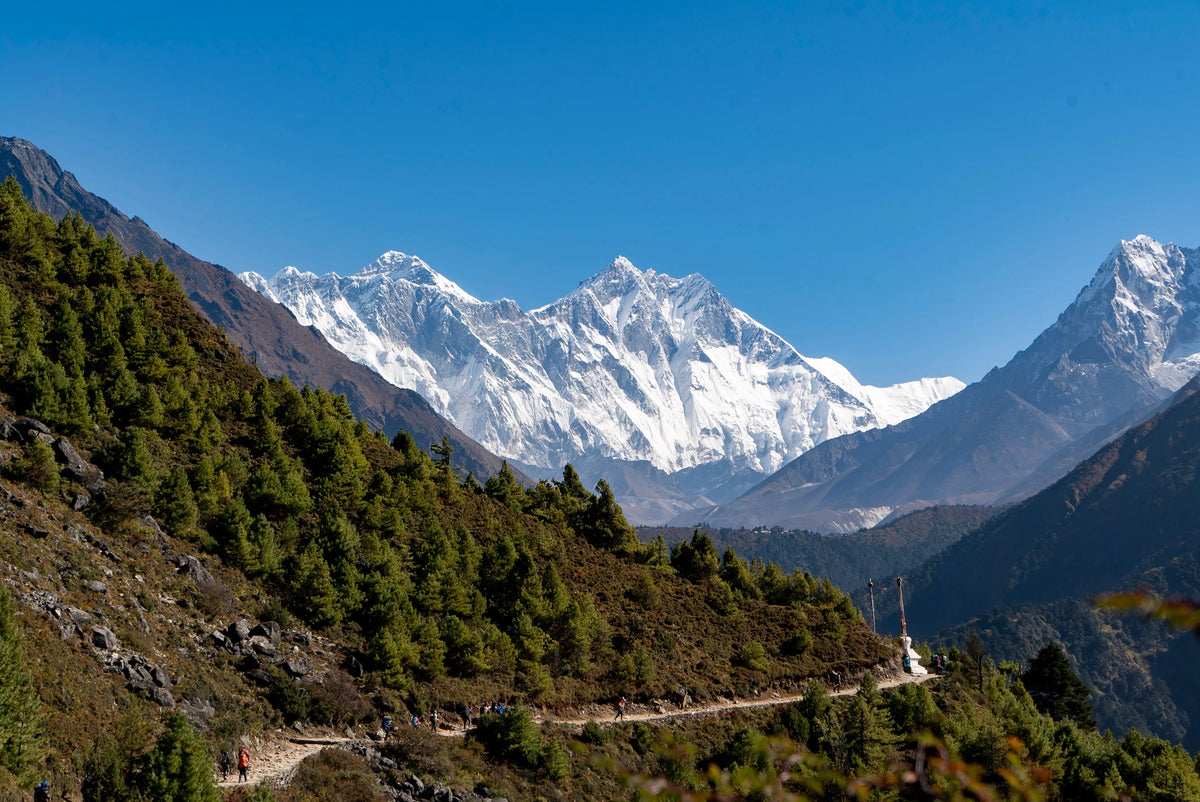
Everest Base Camp is one of the best-known trekking destinations in the world, and within the first few days of walking you see why: the Khumbu gives you one fine sight after another, faster than you can take them in. You walk through rhododendron and giant fir forest along the Dudh Kosi, reach Namche Bazaar on its hillside above the gorge, get your first view of Everest above the ridge, see Tyangboche Monastery with Ama Dablam rising above it, and cross the glacier country of the upper Khumbu. At the end come the flat moraine of Gorak Shep and the walk to base camp at the foot of the icefall.

The trek follows the route that Edmund Hillary and Tenzing Norgay walked before their 1953 ascent, the same approach nearly every Everest expedition from Nepal has used since, through villages and valleys the Sherpa people have lived in for centuries. The communities along the trail, from the trading families of Namche to the farming villages of Khumjung and Kunde, had a relationship with the mountain several hundred years before anyone tried to climb it. Walking through them, you see a living culture that the mountain has shaped.
The acclimatization schedule on this trek is slow and deliberate. High-altitude travel can cause serious illness, even in fit travelers. Acclimatization reduces risk but cannot eliminate it. Tell your guide promptly about symptoms. Your guide may stop an ascent, change the route or arrange descent. Rescue and medical treatment depend on location, weather, access and available resources and cannot be guaranteed. The optional climb of Kala Patthar (5,550 meters) the morning before base camp gives you the classic close view of Everest’s summit pyramid, which base camp itself does not.
You come back down the same trail, and it feels different. The altitude drops each day, your body is stronger than it was two weeks earlier, and on ground you already know you notice details you missed on the way up. The flight back to Kathmandu, the celebration dinner, and the last days in the valley close a trip that most people who finish it rank among the biggest physical challenges of their lives.
The price covers four hotel nights in Kathmandu with breakfast, 13 lodge nights, all meals on the trek, Sherpa guides and porter support. Return Lukla flights, the Ramechhap transfers when needed, trekking permits and Kathmandu sightseeing entry fees are included. Nepal entry visa fees are not included.
SherpaHolidays Terms and Conditions SH-TC-2026-10-14. Your accepted booking version and mandatory rights remain in effect.
Travel dates
The deposit is part of the total price, not an additional fee.
-
March 24 – April 10, 2027 Available$3,975 per person
-
April 14 – May 1, 2027 Available$3,975 per person
-
May 5 – 22, 2027 Available$3,975 per person
-
October 14 – 31, 2027 Available$3,975 per person
-
November 4 – 21, 2027 Available$3,975 per person
Scheduled departure deposit: $500 per person for bookings more than 90 days before departure
Private journey deposit: 30% of the trip price for bookings more than 90 days before departure
Final balance: Due 90 days before departure. Bookings made 90 days or fewer before departure are paid in full at booking.
Our conditions promise: A qualifying Nepal advisory change or trek-region closure within 60 days of departure lets you move dates free or take full credit for 24 months.
Scheduled departures: No minimum group size
SherpaHolidays Terms and Conditions SH-TC-2026-10-14. Your accepted booking version and mandatory rights remain in effect.
Plan your trek
Plan Your Everest Trek with Us
Tell us when you would like to go and who is coming. A rough plan is enough.
Loading the inquiry form…
The form did not load. Email your trip ideas to us instead. We reply within one business day.
Email usWe could not send your inquiry just now. Nothing was lost: try again, or email it to info@sherpaholidays.com with one tap.
Thank you. Your inquiry is on its way.
Sam or Gyalgin will read it personally and reply from info@sherpaholidays.com within one business day.
We could not save your answer. Try again, or tell us when we call. Your inquiry is already sent.
Thanks. Your answer is with your inquiry now.
Three quick questions, if you have a moment. When, how many, and a budget. Optional, and they help us prepare a better first reply.
Three quick questions, if you have a moment.
Thanks. Those details are with your inquiry now.
This is an inquiry, not a booking. Nothing is charged here.
- Within one business day We reply within one business day.
- Then A call, if you would like one.
- When you are ready A deposit holds your place.


Included
- Flights to Lukla and back, with the transfer to Ramechhap when busy-season flights leave from there.
- Every meal on the trek: breakfast, lunch and dinner. Many trekking companies leave most trail meals out of their price.
- 13 nights in the best available lodges
- 4 nights in Kathmandu at the Malla Hotel or similar, with breakfast.
- An English-speaking Sherpa guide
- Porters, one for every two guests, so you walk with a day pack.
- Permits and park fees: Sagarmatha National Park and the Khumbu Pasang Lhamu municipality permit.
- Private transfers in Kathmandu: from the airport on arrival to the drop-off when you leave, plus entry fees for the valley sightseeing.
- Insurance for your guides and porters
Not included
- International flights to and from Nepal
- Travel insurance with evacuation cover, which is required
- Lunch and dinner in Kathmandu, and drinks
- Tips and personal gear
- A single room, if you want one
Why our price
Our 18-day Everest Base Camp trip starts at $3,975 per person, Kathmandu to Kathmandu. When you compare trips, check what each price covers.
- Time and pace
- 18 days, with acclimatization days at Namche Bazaar and Dingboche, plus time in the Kathmandu Valley. Compare the full itinerary and nights included.
- Places to stay
- Four nights at the Malla Hotel or similar in Kathmandu, with breakfast, and 13 nights in mountain lodges. Ask about the hotels and room arrangements on your dates.
- Meals
- Breakfast, lunch and dinner on the trek are included. Compare which meals you would pay for separately.
- Flights and permits
- Return Lukla flights, transfers to and from Ramechhap when needed, and required trekking permits are included. Kathmandu sightseeing entry fees are included too.
- Guide and bags
- Scheduled groups have up to 10 guests, with an English-speaking Sherpa guide and one porter for every two guests. Compare group size and porter support.
Budget separately for international flights, your Nepal visa, travel insurance, Kathmandu lunches and dinners, drinks, tips, personal gear and any single-room supplement.
Ask us for the full itinerary and inclusions for your dates.
Price questions
Why does your trip cost more than some Everest Base Camp trips?
Packages vary in length, hotels, meals and support. Ours is 18 days, with four Kathmandu hotel nights, 13 lodge nights, all trail meals, Lukla flights, permits and porter support. Compare those details with any quote you are considering.
Are the Lukla flights and trekking permits included?
Yes. Return Lukla flights and domestic airport departure taxes are included, along with road transfers to and from Ramechhap when needed. We also include the Sagarmatha National Park and Khumbu Pasang Lhamu municipality permits. International flights and Nepal visa fees are separate.
Which meals are included?
Breakfast, lunch and dinner on the trek, plus breakfast during your four hotel nights in Kathmandu. Lunch and dinner in Kathmandu and drinks are separate.
Where will I sleep?
Four nights at the Malla Hotel or a similar hotel in Kathmandu, and 13 nights in mountain lodges chosen by our team. Ask us for the hotels, lodges and room arrangements for your dates.
How big is the group, and who carries my bag?
Scheduled groups have up to 10 guests. An English-speaking Sherpa guide accompanies the trek, and one porter serves every two guests. Porters carry your main bag, so you walk with a day pack. Private trips are also available.
Is my travel insurance included?
No. Insurance for our guides and porters is included. You arrange your own required travel insurance, covering emergency medical treatment, evacuation, trip cancellation and interruption, and repatriation. Confirm with your insurer that the policy covers this trek and its maximum altitude.
What else should I budget for?
International flights, Nepal visa fees, travel insurance, Kathmandu lunches and dinners, drinks, tips, personal trekking gear, souvenirs and a single-room supplement if you choose one. Ask us about any optional services before booking.
What happens if weather delays my Lukla flight?
If weather delays your Lukla flight and you need to wait, we cover up to 2 extra nights while you wait, and more when the situation calls for it. Nights you choose to add, or a helicopter you choose instead of waiting, are your cost, quoted before anything is booked. Other delay arrangements are stated in your written itinerary.

Private or small group
Your Dates, Your Pace
Any departure can run privately for your group, at your pace.
Ask for a private quote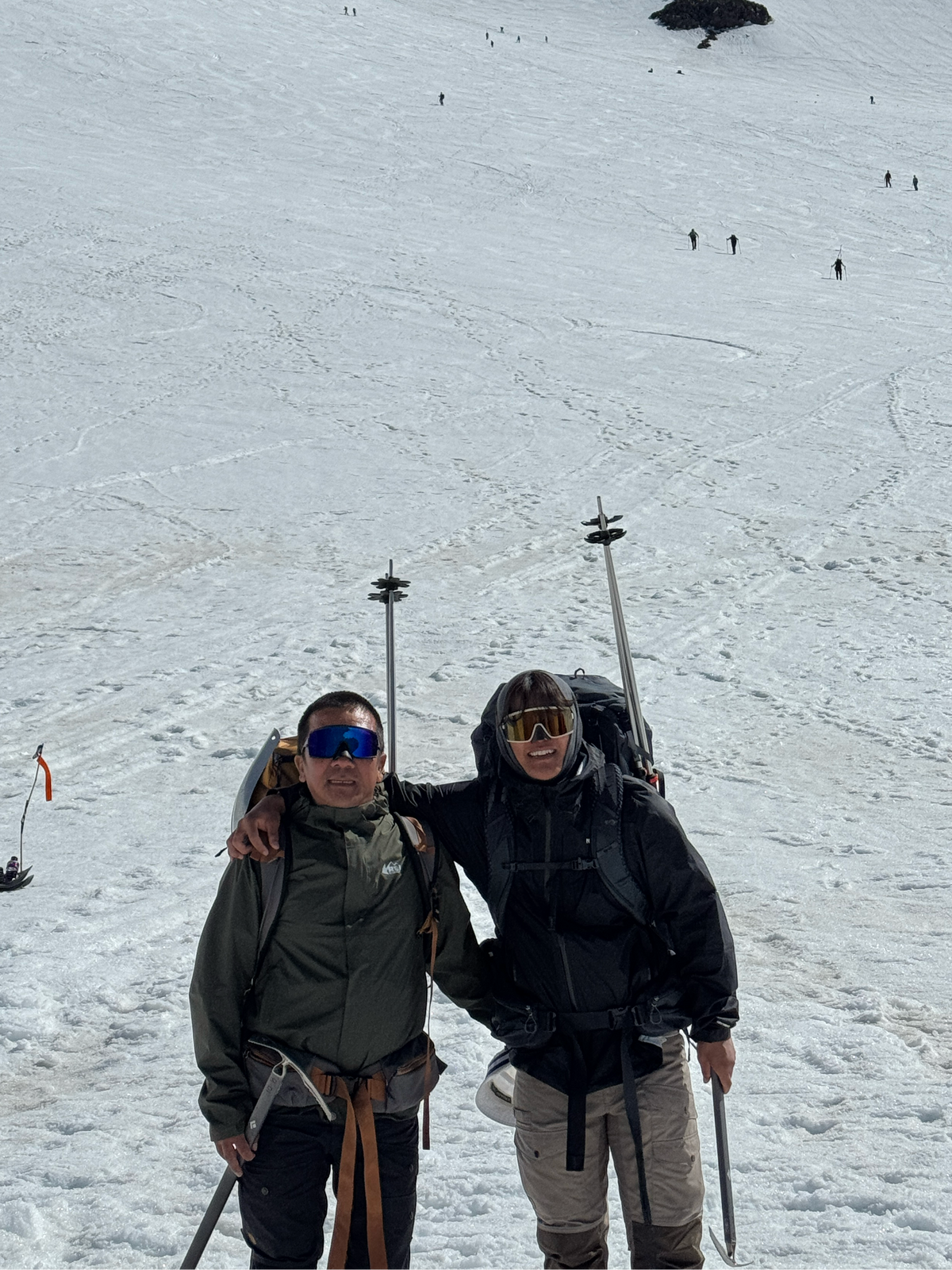
Our family
Three Generations in the Himalayas
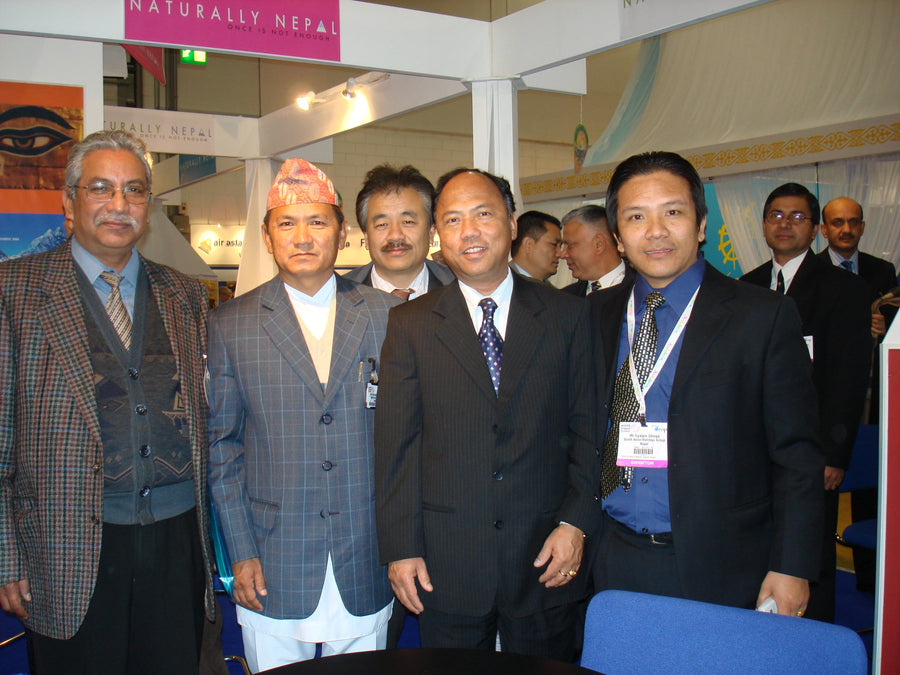
Our family has worked in these mountains for about 70 years. Today Sam and his father plan every trip themselves.
-
Sam’s grandfather
San Tsopel Sherpa
Cooked for Sir Edmund Hillary and his team throughout their work building schools for the Sherpa community.
-
Sam’s father
Gyalgin Sherpa
Worked on Mount Everest and guided in the Himalaya for decades, then founded his own expedition company in Nepal, South Asian Holidays.
-
Founder of SherpaHolidays
Sam Sherpa
Born and raised in Nepal, now in the United States. He started SherpaHolidays so American travelers can plan with people who know both sides.
Questions People Ask Us
Anything else? Call us or ask in the form.
-
The deposit is part of the total price, not an additional fee. A scheduled booking made more than 90 days before departure requires $500 per person. A private journey booked more than 90 days before departure requires 30% of the trip price. The balance is due 90 days before departure. At 90 days or fewer, full payment is due at booking. Your disclosure and invoice state the exact amounts and dates.
Once your deposit is received, your price is locked except for government taxes, park fees or levies introduced after that date. We tell you in writing as soon as we learn of one and identify its amount and basis. A different route, hotel upgrade or optional activity is not an automatic extra charge; any additional cost requires your agreement before it is booked.
SherpaHolidays Terms and Conditions SH-TC-2026-10-14. Your accepted booking version and mandatory rights remain in effect.
-
Scheduled departure deposit
$500 per person for bookings more than 90 days before departurePrivate journey deposit
30% of the trip price for bookings more than 90 days before departureFinal balance
Due 90 days before departure. Bookings made 90 days or fewer before departure are paid in full at booking.You cancel 90 or more days before departure
Your deposit becomes credit toward any SherpaHolidays trip for 24 months. Payments above the deposit are refunded, subject only to a specific supplier exception disclosed and accepted before payment.You cancel 89 to 60 days before departure
Cancellation charge: 50% of the total trip priceYou cancel 59 to 46 days before departure
Cancellation charge: 75% of the total trip priceYou cancel 45 days or fewer before departure
Cancellation charge: 100% of the total trip price. No refund.Our conditions promise
A qualifying Nepal advisory change or trek-region closure within 60 days of departure lets you move dates free or take full credit for 24 months.We cancel or cannot provide contracted services
Refunds for services not provided as required by California law. An alternative or credit is your choice, not a required substitute.Scheduled departures
No minimum group sizeThe traveler-cancellation table does not remove our conditions promise, rights under an already accepted booking, or refunds and other rights required by law.
If the US State Department raises Nepal to Level 3 or higher, or your trek region is closed, within 60 days of departure, you can move your dates free or take full credit toward any SherpaHolidays trip for 24 months. This applies instead of the normal traveler-cancellation charges, including the 45-day rule and any supplier cancellation exception.
Full credit means the payments you made for the affected trip, not only the deposit. We record the trigger and your choice in writing. The credit follows Section 4's use and validity terms. A free date move has no change fee; we disclose any price difference for the replacement trip before you decide. The promise does not replace a cash refund owed when we cancel or cannot provide contracted services.
SherpaHolidays Terms and Conditions SH-TC-2026-10-14. Your accepted booking version and mandatory rights remain in effect.
-
Guides from our own Sherpa team lead every trip in Nepal. Beyond Nepal we work with trusted local partners we have known for years, so there is always someone beside you who knows the ground well.
-
Yes. Any departure can run privately on your dates, and we adjust pace, accommodation and rest days around you. If you want a different route entirely, we plan custom itineraries from scratch.
-
You do not need to be an athlete, but you should be comfortable walking several days in a row: 5 to 7 hours most days, up to 8 on the longest. Train for 8 to 12 weeks: cardio, stairs or hills, and one long walk a week in your trekking boots.
In your fifties or sixties? Age on its own is not a reason to say no. Read what changes in how you prepare.
-
Porters carry your main bag, one porter for every two guests, so you walk the trail with a day pack. Your itinerary identifies your guide team, including Sherpa guides on Himalayan routes, and the support and equipment included.
The flights to Lukla allow 15 kg (33 lb) per person: 10 kg (22 lb) checked and 5 kg (11 lb) as hand baggage. Extra luggage stays at your Kathmandu hotel while you trek, and we arrange it.
-
Our team meets you when you arrive in Kathmandu and takes you to your hotel. A dedicated person from our team waits for you at the airport and at each hotel. All transfers in Kathmandu are by private vehicle. The flights to Lukla and back are in the price, with the road transfer to Ramechhap when busy-season flights leave from there.
All arrival, departure and sightseeing transfers in Kathmandu are by private vehicle.
-
4 nights at the Malla Hotel or a similar hotel in Kathmandu, with breakfast, and 13 nights in the best available lodges on the trail, with every meal. The Malla Hotel is on the edge of Thamel, a short walk from its shops and restaurants. Ask us for the hotel names on your dates. We confirm hotels for your dates because availability changes.
-
High-altitude travel can cause serious illness, even in fit travelers. Acclimatization reduces risk but cannot eliminate it. Tell your guide promptly about symptoms. Your guide may stop an ascent, change the route or arrange descent. Rescue and medical treatment depend on location, weather, access and available resources and cannot be guaranteed.
Comprehensive travel insurance is a condition of every booking. Your policy must cover emergency medical treatment, emergency evacuation, trip cancellation and interruption, and repatriation. Confirm with your insurer that it covers your itinerary's activities and maximum altitude, including technical climbing, rafting, helicopter evacuation and search and rescue where applicable. Provide proof before departure. Consider obtaining cover when you book because some benefits have purchase deadlines.
We are not your insurer. Receiving your documents is not a determination of coverage and does not guarantee payment of a claim. Medical and evacuation providers may require payment in advance. Keep insurer emergency details available during your trip.
-
We may change the order of activities, timing or route for weather, access or safety. If a named hotel is unavailable, we provide an alternative of equivalent character and standard. A minor change that preserves the agreed character and standard is not itself a cancellation. We tell you promptly about a material change, explain available alternatives and your applicable refund rights, and obtain agreement before charging more. Calling a change operational or safety-related does not remove a refund required by law.
Mountain flights depend on weather and airline decisions. Lukla flights may use Ramechhap instead of Kathmandu; your itinerary identifies the included transfers. If weather delays your Lukla flight and you need to wait, we cover up to 2 extra nights while you wait, and more when the situation calls for it. Nights you choose to add, or a helicopter you choose instead of waiting, are your cost, quoted before anything is booked. Other delay arrangements and costs are stated in your written itinerary. This weather-delay wording applies to bookings made from October 14, 2026; bookings made earlier keep the wording of the version they accepted. We suggest booking your flight home one or two days after the trip ends. That buffer does not guarantee a connection.
We cannot guarantee a summit, pass crossing, mountain view, wildlife sighting or on-time flight.
-
Checked October 15, 2026: the US State Department rates Nepal Level 2, “exercise increased caution.” It advises against travel to the Rasuwagadhi, Timure and Syafrubesi area of Rasuwa district. The Everest region is open; the August flood hit the Langtang area, which is not on this route. Our current Nepal safety article has more.
If the US State Department raises Nepal to Level 3 or higher, or your trek region is closed, within 60 days of departure, you can move your dates free or take full credit toward any SherpaHolidays trip for 24 months.
-
Spring (March to May) and autumn (late September to November) have the clearest weather. Autumn is the busiest, so book 3 to 6 months ahead if you can.
-
Layers rather than bulk, a waterproof shell and boots you have already broken in. Your guide checks your gear in Kathmandu before the flight to Lukla.
Guest reviews
What guests say
I recently took a trip to Nepal and was met with wonderful service by the staff and amazing tours with the Sherpa guides. The cultural tours were by far my favorite. Highly recommend!!
Took a trip to Nepal for 10 days and got an amazing tour of the area! Great people, great places 10/10 would go again 🔥🔥
I found Sherpa Holidays when I was looking to do the 23 days Annapurna circuit trek and they not only made me a custom itinerary to fit my needs, but they also made the entire process seamless. Highly recommend Sherpa Holidays for anyone looking to head to Nepal!
The staff were easy to communicate with and I had a wonderful trip.
Reviews shown as published on our Google profile.