
Decorative items on a market stall with people walking in the background
Snow-capped mountain peaks with a colorful banner in the foreground
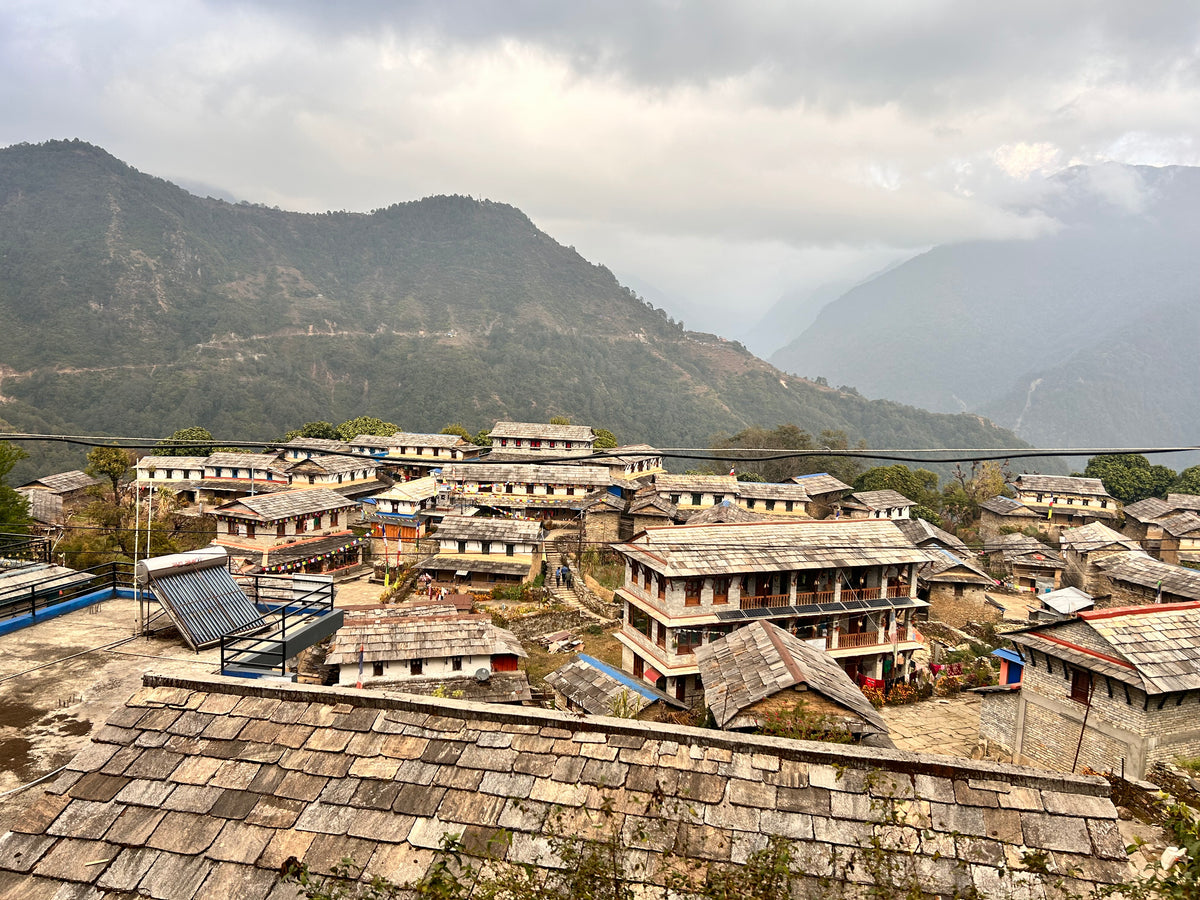
Small village with houses and a mountain in the background
Stupa on a hill with snow-capped mountains in the background
Traditional Nepalese temple with intricate architecture and a person standing in front.
Traditional Tibetan buildings with a central white stupa on a mountainous landscape.
Person climbing a snow-covered mountain with a vast landscape in the background
Silhouette of mountains with a sunset or sunrise in the background
FREE CANCELLATION UP TO 30 DAYS BEFORE DEPARTURE. FULL TERMS APPLY.

21 Day Annapurna and Everest Trek Nepal | SherpaHolidays

Starting From
$4,725.00
Duration
21 Days
Best Season
Autumn
Max Altitude
3,875m (12,713ft)
Comfort Level
Moderate
Dates & Prices


Full payment at booking secures your permits, private guides, and all logistics before your departure date.

Licensed Sherpa Guides
Permits & Logistics Included
Private Journeys Available
Altitude Safety Expertise

Most trekkers choose one range. This trip gives you both.

The Annapurna and Everest regions are Nepal's two great trekking destinations and they could not be more different in character. The Annapurna foothills are warm, terraced, subtropical in the lower valleys, with villages that have been farming this land for generations and ridge walks that put three 8,000-meter peaks in a single field of view. The Khumbu is higher, colder, more exposed, carrying the specific atmosphere of a valley that exists entirely in the shadow of the highest mountain on earth. Most trekkers who come to Nepal pick one. This trip does not ask you to choose.

Twenty-one days. The circuit begins in Kathmandu, flies to Pokhara, and climbs through the Annapurna foothills to the ridge village of Ulleri where Dhaulagiri, Annapurna I, and Manaslu are visible simultaneously. It descends back to Pokhara, returns to Kathmandu, and then takes the mountain flight to Lukla to begin the Khumbu approach. The trail follows the Dudh Koshi River through giant fir forests to Namche Bazaar, acclimatizes there for a day, and pushes up through blue pine and rhododendron to Thyangboche Monastery at 3,875 meters, where Everest rises above the ridge directly ahead.

Our guides were born in these mountains. The Sherpa team on the Khumbu section has been guiding this valley since the early days of Himalayan mountaineering. They know the lodges, the trails, the weather patterns, and the altitudes. They will carry the heavy bags and make sure you arrive at each camp in good shape for the next day. That is what the Sherpa Standard means in practice.

21 Days Across Both Great Ranges

Days 1 to 2  |  Kathmandu

Arrive at Tribhuvan International Airport and spend two days in the valley. Swayambhunath, Pashupatinath, Boudhanath, and the Durbar Squares of Kathmandu and Patan. The medieval Newari city of Kirtipur. The pre-trek briefing covers permits, gear, altitude, and what the next three weeks will require.

Days 3 to 7  |  The Annapurna Foothills

Fly to Pokhara and drive to Naya Pul to begin the walk. Trek through terraced paddy fields to Syauli, then through oak and rhododendron forests to Ghandruk, one of the largest Gurung villages in Nepal at 1,940 meters. Climb through the forest to Deurali at 2,987 meters and continue to Ulleri, where the ridge opens to a panorama of Dhaulagiri I at 8,167 meters, Annapurna I at 8,091 meters, and Manaslu at 8,163 meters. Three of the world's ten highest peaks in a single view.

Days 8 to 10  |  Return and Rest

Descend the 500-meter stone staircase to Birethanti and return to Pokhara for a rest day. Lake Phewa with Machhapuchhre reflected in the water. Then back to Kathmandu to prepare for the Khumbu section.

Days 11 to 13  |  Gateway to Everest

The mountain flight from Kathmandu to Lukla at 2,827 meters is one of the most dramatic short flights in the world: the runway is 527 meters long, ends at a stone wall, and sits on a ridge above a 600-meter drop. Then the Khumbu begins. Follow the Dudh Koshi River through forests of giant firs and rhododendrons, through Phakding and up the steep climb to Namche Bazaar at 3,446 meters, the Sherpa capital of the Khumbu.

Days 14 to 15  |  Namche and Thyangboche

A full acclimatization day in Namche: the Saturday market, the bakeries, the view of Everest visible from the ridge above town if the morning is clear. Then the climb through blue pine and rhododendron forest to Thyangboche Monastery at 3,875 meters. The monastery sits on a ridge at the junction of the Imja and Dudh Koshi valleys. Everest, Lhotse, Nuptse, and Ama Dablam are all visible from the monastery grounds.

Days 16 to 19  |  The Descent

Retrace the trail down through Monjo and Phakding to Lukla. One final night at altitude before the morning flight back to Kathmandu.

Days 20 to 21  |  Kathmandu and Departure

Two final days in the valley. Sightseeing, rest, Thamel, the National Museum. International departure on Day 21.

Day by Day

Days 1 to 2  Kathmandu  Ancient Traditions and Sacred Sites

Arrive at Tribhuvan International Airport at 1,360 meters and transfer to your hotel with a traditional Sherpa welcome. Pre-trek briefing covers everything: permits, altitude considerations, gear requirements, the itinerary in detail, and how the next three weeks will unfold. The briefing is not a formality. On a 21-day combined trek crossing two major ranges, preparation matters.

Day Two is a full day in the valley. Swayambhunath, the Monkey Temple, on its hilltop above the city, where the painted eyes of the Buddha have watched over the valley since at least the 5th century. Pashupatinath Temple on the Bagmati River, the most sacred Hindu site in Nepal, where the cremation ghats have operated continuously for centuries. Boudhanath, the great white stupa at the heart of the Tibetan Buddhist community in Nepal. Patan Durbar Square, the finest collection of medieval Newari architecture in the valley. The historic city of Kirtipur, one of the oldest settlements in the Kathmandu Valley, largely unchanged in character from the medieval period.

Stay: Kathmandu Hotel

Days 3 to 7  The Annapurna Foothills  Syauli to Ulleri

Short flight from Kathmandu to Pokhara, then the drive to Naya Pul, the trailhead at the edge of the Annapurna Conservation Area. The first section of the trek moves through terraced paddy fields along the Modi Khola valley, one of the most fertile and densely farmed landscapes in the Annapurna foothills. The village of Syauli sits at the entrance to the Annapurna Sanctuary approach, with the first views of the high peaks appearing above the ridge to the north.

The trail climbs through oak and rhododendron forest to Ghandruk at 1,940 meters, one of the largest and most prosperous Gurung villages in Nepal. The Gurung people have been the primary community in the Annapurna foothills for centuries, and Ghandruk is one of the places where that culture is most visible and most intact. The village museum covers Gurung history and the tradition of Gurkha military service that has defined this community's relationship with the outside world for over 200 years.

Continue climbing through increasingly dense forest to Deurali at 2,987 meters, where the tree line opens and the air cools. The village of Ulleri sits above, on a broad ridge with an unobstructed panorama to the north and west. From the hill behind the lodge at sunrise, on a clear morning, Dhaulagiri I at 8,167 meters, Annapurna I at 8,091 meters, and Manaslu at 8,163 meters are all visible simultaneously. Three of the world's ten highest peaks, each a distinct massif, each a different angle of light. This is the panorama the Annapurna section is built toward, and it delivers.

Stay: Premium Mountain Lodges

Days 8 to 10  Return to Pokhara and Kathmandu

Descend from Ulleri via a stone staircase that drops over 500 meters in elevation to Birethanti on the Modi Khola. The descent takes several hours and the staircase, hand-laid over generations of village labor, is one of the more remarkable pieces of trail infrastructure in the Annapurna region. Return to Pokhara by early afternoon. A rest day: Phewa Lake, the lakeside restaurants, and the view of Machhapuchhre reflected in the water on a clear evening. The Fish Tail peak is sacred and has never been climbed. It is the most immediately beautiful mountain in the Pokhara view.

Return flight to Kathmandu and one night in the city before the Lukla flight. The transition between the Annapurna and Everest sections is a deliberate reset: city comforts, a proper bed, the briefing for the Khumbu section that covers acclimatization protocol, the Namche ascent, and what to expect above 3,500 meters.

Stay: Pokhara Luxury Hotel then Kathmandu Hotel

Days 11 to 13  Gateway to Everest  Lukla to Namche Bazaar

The Lukla flight is 35 minutes from Kathmandu and one of the most talked-about short flights in the world. Tenzing-Hillary Airport sits on a ridge at 2,827 meters. The runway is 527 meters long, slopes upward at 12 degrees, and ends at a stone retaining wall on one side and drops 600 meters on the other. Pilots land uphill and take off downhill using the slope to assist braking and acceleration. In good weather it is straightforward. In bad weather it does not operate. The airport is weather-dependent by design, which is part of what makes the Khumbu feel genuinely remote.

The trail from Lukla descends to the Dudh Koshi River at Phakding and follows the river north through forests of giant firs, blue pine, and rhododendron. The Dudh Koshi, the Milky River, drains the glaciers beneath Everest and runs cold and pale even in summer. The trail crosses and recrosses it on suspension bridges hung with prayer flags, some of them over a hundred meters long, swaying slightly in the valley wind. The steep climb from Jorsale to Namche Bazaar gains over 600 meters in elevation and arrives at the rim of a natural amphitheater carved into the ridge above the valley junction. Namche Bazaar at 3,446 meters is built into the curve of that amphitheater: lodges, bakeries, gear shops, and expedition supply stores stacked in tiers on the hillside, with Kongde Ri and Thamserku visible on the ridges above.

Stay: Best Available Mountain Lodges

Days 14 to 15  Namche and Thyangboche  The Sherpa Capital and the Sacred Ridge

Acclimatization day in Namche. The standard protocol for high-altitude trekking is to ascend no more than 300 to 500 meters per day above 3,000 meters and to take a rest day for every 1,000 meters gained. Namche is the first place where the altitude is genuinely felt, and the rest day is not optional. Spend the morning on the trail above town: the viewpoint at the Everest View Hotel at 3,880 meters gives the first clear sightline to Everest on a cloudless morning, along with Lhotse, Nuptse, and Ama Dablam. Saturday brings the Namche market, which has been running every week for generations and where Tibetan traders, Sherpa farmers, and trekking groups converge in a way that has not fundamentally changed since the valley opened to outsiders.

The climb from Namche to Thyangboche takes most of the day and passes through the finest stretch of high-altitude forest in the Khumbu: blue pine and silver fir giving way to rhododendron as the trail gains elevation, with Ama Dablam dominating the view ahead for most of the ascent. Thyangboche Monastery sits at 3,875 meters on a broad ridge at the convergence of the Imja and Dudh Koshi valleys. The monastery was founded in 1923 and remains the most significant Buddhist institution in the Khumbu region. The view from the monastery grounds on a clear morning puts Everest at 8,849 meters, Lhotse at 8,516 meters, Nuptse at 7,861 meters, and Ama Dablam at 6,812 meters simultaneously in view above the ridgeline. There is no equivalent panorama of Everest accessible without technical climbing. This is the highest point of the trek.

Stay: Thyangboche Lodge

Days 16 to 19  The Descent  Thyangboche to Lukla

The return trail retraces the approach through Namche, Monjo, Phakding, and back to Lukla. Descending through the Khumbu is a different experience from ascending: the views are different, the light falls differently in the afternoon, and the body moves more easily. The suspension bridges, the prayer wheels, the mani stone walls carved with the mantra Om Mani Padme Hum and stacked along the trail for centuries — these are things that are easier to notice on the way down when the altitude and the effort of climbing are not competing for attention. One final night in Lukla at 2,827 meters before the morning flight back to Kathmandu.

Stay: Mountain Lodges en Route then Lukla Lodge

Days 20 to 21  Kathmandu and Departure

Return flight from Lukla to Kathmandu, subject to weather. The last two days in the valley are for recovery, reflection, and the particular pleasure of being back at low altitude after weeks in the mountains. Thamel is good for the last morning wander: the gear shops, the bookstores, the rooftop restaurants. The National Museum holds the finest collection of Himalayan art and archaeological material in Nepal. The international departure is from Tribhuvan International Airport on Day 21.

Stay: Kathmandu Hotel then International Departure

The Sherpa Standard

Every SherpaHolidays journey is fully supported. Here is what that covers for this trip.

Accommodation and Meals

  • Kathmandu and Pokhara: Hotel accommodations on a bed and breakfast basis.
  • Mountain Lodges: Over eight nights in the best available lodges in the Annapurna foothills and Khumbu valley.
  • Full Board Trekking: All meals throughout the trekking section: breakfast, lunch, and dinner prepared fresh each day.
  • Airport Welcome: Traditional welcome garlands and full pre-trek orientation on arrival.

Leadership and Logistics

  • Lead Guide: Dedicated English-speaking trekking guide for the full combined circuit.
  • Sherpa Support: Professional Sherpa porters at a ratio of one porter per two guests for all heavy luggage.
  • Altitude Monitoring: Continuous altitude monitoring throughout the Khumbu section with acclimatization protocol managed by the guide team.
  • Spanish-Speaking City Guide: Specialist Spanish-speaking guide for the Kathmandu sightseeing days.

Transport and Logistics

  • All Internal Flights: Kathmandu to Pokhara and return, and Kathmandu to Lukla and return.
  • Private Transfers: All overland travel in private vehicles.
  • Permits and Fees: All trekking permits, conservation area entry fees, and sightseeing entrance fees covered.


What Is Not Included

  • International airfare to and from Kathmandu
  • Nepal entry visa fees
  • Lunch and dinner while in Kathmandu and Pokhara
  • Specialized trekking clothing, sleeping bags, and personal gear
  • Travel and emergency evacuation insurance, mandatory for high-altitude trekking. We can recommend providers.
  • Tips for Sherpa guides and porters
  • Single supplement (for those taking a private room)

Five Moments That Define This Trek

Three 8,000-Meter Peaks from Ulleri Ridge

From the ridge behind the lodge at Ulleri, on a clear morning, Dhaulagiri I at 8,167 meters, Annapurna I at 8,091 meters, and Manaslu at 8,163 meters are all visible in a single panorama. Three of the world's ten highest peaks, each a distinct massif, each a different face of the same sky. This is the view the Annapurna section earns, and it has no equivalent at this elevation anywhere in the range.

Thyangboche and the Everest Panorama

Thyangboche Monastery at 3,875 meters sits on a ridge at the convergence of two Khumbu valleys, with Everest, Lhotse, Nuptse, and Ama Dablam all visible above the ridgeline from the monastery grounds. The monastery has been the spiritual center of the Khumbu since 1923. The view from its courtyard is the most famous unobstructed view of Everest accessible without technical mountaineering. It earns its reputation every clear morning.

The Lukla Flight

The approach to Tenzing-Hillary Airport at Lukla is one of the most discussed short flights in commercial aviation: a 527-meter runway on a ridge at 2,827 meters, sloping uphill, ending at a stone wall, with a 600-meter drop on the departure end. Pilots land uphill and take off downhill. In good weather it is entirely routine. The fact that it requires good weather is part of what makes the Khumbu feel like genuine remote country, which it is.

Namche Bazaar

The Sherpa capital of the Khumbu sits at 3,446 meters in a natural amphitheater carved into the ridge above the Dudh Koshi valley junction. It is the last substantial town before the high peaks, the oldest trading hub in the Everest region, and one of the most atmospheric places in Nepal. The Saturday market has been running for generations. The bakeries and gear shops are a more recent addition. The view of Kongde Ri above the rooftops has not changed.

The Ecological Arc

The full range of the trip covers subtropical valley farmland in the Annapurna foothills, oak and rhododendron forest at middle altitude, giant fir forest in the Khumbu approach, and blue pine and alpine rhododendron above Namche. The transition from the warm Modi Khola valley to the cold, high Khumbu is one of the most dramatic ecological shifts available on foot in Nepal, covering roughly the same range of habitats as traveling from southern France to Arctic Norway.

Flexible Bookings

Full payment at booking secures your permits, private guides, and all logistics before your departure date. However, there are deposits available to secure your spot.

Travel Dates

Secure your spot with a $500 deposit. The remaining balance is due 60 days before departure.

Trip duration
Availability
Prices from
October 1 – October 21 (Deposit) Most Popular
Available
$500.00
Remaining spots
10 spots remaining
October 1 – October 21
Available
$4,725.00
Remaining spots
10 spots remaining
March 15 – April 4 (Deposit) Most Popular
Available
$500.00
Remaining spots
10 spots remaining
March 15 – April 4
Available
$4,725.00
Remaining spots
10 spots remaining
November 1 – November 21 (Deposit) Most Popular
Available
$500.00
Remaining spots
10 spots remaining
November 1 – November 21
Available
$4,725.00
Remaining spots
10 spots remaining

Things Guests Ask Before Booking

Real questions, answered by people who have actually made these crossings.
  • Yes, and they vary by country. Nepal's visa is available on arrival for most nationalities. Tibet requires a special Tibet Travel Permit, arranged through us it cannot be obtained independently through us. Bhutan requires a Bhutan visa, which we handle as part of the booking process. India requires a tourist visa applied for in advance. We
    walk every guest through exactly what's needed for their specific journey, well before departure.

  • Every journey we offer can be adjusted in duration, pace, accommodation tier, specific sites, and rest days. If none of our fixed routes match what you have in mind, we can build a multi-country itinerary from scratch. That's not an upsell, it's actually how most of our returning guests book.

  • Flights from your home country to Kathmandu are not included, as these vary
    significantly by departure city, and we want you to book what works for your schedule and budget. All regional flights within the journey, Kathmandu to Lhasa, Kathmandu to Paro, and so on, are included unless your itinerary specifies otherwise. We'll confirm every included and excluded flight clearly before you book.

  • Autumn (September to November) and spring (March to May) are the strongest
    windows for most multi-country journeys. That said, each destination has its own rhythm. Tibet is best visited before the summer rains, Bhutan has a spring festival season worth planning around, and India's north is at its finest from October through February. When you book with us, we advise on the exact timing based on where you're going and what you want to see.

  • In Nepal, your journey is led entirely by our Sherpa team. In Bhutan, Tibet, and India, we work with trusted local guides who meet our standard people we've partnered with for years, who know their regions the way our Sherpas know the Himalayas. You will always have someone beside you who actually knows where they are.

  • We handle everything: permits, accommodations, inter-country transfers, regional flights, border crossings, and on-the-ground coordination in each country. The only thing you arrange independently is your international flight to Kathmandu. From the moment you land, it's ours to manage.