
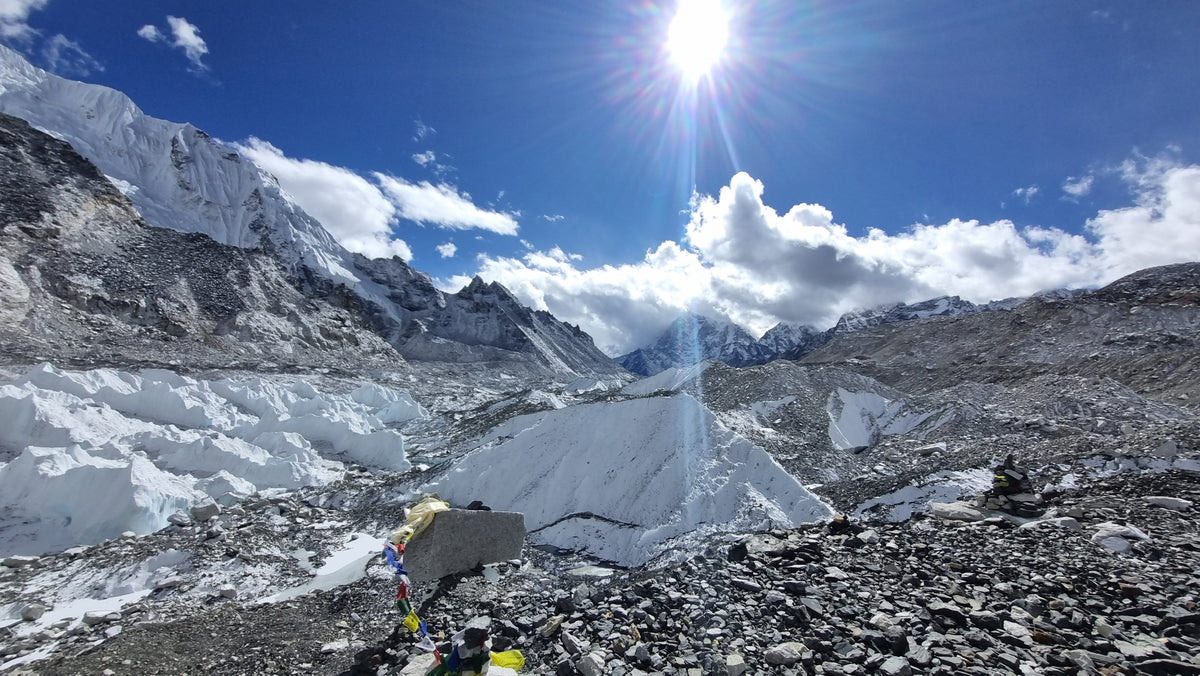
Glacier and mountains at Everest Base Camp on the Nepal side.
Gokyo lake and Ngozumpa glacier, Nepal.
Glacier and mountains at Everest Base Camp on the Nepal side.
Everest, Lhotse and Ama Dablam above the trail to Everest Base Camp
Namche Bazaar at dusk, Khumbu, Nepal.
Tengboche Monastery facade, Khumbu, Nepal.
Snow-covered face of Ama Dablam, Nepal.
Krishna Mandir and Garuda column in Patan, Nepal.
Everest Base Camp and Gokyo Trek route map

20 Days, Challenging

20-Day Everest Base Camp and Gokyo Trek

From $4,575 per person

  • Next departure Apr 1, 2027
  • Join a group of up to 10, or go private. Large groups welcome.
Duration
20 Days
Best season
Spring & Autumn
Max altitude
5,550m (18,209ft)
Difficulty
Challenging

Challenging: 5 to 8 hours of walking a day for two weeks or more, with nights up to about 5,200 m (17,000 ft) and a pass or viewpoint above 5,000 m (16,400 ft). Read your trip's walking demands, highest daytime and sleeping altitudes, terrain, technical requirements and gear list before booking.

Technical climbing: The Cho La has a short fixed rope on snow and ice. We recommend crampons, and the guide team carries the equipment.

We reply within one business day. No payment to ask.

Sherpa guides
Permits & logistics included
Private trips available
Altitude safety expertise
A US company, paid in dollars

The climb to Kala Patthar

From Lukla at 2,840 m to Kala Patthar at 5,550 m (18,209 ft), the highest point of the trip.

Ask about this trip

Everest Base Camp and Gokyo Ri on one trek: two of the great Khumbu viewpoints, on two different routes, which few people see on the same trip.

Most trekkers who come to the Khumbu choose one route: Everest Base Camp and Kala Patthar, or the Gokyo Lakes and Gokyo Ri. The reason is time. Doing both properly, with enough acclimatization and without rushing through country that rewards a slower pace, takes three weeks, and this trek is built for that. It follows the standard Everest Base Camp approach through Namche Bazaar, Tyangboche, Dingboche, and Lobuche to stand at 5,364 meters below the Khumbu Icefall, then climbs Kala Patthar for the best-known close view of Everest you can reach on foot. From there it crosses the Cho La pass to the Gokyo Valley and climbs Gokyo Ri, a panorama many experienced trekkers rate as the better of the two.

The Khumbu is the most visited trekking region in Nepal, for good reasons: the trails are reliable, the lodge network is excellent, the mountain scenery starts on the first day out of Lukla, and the Sherpa communities along the route are among the most knowledgeable and welcoming people in the mountains. The first views of Everest appear over the ridge above Namche Bazaar. Ama Dablam rises so close above Tyangboche that the monastery seems to have been placed for the view. Below Everest Base Camp, you can hear the Khumbu glacier moving.

The Cho La (5,422 meters) links the two valleys and is what sets this trek apart from either single-valley version. It is a real high-mountain pass, with a snow and ice slope on the climb from the Lobuche side and loose rock on the descent to Gokyo. It needs care, proper acclimatization, and a guide team that has crossed it before in different conditions. On the far side, the Gokyo Valley feels different from the Everest approach right away: quieter and more open, with glacial lakes below the trail and far fewer trekkers.

Gokyo Ri (5,488 meters) is the last high viewpoint of the trek. From the top you can see five peaks over 8,000 meters: Everest, Lhotse, Makalu, Cho Oyu, and, on the clearest days, Kangchenjunga. The Ngozumpa glacier, the largest glacier in the Himalaya, fills the valley below. You then walk back to Namche and Lukla and fly to Kathmandu, having made a circuit of the Khumbu that few trekkers complete in one trip.

The price covers four Kathmandu hotel nights with breakfast, 15 lodge nights and all meals on the trekking section, with Sherpa guides and porter support. Return Lukla flights, the Ramechhap transfers when needed and trekking permits are included. Nepal entry visa fees are not included.

High-altitude travel can cause serious illness, even in fit travelers. Acclimatization reduces risk but cannot eliminate it. Tell your guide promptly about symptoms. Your guide may stop an ascent, change the route or arrange descent. Rescue and medical treatment depend on location, weather, access and available resources and cannot be guaranteed.

SherpaHolidays Terms and Conditions SH-TC-2026-10-14. Your accepted booking version and mandatory rights remain in effect.

20 Days in the Khumbu

Days 1 to 3  |  Kathmandu

Arrive in Kathmandu and transfer to the hotel for the expedition briefing. The first three days cover the UNESCO World Heritage Sites of the Kathmandu Valley: Swayambhunath on its hilltop above the city, Pashupatinath on the Bagmati River, and the medieval Durbar Squares of Kathmandu and Patan. They are also good preparation. The Buddhism of these valley temples is the same tradition that built the gompas of Tyangboche and Khumjung and that the Sherpa communities of the Khumbu have kept for centuries, and knowing something of it before the trek makes the mountain section richer.

Days 4 to 7  |  Lukla to Namche Bazaar

The flight from Kathmandu to Lukla is a memorable way into any trekking region: a small aircraft coming in to a short runway on a hillside above the Dudh Kosi valley, with mountains above and the valley falling away below. The trek begins at Lukla (2,840 meters) and follows the Dudh Kosi River through giant fir and magnolia forest, the sound of the water always with you and the first high peaks appearing above the ridgelines. Namche Bazaar (3,440 meters) is the commercial and cultural hub of the Sherpa world, a horseshoe-shaped bowl filled with lodges and teahouses, and a mountain trading town that has sat between the high and low Himalaya for centuries.

Days 8 to 11  |  Tyangboche to Lobuche

The acclimatization day at Namche includes a walk up to Khumjung, the largest traditional Sherpa village in the Khumbu, where the Hillary School and the village’s strong Gurkha and mountaineering ties give it a different feel from the lodges and teahouses of the main trail below. Continue to Tyangboche (3,860 meters), the most important monastery in the Khumbu, on a forested saddle with Ama Dablam rising directly above it, one of the great mountain views in Nepal. Above Tyangboche the vegetation thins. The trail passes Pheriche and Dingboche into the high alpine country of the upper Khumbu, with the peaks growing larger and the air noticeably thinner each day. Lobuche (4,930 meters) is the last real settlement before the glacier.

Days 12 to 15  |  Base Camp, Kala Patthar, and the Cho La

The route to Everest Base Camp follows the lateral moraine of the Khumbu glacier past the Gorak Shep plain to the foot of the icefall at 5,364 meters. From base camp itself, the surrounding ridges hide most of Everest. What you see is the icefall, its seracs, and the scale of the route climbing teams use to reach the Western Cwm above. Kala Patthar, climbed before dawn the next morning, gives you the close view of Everest that base camp does not: the whole summit pyramid above the Nuptse ridge, lit before the peaks around it. The day after, the Cho La crossing links the Everest and Gokyo valleys over a high snow and ice pass that needs care and a guide team that knows the route in all conditions.

Days 16 to 20  |  Gokyo and the Return

The Gokyo Valley on the far side of the Cho La is quieter and more open than the Everest approach. Along the valley floor lies a chain of turquoise lakes fed by the Ngozumpa glacier above, the largest glacier in the Himalaya. Gokyo Ri (5,488 meters) is the last high viewpoint: five peaks over 8,000 meters in one view, the glacier filling the valley below, and the Khumbu laid out in the clear morning air. The descent retraces the approach through Namche and back to Lukla for the flight to Kathmandu and the final days in the city before departure.

Day by Day

Days 1 to 3  Kathmandu  The Sacred Valley

Arrive at Tribhuvan International Airport and transfer to the hotel with a warm Sherpa welcome. The expedition briefing that evening is thorough. We go through the full 20-day route: the altitude profile from Lukla to Kala Patthar and Gokyo Ri, the acclimatization schedule, the Cho La crossing and what it takes, the lodges along the way, and the daily distances and height changes for each section. The Everest and Gokyo combined trek is physically demanding, and preparing for it starts with knowing exactly what the days ahead involve. By dinner you will have a clear picture of the trek.

The Kathmandu Valley deserves more attention before a Khumbu trek than it usually gets. Swayambhunath, the hilltop stupa at the western edge of the city, has been a center of Buddhist practice for over two thousand years. Its white dome and golden spire, strung with prayer flags, mark a site as important to the tradition of the Khumbu gompas as any monastery in the mountains. Pashupatinath, on the Bagmati River, is the most sacred Hindu site in Nepal, with its cremation ghats, its sadhus, and the constant activity of a working temple. The Durbar Squares of Kathmandu and Patan are medieval royal courts built in the Newari tradition, their carved wood and stone the work of highly skilled craftsmen. We arrange your Khumbu Pasang Lhamu Rural Municipality permit and Sagarmatha National Park fees during these three days.

Stay: Luxury Hotel in Kathmandu

Days 4 to 7  Lukla to Namche Bazaar  The Sherpa Heartland

The flight from Kathmandu to Lukla leaves early in the morning, before cloud builds in the valley and closes the airstrip. The aircraft heads east over the middle hills, the ground rising quickly as the foothills give way to the higher ranges, and on the final approach it follows the hillside so closely that the runway only comes into view in the last few seconds. Lukla (2,840 meters) is a busy, practical staging point for the Khumbu, its single street of lodges and equipment shops full of trekkers coming and going and porters organizing loads.

From Lukla the trail follows the Dudh Kosi River through forests of giant fir and rhododendron, the river running fast and cold below suspension bridges that carry the path from bank to bank. The valley is deep and the lower forest dense, with glimpses of the peaks through the trees. As the trail climbs toward Monjo and Jorsale, the forest opens and the first distant views of the high Khumbu peaks appear above the northern ridgeline. Park fees are collected at the Sagarmatha National Park entrance at Monjo; above it the valley narrows to a gorge, then opens again at the foot of the long climb to Namche Bazaar.

Namche Bazaar sits in a natural amphitheater on the hillside above the Dudh Kosi gorge, its lodges, bakeries, and expedition outfitters packed into a horseshoe-shaped bowl at 3,440 meters. On clear mornings you can see Everest from a viewpoint above the town, a distant white pyramid above the nearer peaks to the north. The acclimatization day here is well spent: the walk up to Khumjung (3,780 meters) takes you higher for a few hours while your body adjusts to Namche’s altitude. Khumjung is the largest traditional Sherpa village in the Khumbu, shaped by a long history of mountaineering work and Gurkha service, and its Hillary School is a lasting link between this valley and the outside world.

Stay: Best Available Mountain Lodges

Days 8 to 11  Tyangboche to Lobuche  Into the High Alpine

The trail from Namche to Tyangboche first drops into the Dudh Kosi gorge, then climbs the far side through mossy forest to the saddle at 3,860 meters where the monastery stands. Tyangboche is the most important religious institution in the Khumbu, set on a forested platform with Ama Dablam rising nearly 3,000 meters directly above it and the Everest massif to the north, one of the great mountain settings in Nepal. The monastery was rebuilt after a fire in 1989 and is well kept, and its monks hold daily prayers in a gompa visited by Sherpa pilgrims and foreign trekkers alike. When the cloud clears in the late afternoon, sunset on the Everest group from the saddle is worth the trip from Kathmandu by itself.

Above Tyangboche the vegetation changes gradually. Mossy forest gives way to open juniper scrub, then to the alpine meadows of Dingboche (4,410 meters), where the Imja Khola valley branches east toward Island Peak and the Chhukung glacier. The high peaks are in full view on all sides now: Lhotse to the north, Ama Dablam to the south-east, Makalu on the eastern horizon. Above Dingboche you need a slow, steady pace, and the acclimatization schedule keeps the group at this altitude for a day before going on to Lobuche. Lobuche (4,930 meters) is the last settlement before the glacier terrain of the upper Khumbu, a cluster of lodges on a moraine ridge with the Khumbu glacier to the east and the pyramid of Pumori above to the north-west.

Stay: Best Available Mountain Lodges

Days 12 to 15  Everest Base Camp to Cho La  The High Crossing

The walk from Lobuche to Gorak Shep follows the lateral moraine of the Khumbu glacier through country reduced to rock and ice. Gorak Shep (5,140 meters) is the last stop before base camp, a flat sandy plain above the glacier where the lodges serve meals and hot drinks to trekkers at every stage of acclimatization. From here the route continues along the moraine to the edge of the icefall at 5,364 meters. Base camp moves slightly with the glacier each season, and outside the expedition season from March to May it is mostly unmarked. What stays the same is the scale of the icefall above, the sound of the glacier moving, and the mountaineering history that has built up here since the first reconnaissance expeditions of the 1950s.

Kala Patthar (5,550 meters) is the morning after base camp: a predawn start from Gorak Shep in the cold and dark to reach the top by sunrise. From Kala Patthar you get the most direct line of sight to the summit anywhere on the Everest route: the whole pyramid of the world’s highest mountain above the Nuptse ridge, lit by the rising sun while the peaks around it are still in shadow. It is the view on the cover of nearly every Everest trekking guide and in most documentaries about the region.

The Cho La crossing leaves the Lobuche valley and climbs steeply to the pass at 5,422 meters, gaining height quickly through loose boulder fields before reaching the snow and ice of the upper slope. The pass is a narrow col with a short fixed rope on the steepest section. We recommend crampons and trekking poles, and the guide team carries the equipment needed. The descent on the Gokyo side is long and loose, dropping through scree and boulders to the floor of the Ngozumpa glacier. We cross in the morning, before cloud and afternoon wind build on the high ground.

Stay: Best Available Mountain Lodges

Days 16 to 20  Gokyo to Kathmandu  The Return

The Gokyo Valley feels different from the Everest approach, and much quieter. The trail follows the western edge of the Ngozumpa glacier, the largest glacier in the Himalaya, past the chain of glacial lakes the valley is known for. The first lake, Longponga Tsho, lies below the trail; the second and third are beside it; the fourth, Thonak Tsho, and the fifth, Ngozumpa Tsho, are above Gokyo village. Each lake is a different shade of turquoise, depending on the minerals in the meltwater that feeds it, and the glacier beyond each one is visibly larger than the last. Gokyo village (4,790 meters) is smaller and quieter than Namche, its lodges holding a fraction of the Everest route’s traffic.

Gokyo Ri (5,488 meters) needs an early start from the village: two to three hours on a well-marked but steep trail above the third lake. The top is a broad ridge rather than a single point, so the view is wide. Everest, Lhotse, Makalu, and Cho Oyu are all visible, four of the world’s six highest peaks in one view, with the Ngozumpa glacier filling the valley below. The route back to Namche descends the lower Gokyo Valley through Dole and Mong La to Namche Bazaar, where you spend a last night in a familiar lodge before the return. The walk from Namche to Lukla is a long day, and the flight the next morning gets you back to Kathmandu in time for a final day in the city.

Stay: Best Available Mountain Lodges then Luxury Hotel in Kathmandu

The Sherpa Standard

Every SherpaHolidays trip is fully supported from arrival to departure. Here is what that means on this one.

Accommodation and Meals

  • Kathmandu: 4 nights at a luxury hotel in Kathmandu on a bed and breakfast basis.
  • Mountain Lodges: 15 nights in the best available mountain lodges along the route, chosen for comfort, cleanliness, and views.
  • Full Board on Trek: Breakfast, lunch, and dinner every day of the 15-day trekking section, cooked fresh at each lodge.

Leadership and Support

  • Expedition Guide: One experienced English-speaking Sherpa trekking guide who knows Sherpa culture, Khumbu geography, and the Cho La crossing well, with you for the whole trek.
  • Sherpa Support Team: Professional porters, one for every two guests, carrying all personal luggage and handling trek logistics throughout.
  • Staff Ethics: Comprehensive insurance, fair wages, and proper equipment for every guide and porter, as standard.

Transport and Permits

  • Private Transfers: All airport pickups and city sightseeing transfers in Kathmandu by private vehicle.
  • Domestic Flights: Round-trip flights between Kathmandu and Lukla for every guest and the trekking guide, including all domestic airport departure taxes.
  • Ramechhap Transfer: In the busy spring and autumn seasons, Lukla flights often leave from Manthali airport in Ramechhap instead of Kathmandu. When they do, the road transfer between Kathmandu and Ramechhap, both ways, is included.
  • Permits: Sagarmatha National Park entry permit and the Khumbu Pasang Lhamu Rural Municipality permit, paid for and arranged before you start walking.
  • Heritage Access: All sightseeing entry fees for Kathmandu Valley historical and religious sites.


What Is Not Included

  • International airfare to and from Kathmandu and Nepal entry visa fees
  • Lunch and dinner in Kathmandu
  • Comprehensive travel insurance, which is a condition of every booking. Your policy must cover emergency medical treatment, emergency evacuation, trip cancellation and interruption, and repatriation. We can recommend providers.
  • Tips for guides and porters, personal trekking equipment, and souvenirs
  • Single supplement (for those taking a private room)

Five Highlights

Everest Base Camp

At 5,364 meters, at the foot of the Khumbu Icefall, base camp is where almost every successful ascent of Everest from the Nepal side has begun since the first expeditions of the 1950s. The icefall above is dangerous, and you can hear the seracs shifting. Standing under it, with the mountain rising beyond the ridges, gives you a real sense of the altitude and of what climbers take on here. Most people who stand here have walked for two weeks to reach it, which makes it a very different arrival from a helicopter drop.

Kala Patthar at Sunrise

The predawn climb to Kala Patthar is a Khumbu ritual: a cold start from Gorak Shep, headlamps on the trail in the dark, a slow climb in air half as dense as at sea level, and then the summit ridge as the light comes up. Kala Patthar gives a trekker the clearest, most direct view of Everest in Nepal: the whole summit pyramid above the Nuptse ridge, with the South Col visible and the climbing route easy to trace. The photograph you take here at first light is usually the one that ends up on the wall.

The Cho La Pass

The crossing between the Everest and Gokyo valleys is what sets this trek apart from either single-valley route. The Cho La (5,422 meters) is a demanding high-mountain pass: a snow and ice slope on the way up, a long loose descent on the far side, and a windy col at the top with views across the upper Khumbu in both directions. It needs the right equipment, proper acclimatization, and a guide team that knows the route. On the far side, the Gokyo Valley opens out below with its glacial lakes, and it is quiet, because it sees only a fraction of the Everest route’s traffic.

Gokyo Ri

The summit of Gokyo Ri (5,488 meters) has what many experienced Himalayan trekkers consider the best view you can reach on foot in Nepal. From the top, Everest (8,849 meters), Lhotse (8,516 meters), Makalu (8,485 meters), and Cho Oyu (8,188 meters) are all in one sweep of the horizon. The Ngozumpa glacier fills the valley below, its moraines and crevassed surface running unbroken from the high peaks down the valley, and the Gokyo lakes lie beneath the trail.

Tyangboche and Sherpa Culture

Tyangboche monastery is the most important religious institution in the Khumbu, and its setting is one of the best in Nepal: a forested saddle with Ama Dablam directly above and the Everest group to the north. The monks who keep up daily practice here belong to the Tibetan Buddhist tradition the Sherpa people brought across the Nangpa La from Tibet several centuries ago and have kept alive in this valley ever since. You see the same faith in the villages of Khumjung and Kunde above Namche, in the mani walls along the trail, and in the prayer flags at every high point and river crossing. For many guests, this living religious culture at the foot of the world’s highest peaks is an unexpected highlight of the Khumbu.

Travel dates

The deposit is part of the total price, not an additional fee.

  • April 1 – 20, 2027 Available
    $4,575 per person
  • October 1 – 20, 2027 Available
    $4,575 per person
  • November 1 – 20, 2027 Available
    $4,575 per person

Scheduled departure deposit: $500 per person for bookings more than 90 days before departure

Private journey deposit: 30% of the trip price for bookings more than 90 days before departure

Final balance: Due 90 days before departure. Bookings made 90 days or fewer before departure are paid in full at booking.

Our conditions promise: A qualifying Nepal advisory change or trek-region closure within 60 days of departure lets you move dates free or take full credit for 24 months.

Scheduled departures: No minimum group size

SherpaHolidays Terms and Conditions SH-TC-2026-10-14. Your accepted booking version and mandatory rights remain in effect.

Questions about this trip?

Ask Sam or Gyalgin

We reply within one business day. No payment, no commitment.

Loading the inquiry form…

This is an inquiry, not a booking. Nothing is charged here.

  • Within one business day We reply within one business day.
  • Then A call, if you would like one.
  • When you are ready A deposit holds your place.

Or talk to us directly:

+1 (855) 743-7725 info@sherpaholidays.com

Things guests ask before booking

Straight answers about booking, payment and how we run every trip.

  • It is the hardest day of the trek. The Cho La is a pass at 5,422 meters. The way up climbs steeply through loose boulders to a snow and ice slope, and the far side is a long, loose descent. We recommend crampons and trekking poles for it.

    You cross it after Everest Base Camp and Kala Patthar, so you have had more than a week to adjust to the altitude first.

  • There is an acclimatization day at Namche Bazaar, with a walk up to Khumjung (3,780 meters) before you sleep lower again. Above Dingboche the pace stays slow and steady, and the group spends a day at that altitude before going on to Lobuche.

    The highest point is Kala Patthar at 5,550 meters (18,209 ft). Base camp is at 5,364 meters and Gokyo Ri at 5,488 meters.

    High-altitude travel can cause serious illness, even in fit travelers. Acclimatization reduces risk but cannot eliminate it. Tell your guide promptly about symptoms. Your guide may stop an ascent, change the route or arrange descent. Rescue and medical treatment depend on location, weather, access and available resources and cannot be guaranteed.

  • Yes. The round-trip flight between Kathmandu and Lukla is included, with the domestic airport taxes. In spring and autumn, Lukla flights often leave from Manthali airport in Ramechhap instead of Kathmandu. When they do, the road transfer between Kathmandu and Ramechhap, both ways, is included too.

    The Sagarmatha National Park permit and the Khumbu Pasang Lhamu Rural Municipality permit are also included, and we arrange both before you start walking.

  • If weather delays your Lukla flight and you need to wait, we cover up to 2 extra nights while you wait, and more when the situation calls for it. Nights you choose to add, or a helicopter you choose instead of waiting, are your cost, quoted before anything is booked.

    We suggest booking your flight home one or two days after the trip ends.

  • You stay at a luxury hotel in Kathmandu with breakfast, and in mountain lodges on the trek. Breakfast, lunch and dinner are included every day of the trekking section. In Kathmandu, lunch and dinner are on your own.

    Porters carry your main bag, one porter for every two guests.

  • Groups of up to 10, or private for your own group. Scheduled group dates have no minimum, so they run with any number of guests. Large groups welcome.

  • The deposit is part of the total price, not an additional fee. A scheduled booking made more than 90 days before departure requires $500 per person. A private journey booked more than 90 days before departure requires 30% of the trip price. The balance is due 90 days before departure. At 90 days or fewer, full payment is due at booking. Your disclosure and invoice state the exact amounts and dates.

    Once your deposit is received, your price is locked except for government taxes, park fees or levies introduced after that date. We tell you in writing as soon as we learn of one and identify its amount and basis. A different route, hotel upgrade or optional activity is not an automatic extra charge; any additional cost requires your agreement before it is booked.

    SherpaHolidays Terms and Conditions SH-TC-2026-10-14. Your accepted booking version and mandatory rights remain in effect.

  • Scheduled departure deposit
    $500 per person for bookings more than 90 days before departure

    Private journey deposit
    30% of the trip price for bookings more than 90 days before departure

    Final balance
    Due 90 days before departure. Bookings made 90 days or fewer before departure are paid in full at booking.

    You cancel 90 or more days before departure
    Your deposit becomes credit toward any SherpaHolidays trip for 24 months. Payments above the deposit are refunded, subject only to a specific supplier exception disclosed and accepted before payment.

    You cancel 89 to 60 days before departure
    Cancellation charge: 50% of the total trip price

    You cancel 59 to 46 days before departure
    Cancellation charge: 75% of the total trip price

    You cancel 45 days or fewer before departure
    Cancellation charge: 100% of the total trip price. No refund.

    Our conditions promise
    A qualifying Nepal advisory change or trek-region closure within 60 days of departure lets you move dates free or take full credit for 24 months.

    We cancel or cannot provide contracted services
    Refunds for services not provided as required by California law. An alternative or credit is your choice, not a required substitute.

    Scheduled departures
    No minimum group size

    The traveler-cancellation table does not remove our conditions promise, rights under an already accepted booking, or refunds and other rights required by law.

    If the US State Department raises Nepal to Level 3 or higher, or your trek region is closed, within 60 days of departure, you can move your dates free or take full credit toward any SherpaHolidays trip for 24 months. This applies instead of the normal traveler-cancellation charges, including the 45-day rule and any supplier cancellation exception.

    Full credit means the payments you made for the affected trip, not only the deposit. We record the trigger and your choice in writing. The credit follows Section 4's use and validity terms. A free date move has no change fee; we disclose any price difference for the replacement trip before you decide. The promise does not replace a cash refund owed when we cancel or cannot provide contracted services.

    SherpaHolidays Terms and Conditions SH-TC-2026-10-14. Your accepted booking version and mandatory rights remain in effect.

  • Comprehensive travel insurance is a condition of every booking. Your policy must cover emergency medical treatment, emergency evacuation, trip cancellation and interruption, and repatriation. Confirm with your insurer that it covers your itinerary's activities and maximum altitude, including technical climbing, rafting, helicopter evacuation and search and rescue where applicable. Provide proof before departure. Consider obtaining cover when you book because some benefits have purchase deadlines.

    We are not your insurer. Receiving your documents is not a determination of coverage and does not guarantee payment of a claim. Medical and evacuation providers may require payment in advance. Keep insurer emergency details available during your trip.

    SherpaHolidays Terms and Conditions SH-TC-2026-10-14. Your accepted booking version and mandatory rights remain in effect.

  • Yes. Any departure can run privately on your dates, and we adjust pace, accommodation and rest days around you. If you want a different route entirely, we plan custom itineraries from scratch.

  • Guides from our own Sherpa team lead every trip in Nepal. Beyond Nepal we work with trusted local partners we have known for years, so there is always someone beside you who knows the ground well.

  • The Sherpa Standard section on this page lists everything included on this trip, from guides and permits to lodges and meals. International flights and travel insurance are the main things you arrange yourself.

Guest reviews

What guests say

5.0 average from 5 Google reviews
Read them on Google
I recently took a trip to Nepal and was met with wonderful service by the staff and amazing tours with the Sherpa guides. The cultural tours were by far my favorite. Highly recommend!!
Avin Fatehi
Took a trip to Nepal for 10 days and got an amazing tour of the area! Great people, great places 10/10 would go again 🔥🔥
Kevin Ye
I found Sherpa Holidays when I was looking to do the 23 days Annapurna circuit trek and they not only made me a custom itinerary to fit my needs, but they also made the entire process seamless. Highly recommend Sherpa Holidays for anyone looking to head to Nepal!
Justin Zhang
The staff were easy to communicate with and I had a wonderful trip.
Jack Cavada

Reviews shown as published on our Google profile.